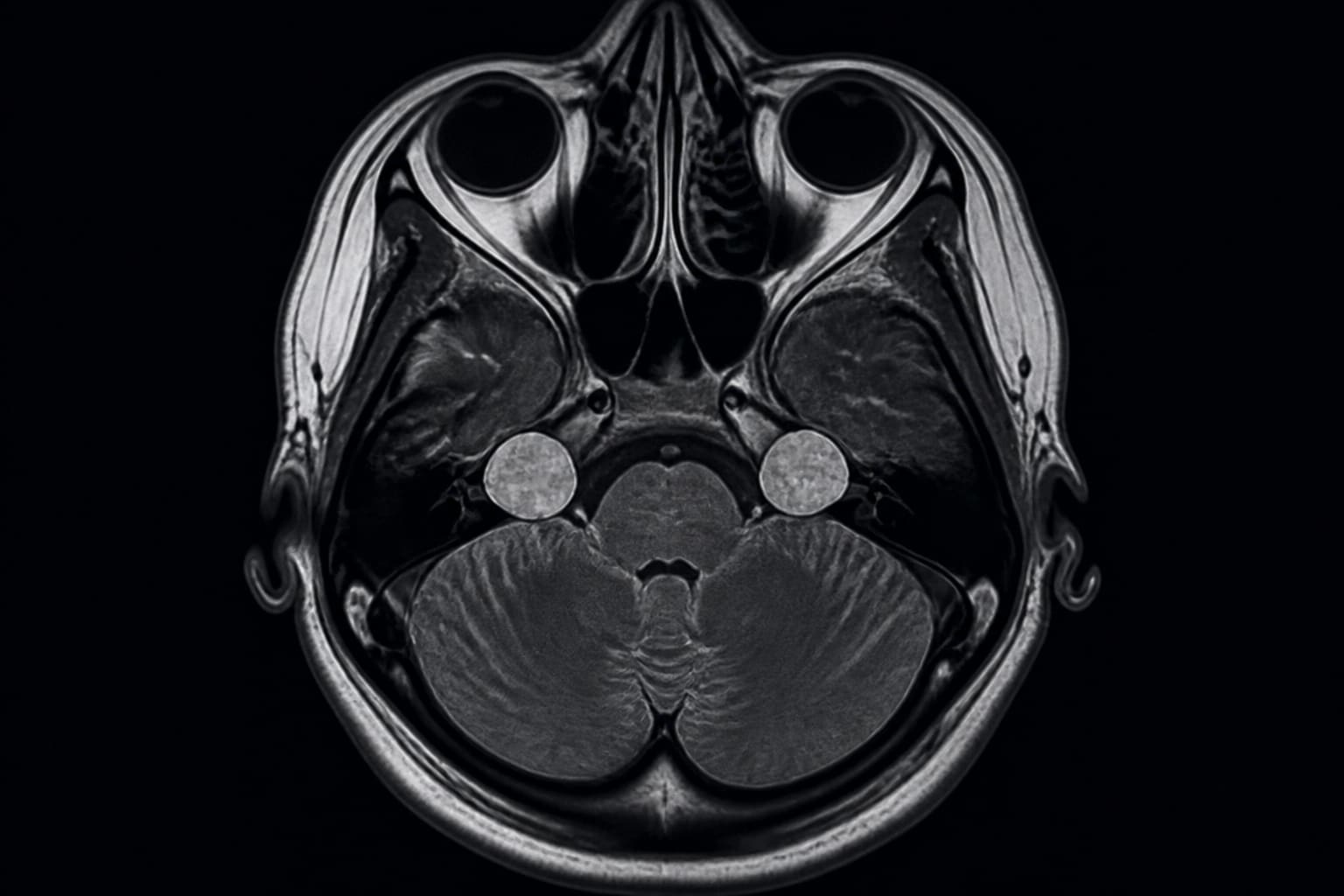
Acute Unilateral Hearing Impairment as an Indicator of Neurofibromatosis Type 2
-
September 15, 2026
Clinical Scorecard: Acute Unilateral Hearing Impairment as an Indicator of Neurofibromatosis Type 2
At a Glance
| Category | Detail |
|---|---|
| Condition | Neurofibromatosis Type 2 (NF2) |
| Key Mechanisms | Genetic disorder characterized by benign nervous-system tumors, particularly bilateral vestibular schwannomas. |
| Target Population | Adults, particularly those presenting with sudden unilateral hearing loss. |
| Care Setting | Primary care and specialty centers for NF2 management. |
Key Highlights
- NF2 is marked by bilateral vestibular schwannomas causing sensorineural hearing loss.
- Acute unilateral hearing loss may indicate NF2 and warrants urgent imaging.
- Weber and Rinne tests can help differentiate types of hearing loss.
- Diagnosis may involve MRI and genetic counseling.
- Management options include surveillance, hearing aids, and potential surgical intervention.
Guideline-Based Recommendations
Diagnosis
- Diagnosis can be established through family history, genetic mutations, or imaging findings.
Management
- Interdisciplinary management is essential, including audiology and otolaryngology referrals.
Monitoring & Follow-up
- Surveillance imaging is recommended for small tumors; larger symptomatic tumors may require resection.
Risks
- NF2 has no cure, but emerging treatments like bevacizumab and brigatinib show promise.
Patient & Prescribing Data
Patients with NF2 presenting with hearing loss.
High-dose oral steroids and tympanic steroid injections may provide minimal symptomatic relief.
Clinical Best Practices
- Perform MRI of the brain and spine when NF2 is suspected.
- Establish care at an NF2 specialty center for comprehensive management.
- Utilize Weber and Rinne tests for initial hearing loss assessment.
Related Resources & Content
Based on findings from:
Unilateral Hearing Loss Leading to a Diagnosis of Neurofibromatosis 2
Annals Of Internal Medicine: Clinical Cases, 2026.
https://www.acpjournals.org/doi/10.7326/aimcc.2026.0199
This content is an AI-generated, fully rewritten summary based on a published scholarly article. It does not reproduce the original text and is not a substitute for the original publication. Readers are encouraged to consult the source for full context, data, and methodology.