Conexiant’s news site is now MDSpire News. Learn more
Advertisement
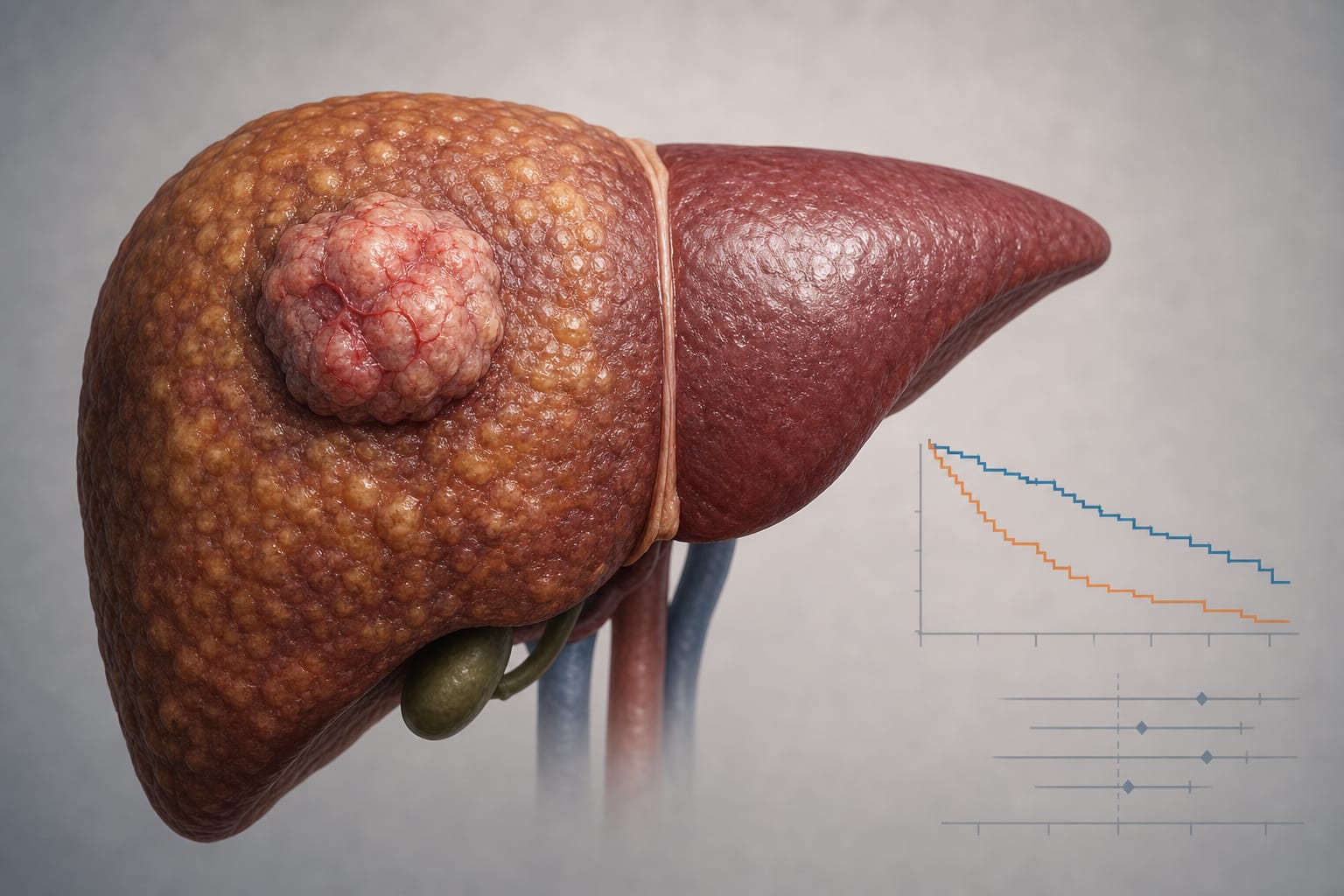
Outcomes Following Curative Hepatectomy for Hepatocellular Carcinoma in Patients With and Without Metabolic-Associated Fatty Liver Disease: Insights from a Western Cohort Study
Clinical Scorecard: Outcomes Following Curative Hepatectomy for Hepatocellular Carcinoma in Patients With and Without Metabolic-Associated Fatty Liver Disease: Insights from a Western Cohort Study
At a Glance
Category
Detail
Condition
Hepatocellular Carcinoma (HCC)
Key Mechanisms
Influence of metabolic-associated fatty liver disease (MAFLD) on postoperative outcomes
Target Population
Adults undergoing curative-intent hepatic resection for HCC
Care Setting
Western academic medical center
Key Highlights
MAFLD-positive patients were older, more frequently obese and diabetic, and less likely to have cirrhosis.
Open or hybrid resection was more common in MAFLD-positive patients.
MAFLD was not independently associated with overall survival (OS) or disease-free survival (DFS) after adjustment for confounders.
Cirrhosis, impaired performance status, elevated alpha-fetoprotein, and greater tumor burden were principal predictors of outcomes.
Guideline-Based Recommendations
Diagnosis
Histologically confirm HCC in patients undergoing hepatic resection.
Management
Consider metabolic dysfunction in the context of MAFLD when evaluating HCC patients.
Monitoring & Follow-up
Assess liver disease severity and tumor burden in postoperative follow-up.
Risks
Evaluate risks associated with cirrhosis and elevated alpha-fetoprotein levels.
Patient & Prescribing Data
Adults with resectable HCC
Curative-intent hepatic resection is the primary treatment modality.
Clinical Best Practices
Utilize international consensus criteria for defining MAFLD.
Adjust for liver disease severity and tumor burden in outcome assessments.
The goal of this clinical trial is to learn if Adaptive Radiation Therapy (ART) is safe and effective in treating patients with locally advanced pancreatic cancer.