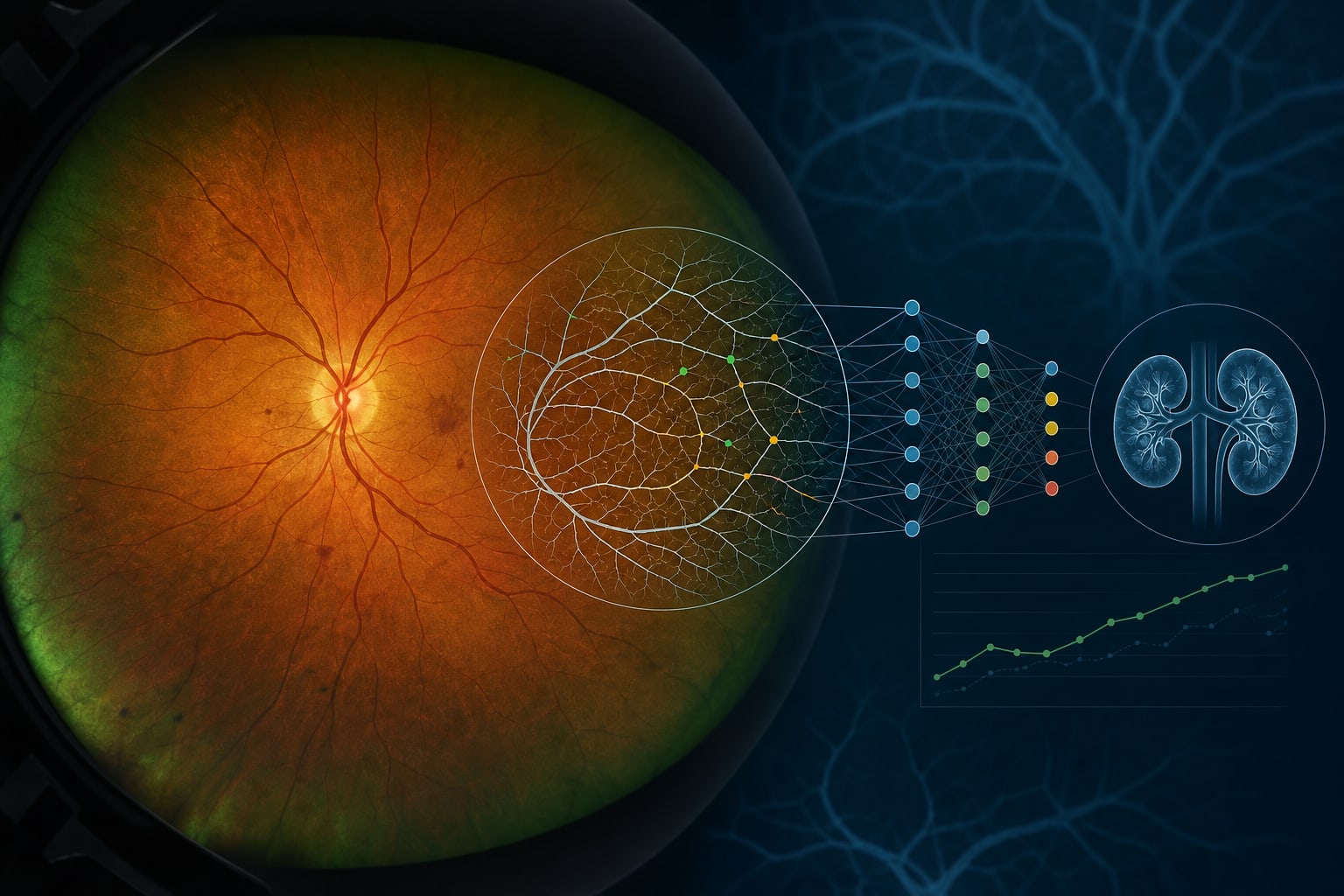
Clinical Scorecard: Impact of RAS Inhibitors on Retinal Microvascular Health in Diabetic Kidney Disease Assessed Through AI-Enhanced Ultra-Wide-Field Imaging
At a Glance
Category
Detail
Condition
Diabetic Kidney Disease (DKD)
Key Mechanisms
Renin-angiotensin system inhibitors (RASi) impact retinal microvascular parameters.
Target Population
Adults aged 18–75 years with clinical diagnosis of DKD.
Care Setting
Prospective cohort study using AI-enhanced ultra-wide-field imaging.
Key Highlights
Significant decreases in venous fractal dimension (Df) and tortuosity (TORT) after 12 weeks of RASi treatment.
77.8% of participants were male, with a mean age of 55.7 years.
55.6% of participants had diabetic retinopathy (DR).
Study utilized AI-based analysis for retinal microvascular assessment.
Correlation between retinal changes and renal clinical indicators was explored.
Guideline-Based Recommendations
Diagnosis
Clinical diagnosis of diabetic kidney disease (DKD) based on eGFR and urinary albumin-to-creatinine ratio.
Management
Initiation of RASi therapy in patients with DKD to reduce urinary protein excretion.
Monitoring & Follow-up
Assessment of retinal microvascular parameters using ultra-wide-field imaging.
Risks
Exclusion of patients with a history of hyperkalemia or other significant comorbidities.
Patient & Prescribing Data
27 patients with DKD enrolled in the study.
Patients had not received RASi for at least 4 weeks prior to enrollment.
Clinical Best Practices
Utilize AI-enhanced imaging for detailed assessment of retinal microvascular health.
Monitor renal indicators alongside retinal changes in patients receiving RASi.