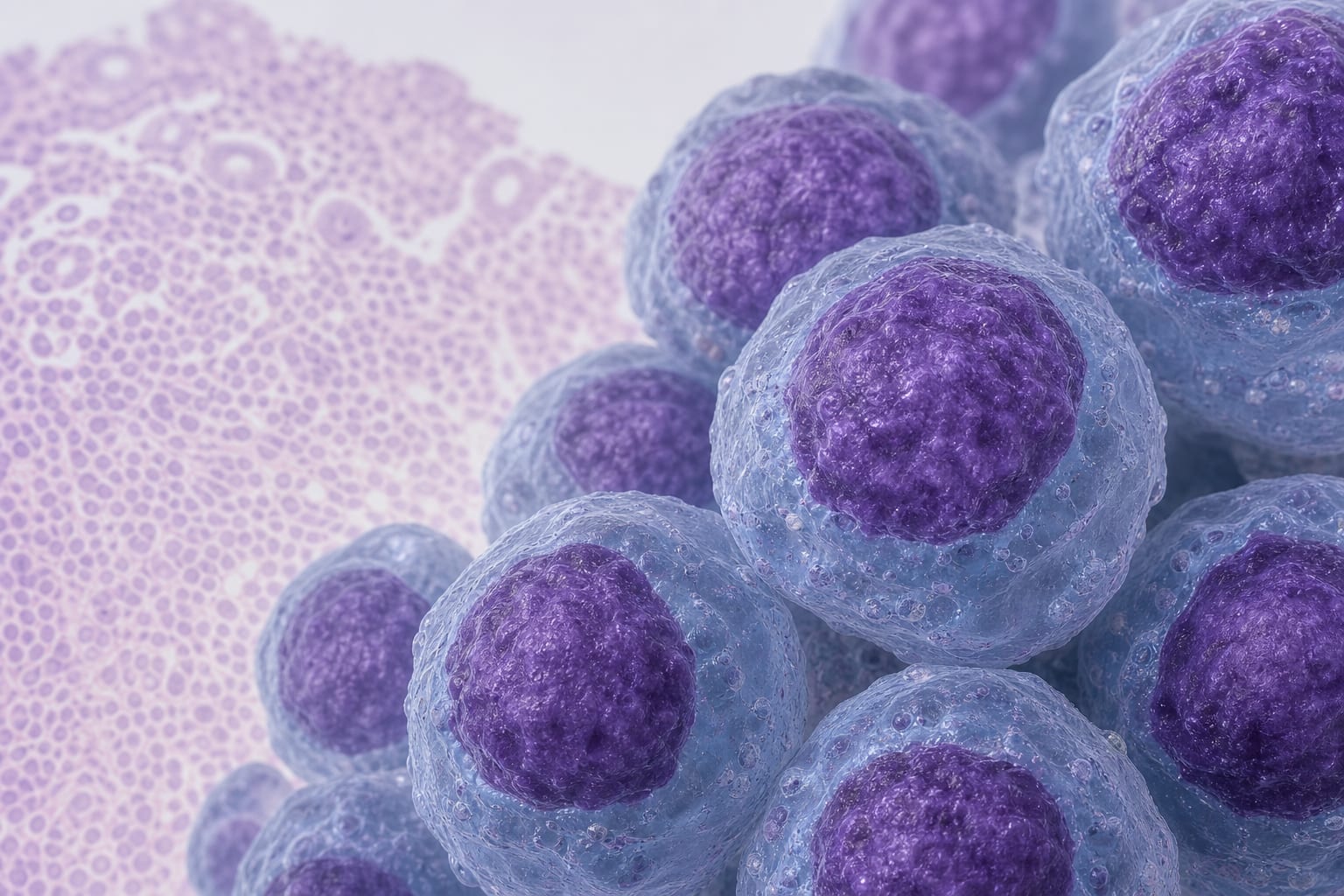
Plerixafor blocks CXCR4/CXCL12 pathway to mobilize CD34+ hematopoietic stem cells into peripheral blood
Target Population
Children aged 1 to <18 years with lymphoma or solid malignant tumors undergoing autologous stem cell transplant
Care Setting
Pediatric oncology and hematology transplant centers
Key Highlights
Plerixafor combined with G-CSF improves mobilization success rates in pediatric patients compared to G-CSF alone.
A strong linear correlation (r=0.84) exists between peripheral blood CD34+ counts prior to apheresis and CD34+ cells collected.
Predictive modeling can optimize timing and use of plerixafor to enhance stem cell collection efficiency in children.
Guideline-Based Recommendations
Diagnosis
Assess peripheral blood CD34+ cell counts prior to apheresis to predict stem cell harvest yield.
Management
Use plerixafor in combination with G-CSF for pediatric patients who are poor mobilizers or predicted to have insufficient stem cell yield.
Administer plerixafor approximately 10 hours before apheresis to achieve peak mobilization.
Monitoring & Follow-up
Monitor peripheral blood CD34+ counts on the day of apheresis to guide mobilization success and need for further intervention.
Risks
Consider potential mobilization failure with G-CSF alone (8–27% failure rate) and use plerixafor to reduce this risk.
Patient & Prescribing Data
Pediatric patients aged 1 to <18 years with lymphoma or solid tumors eligible for autologous transplant
In the MOZAIC trial, 80% of patients receiving plerixafor plus G-CSF met the primary endpoint of doubling peripheral blood CD34+ counts versus 28.6% with G-CSF alone.
Clinical Best Practices
Incorporate predictive models based on peripheral blood CD34+ counts to optimize timing and dosing of plerixafor.
Limit apheresis to a single day in most pediatric patients to reduce resource utilization while ensuring adequate stem cell collection.
Use plerixafor preemptively in patients with predicted insufficient mobilization to improve collection outcomes.