Novel insights into triple-negative breast cancer heterogeneity, prognosis, and treatment response based on matrix stiffness: a combined single-Cell and transcriptome analysis - Scorecard - MDSpire

Novel insights into triple-negative breast cancer heterogeneity, prognosis, and treatment response based on matrix stiffness: a combined single-Cell and transcriptome analysis

  • By

  • Wenjie Shi

  • Haofeng Wang

  • Yingxin Guan

  • Yingzi Zhou

  • Jing Cui

  • Xiaojie Wang

  • Jinling Yu

  • May 7, 2026

  • 0 min

Share

Clinical Scorecard: New Perspectives on the Heterogeneity, Prognosis, and Treatment Response of Triple-Negative Breast Cancer Influenced by Matrix Stiffness: An Integrated Single-Cell and Transcriptomic Analysis
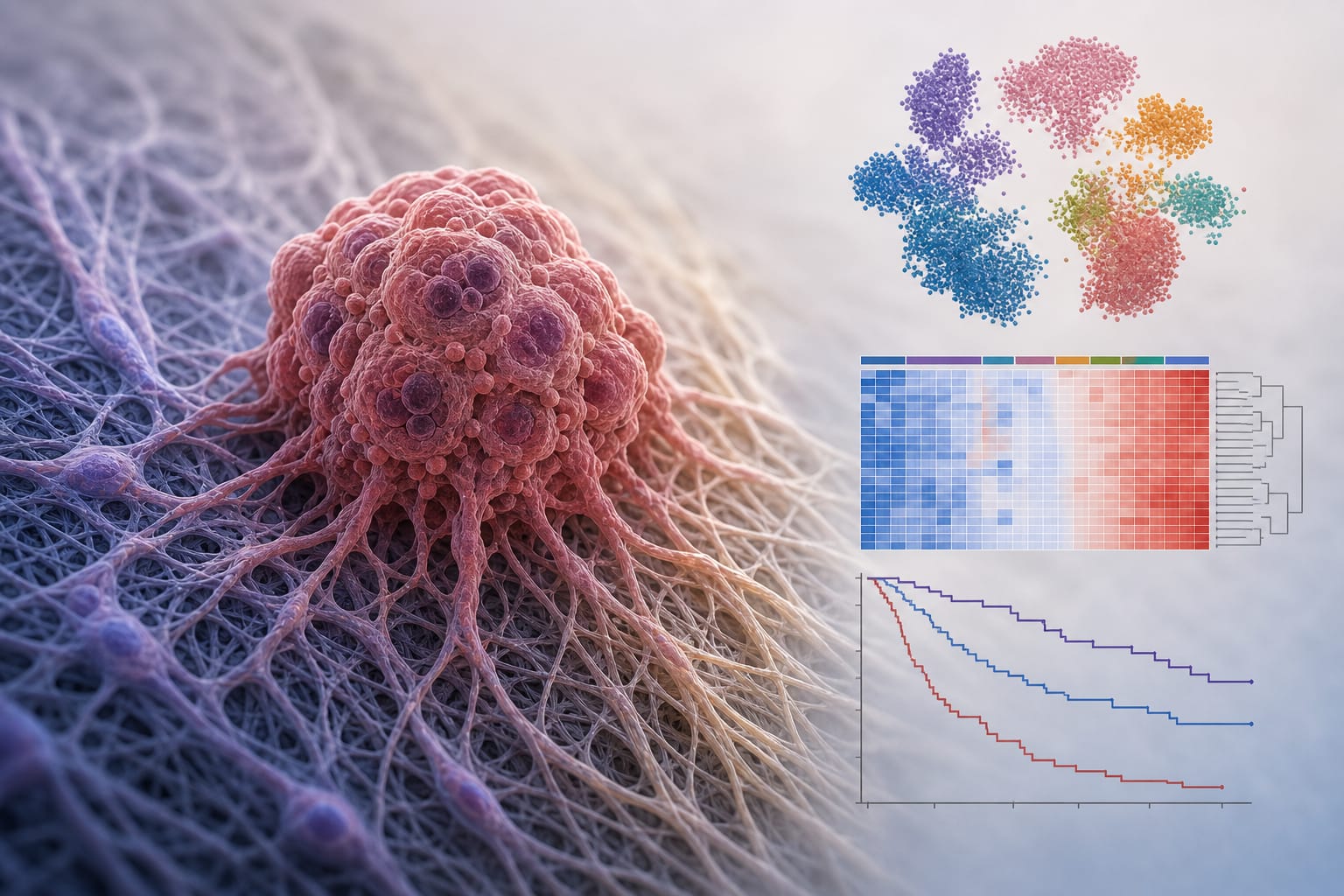
At a Glance

CategoryDetail
ConditionTriple-Negative Breast Cancer (TNBC)
Key MechanismsMatrix stiffness (MS) influences tumor progression, immune microenvironment, and treatment response.
Target PopulationPatients diagnosed with triple-negative breast cancer.
Care SettingOncology clinics and research settings.

Key Highlights

  • High matrix stiffness is associated with poor prognosis and treatment resistance in TNBC.
  • An MS-based prognostic model effectively predicts survival risk across multiple cohorts.
  • The study integrates single-cell RNA-sequencing data to elucidate tumor microenvironment characteristics.

Guideline-Based Recommendations

Diagnosis

  • Utilize MS-related gene expression profiles for prognostic assessment.

Management

  • Consider matrix stiffness as a factor in treatment planning for TNBC patients.

Monitoring & Follow-up

  • Regularly assess MS scores to evaluate treatment response and disease progression.

Risks

  • Patients with high MS scores may exhibit increased resistance to immunotherapy and chemotherapy.

Patient & Prescribing Data

Patients with triple-negative breast cancer, particularly those with high matrix stiffness.

High MS scores correlate with reduced sensitivity to standard chemotherapy and immunotherapy.

Clinical Best Practices

  • Incorporate MS assessment in routine clinical evaluations for TNBC.
  • Utilize prognostic models to guide treatment decisions and patient counseling.

Related Resources & Content

Original Source(s)

Related Content