Patterns of temporary mechanical circulatory support, escalation, de-escalation and outcomes in cardiogenic shock
-
By
-
Ibrahim Mortada
-
Lovkesh Arora
-
Maria Aguilar Pescozo
-
Paulino Alvarez
-
Angelos Soranidis
-
Alexandros Briasoulis
-
Ernesto Ruiz Duque
-
July 8, 2026
-
Clinical Scorecard: Trends in Temporary Mechanical Circulatory Support, Adjustments in Treatment, and Patient Outcomes in Cardiogenic Shock
At a Glance
| Category | Detail |
|---|
| Condition | Cardiogenic Shock |
| Key Mechanisms | Mechanical circulatory support improves end organ perfusion and survival. |
| Target Population | Patients over the age of 18 with cardiogenic shock due to acute myocardial infarction or acute decompensated heart failure. |
| Care Setting | Tertiary referral cardiogenic shock center |
Key Highlights
- 48.18% survival rate among patients receiving mechanical circulatory support.
- Elevated cardiac power at 72 hours post intervention is an independent predictor of survival.
- Average Impella power level was lower in the survival group despite similar flow rates.
Guideline-Based Recommendations
Diagnosis
- Cardiogenic shock occurs in 6%-10% of patients with acute myocardial infarction.
Management
- Mechanical circulatory support is key for improving hemodynamics and survival.
Monitoring & Follow-up
- Continuous assessment of hemodynamic parameters is essential during treatment.
Risks
- Mortality risk within 30 days can reach 40%-50% in patients with cardiogenic shock.
Patient & Prescribing Data
Patients with cardiogenic shock requiring mechanical circulatory support.
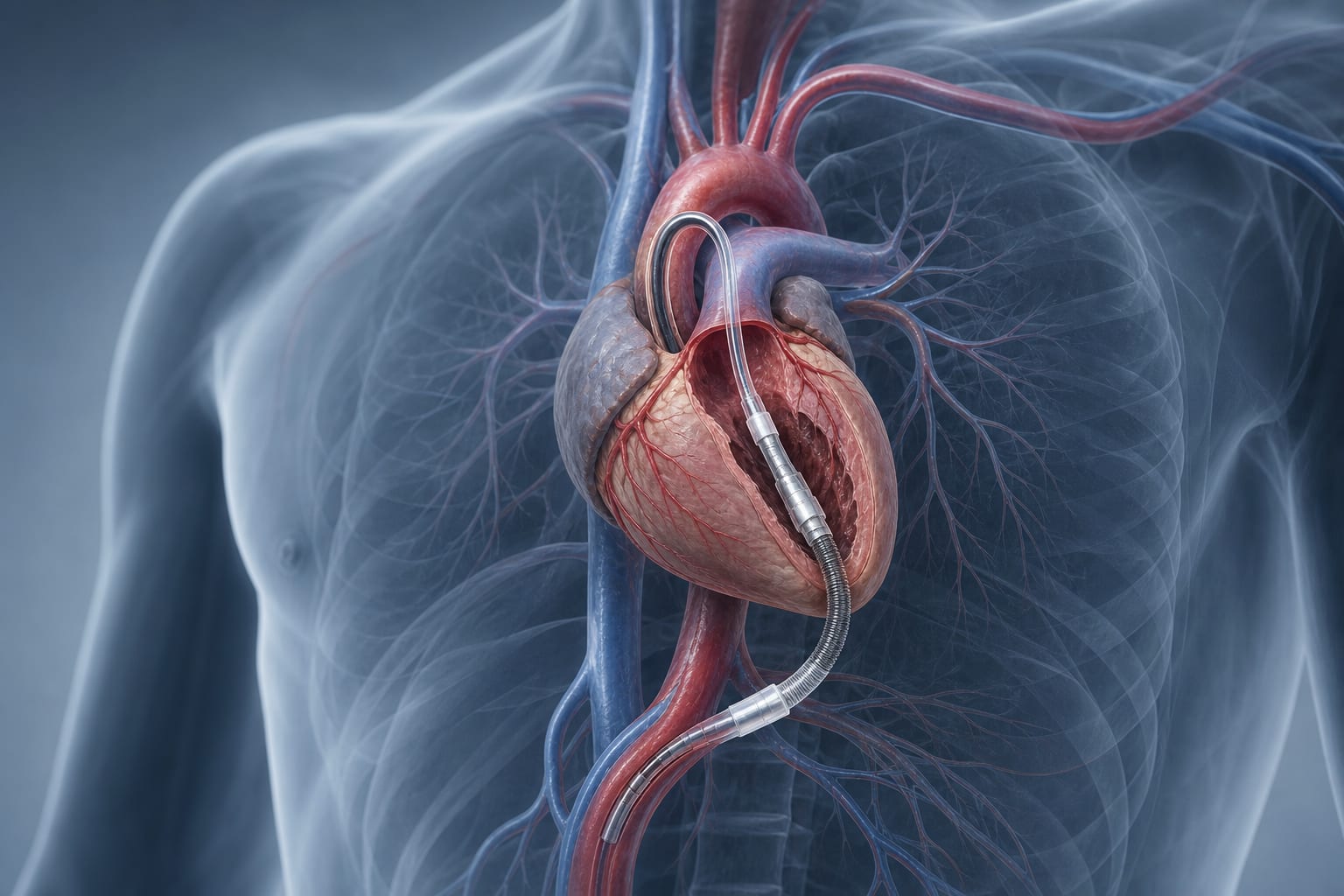
Impella devices are commonly used for left ventricular unloading and improving organ perfusion.
Clinical Best Practices
- Utilize a tailored approach for mechanical circulatory support based on clinical status and hemodynamics.
- Monitor cardiac power output as a key indicator of patient prognosis.
Related Resources & Content