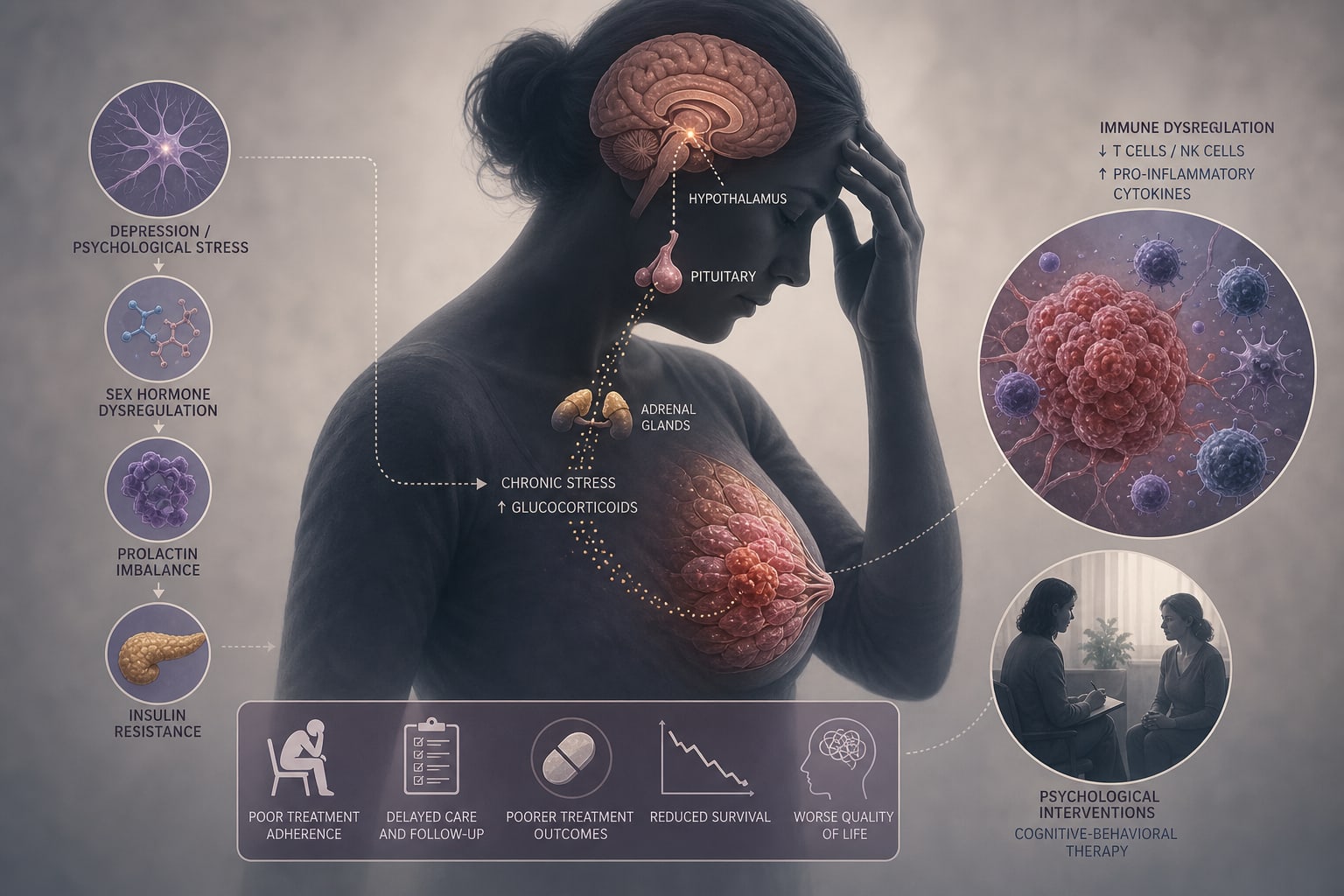
Clinical Scorecard: Interdisciplinary Insights into the Relationship Between Depression and Breast Cancer: Advances and Future Directions
At a Glance
Category
Detail
Condition
Key Mechanisms
Overactivation of the HPA axis, elevated glucocorticoids, dysregulation of sex hormone axis, immune cell suppression, pro-inflammatory cytokines, neuroimmune dysregulation.
Target Population
Care Setting
Key Highlights
High prevalence of depression (up to 32.2%) among breast cancer patients.
Interdisciplinary approaches are necessary for effective management of comorbidity.
Guideline-Based Recommendations
Diagnosis
Assess for depression in breast cancer patients due to high comorbidity rates.
Management
Utilize interdisciplinary approaches combining psychological and biomedical interventions.
Monitoring & Follow-up
Regularly evaluate mental health status in breast cancer patients.
Risks
Neglecting psychosocial factors may adversely affect treatment adherence and recovery.
Patient & Prescribing Data
Breast cancer patients experiencing depressive symptoms.
Attention to drug interactions between antidepressants and breast cancer medications is crucial.
Clinical Best Practices
Integrate psychological support with cancer treatment.
Implement cognitive-behavioral therapy and mindfulness-based interventions.
The research findings of experts from Roswell Park Comprehensive Cancer Center will be featured during the American Society of Clinical Oncology (ASCO) annual meeting May 29 to June 2 at McCormick Place in Chicago