Machine Learning–Based Prognostic Models for Functional Outcomes in Spinal Cord Injury: Systematic Review
-
By
-
Yuan Liu
-
Xiangxia Meng
-
Yi Ding
-
Ruifa Yao
-
Shuchang Xu
-
June 23, 2026
-
Clinical Scorecard: Prognostic Models Utilizing Machine Learning for Assessing Functional Outcomes in Spinal Cord Injury: A Systematic Review
At a Glance
| Category | Detail |
|---|
| Condition | Spinal Cord Injury |
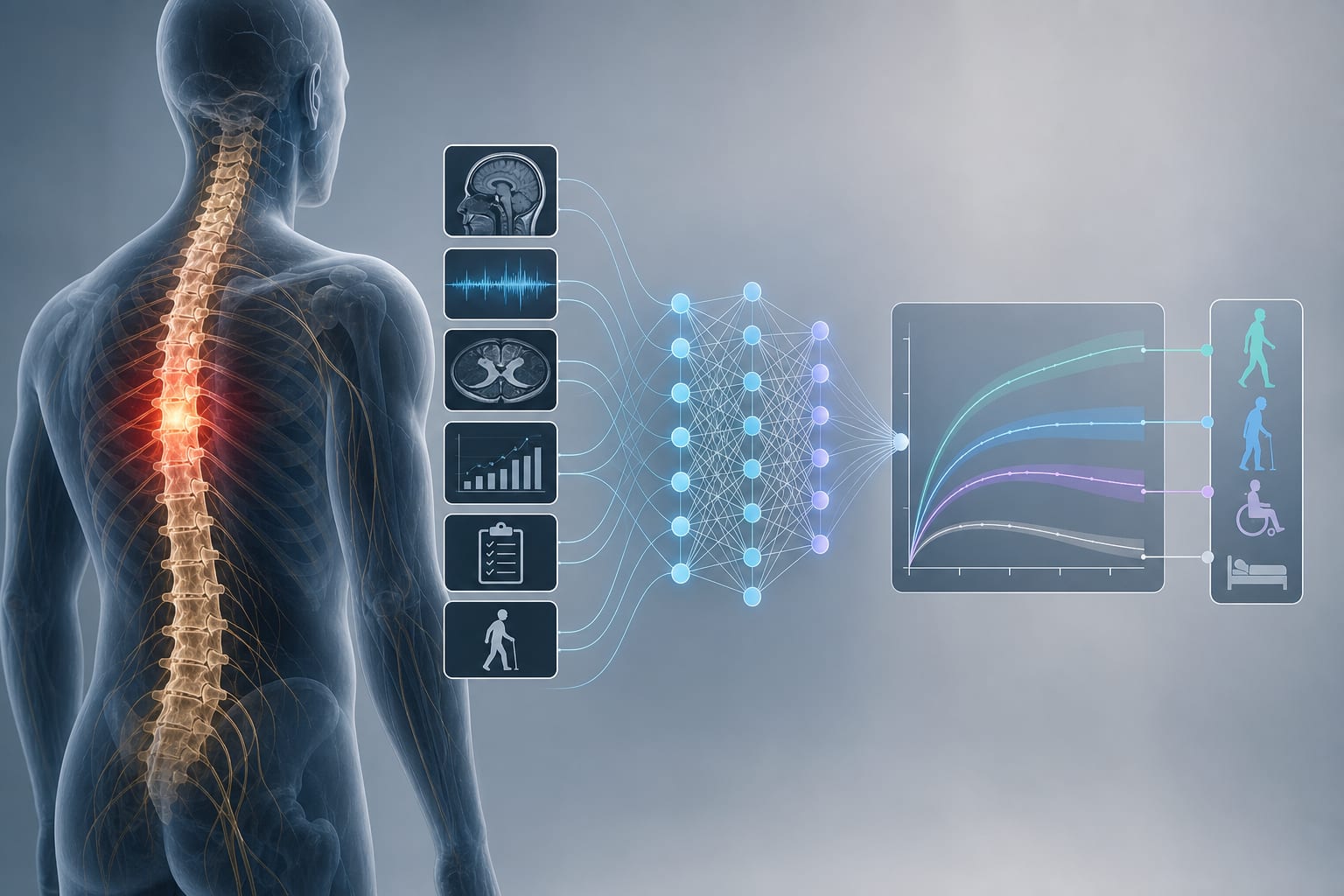
| Key Mechanisms | Machine learning models predicting functional outcomes based on clinical data patterns. |
| Target Population | Individuals diagnosed with spinal cord injury aged 18 years or older. |
| Care Setting | Clinical settings involving rehabilitation and management of spinal cord injury. |
Key Highlights
- Machine learning models developed to predict neurological recovery and functional independence in SCI.
- Variability in outcome measures and modeling approaches complicates comparison across studies.
- Need for standardized evaluation methods to enhance model applicability and reliability.
Guideline-Based Recommendations
Diagnosis
- Utilize machine learning for improved diagnostic accuracy in spinal cord injury.
Management
- Implement individualized prognosis based on machine learning predictions.
Monitoring & Follow-up
- Regularly assess model performance and update based on new data.
Risks
- Address variability in patient characteristics and treatment approaches to improve model reliability.
Patient & Prescribing Data
Adults with spinal cord injury, regardless of treatment methods.
Incorporate machine learning models in rehabilitation planning and patient communication.
Clinical Best Practices
- Adhere to TRIPOD and PROBAST guidelines for developing and validating prognostic models.
- Ensure comprehensive reporting of model characteristics and validation strategies.
Related Resources & Content