Sex-specific echocardiographic remodeling and prognostic value of left ventricular sphericity, pressure–dimension index, and myocardial work after durable LVAD implantation - Scorecard - MDSpire
Advertisement
Sex-specific echocardiographic remodeling and prognostic value of left ventricular sphericity, pressure–dimension index, and myocardial work after durable LVAD implantation
Clinical Scorecard: Gender-based differences in echocardiographic remodeling and the prognostic significance of left ventricular sphericity, pressure–dimension index, and myocardial work following durable LVAD implantation
At a Glance
Category
Detail
Condition
Left Ventricular Assist Device (LVAD) Implantation
Key Mechanisms
Left ventricular sphericity index (LVSI) and pressure-dimension index (PDI) as metrics of ventricular geometry and myocardial work.
Target Population
Adults undergoing durable LVAD implantation, specifically comparing outcomes between men and women.
Care Setting
Cardiology and heart failure management
Key Highlights
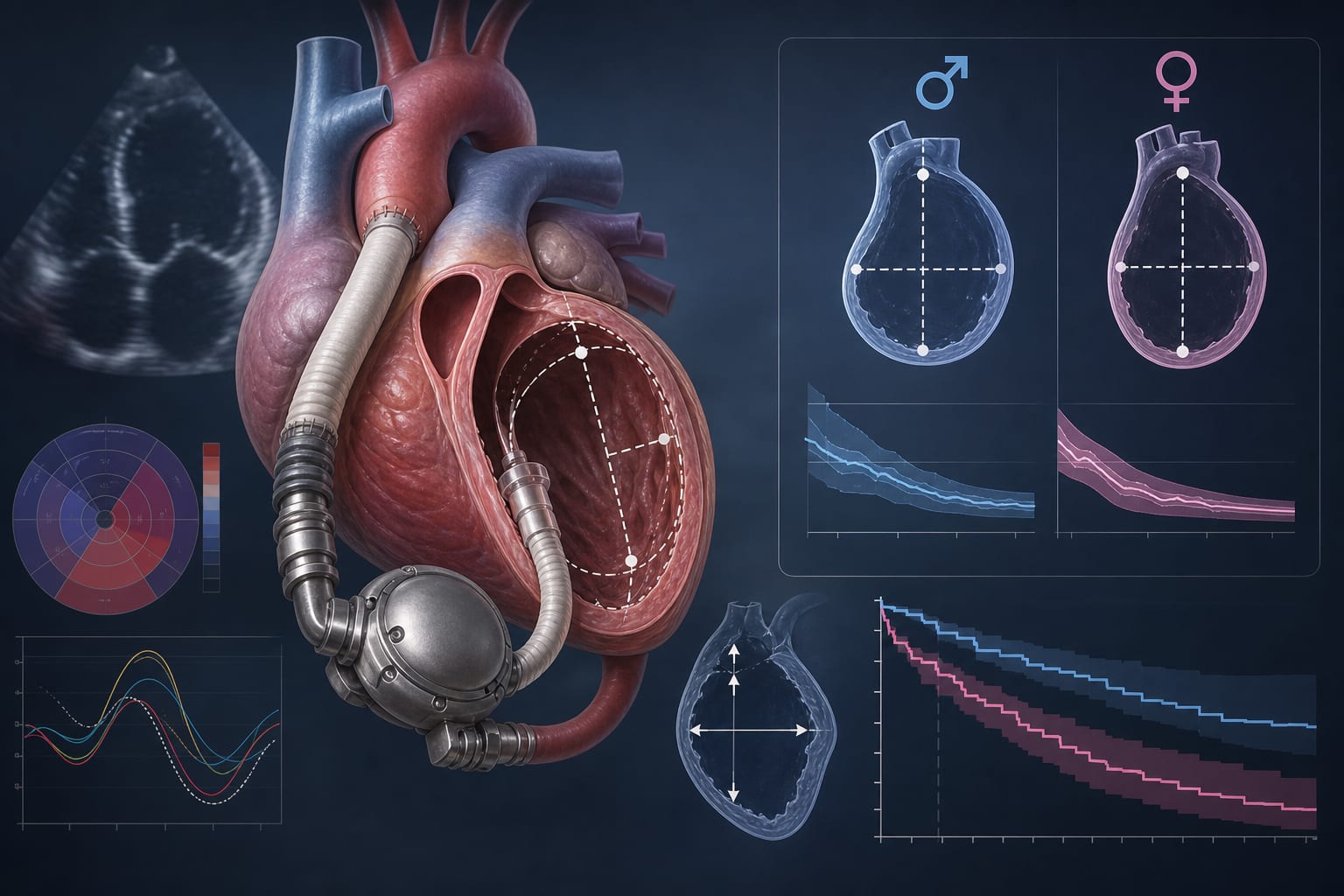
Men showed adverse sphericalization and decline in PDI post-implantation.
Women maintained stable LV geometry and higher absolute PDI at 6 months.
Preoperative LVSI and global work index (GWI) were independent predictors of mortality and postoperative right heart failure.
Guideline-Based Recommendations
Diagnosis
Echocardiography is essential for perioperative assessment in LVAD candidates.
Management
Utilize LVSI and PDI for risk stratification in LVAD patients.
Monitoring & Follow-up
Monitor changes in LV geometry and myocardial work post-LVAD implantation.
Risks
Postoperative right heart failure is a significant complication after LVAD implantation.
Patient & Prescribing Data
End-stage heart failure patients with severely reduced ejection fraction.
Durable LVADs improve survival and reduce complications compared to earlier generations.
Clinical Best Practices
Incorporate sex-specific analyses in LVAD patient management.
Use multimodality imaging for optimized patient assessment.