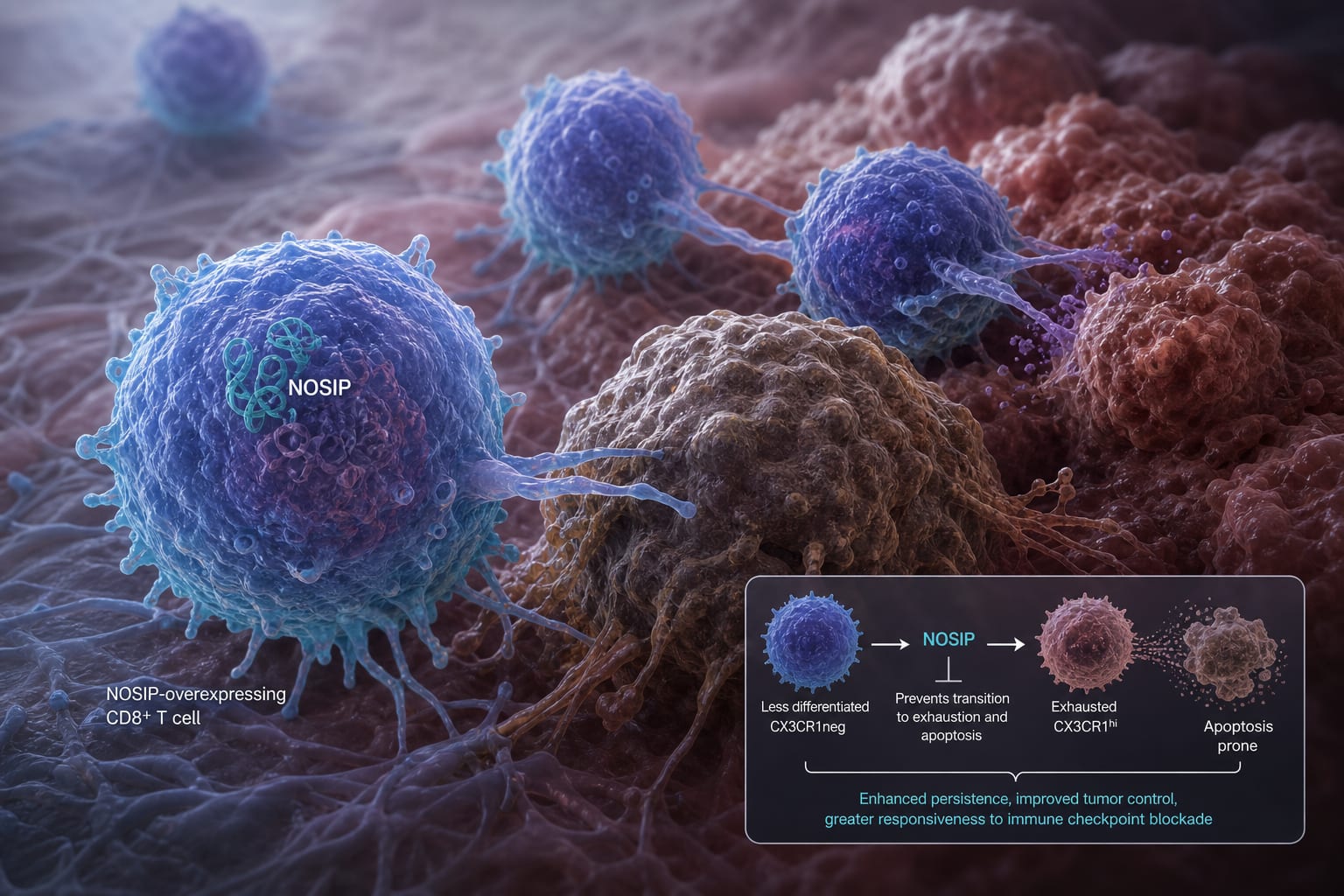
NOSIP overexpression promotes long-term persistence of CD8+ T cells during chronic infection
-
By
-
Shihui Li
-
Toshikatsu Tamai
-
Yui Shinzawa
-
Sotaro Fujisawa
-
Yamato Tanabe
-
Makoto Utsunomiya
-
Hidetoshi Nakagawa
-
Junko Kurachi
-
Miki Koura
-
Eishiro Mizukoshi
-
Makoto Kurachi
-
June 22, 2026
-
Clinical Scorecard: Enhanced Persistence of CD8+ T Cells in Chronic Infection through NOSIP Overexpression
At a Glance
| Category | Detail |
|---|
| Condition | Chronic antigen exposure and CD8+ T cell exhaustion |
| Key Mechanisms | NOSIP overexpression enhances persistence and reduces apoptosis of CD8+ T cells |
| Target Population | Patients with chronic viral infections and tumors |
| Care Setting | Immunotherapy and chronic infection management |
Key Highlights
- NOSIP overexpression preserves less differentiated CD8+ T cell subsets
- Inhibition of apoptosis leads to improved long-term persistence
- Enhanced tumor control observed in NOSIP-overexpressing CD8+ T cells
- Increased responsiveness to PD-L1 blockade with NOSIP overexpression
- Potential therapeutic target for improving CD8+ T cell function
Guideline-Based Recommendations
Diagnosis
- Assess CD8+ T cell exhaustion in chronic infections and tumors
Management
- Consider NOSIP modulation strategies in immunotherapy
Monitoring & Follow-up
- Track CD8+ T cell differentiation and persistence in patients
Risks
- Monitor for potential adverse effects of NOSIP-targeted therapies
Patient & Prescribing Data
Patients with chronic infections and tumors requiring immunotherapy
NOSIP may enhance the efficacy of existing immunotherapies
Clinical Best Practices
- Utilize combination therapies to enhance CD8+ T cell responses
- Monitor immune checkpoint expression in CD8+ T cells
- Evaluate the role of NOSIP in T cell persistence during treatment
Related Resources & Content