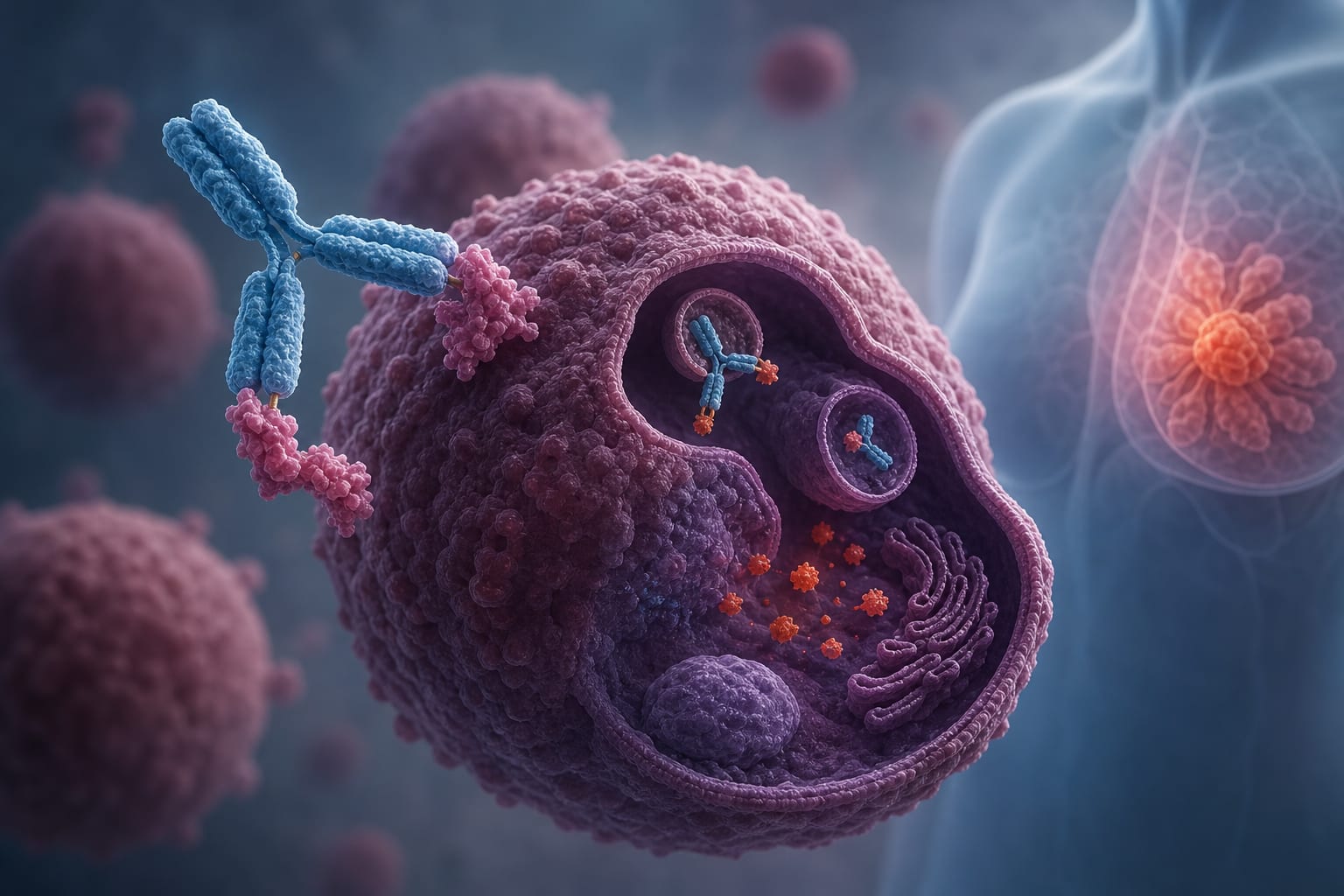
Management of toxicities from antibody – drug conjugates in breast cancer
-
By
-
Ajay Gogia
-
May 29, 2026
-
Clinical Scorecard: Addressing Adverse Effects of Antibody-Drug Conjugates in Breast Cancer Treatment
At a Glance
| Category | Detail |
|---|
| Condition | |
| Key Mechanisms | Combination of targeted antibody delivery with potent cytotoxic payloads. |
| Target Population | |
| Care Setting | |
Key Highlights
- ADCs have transformed breast cancer therapeutics by delivering chemotherapy directly to cancer cells.
- Management of treatment-related toxicities is critical for improving patient outcomes.
- Distinct toxicity signatures are associated with different ADCs based on payload, linker stability, and antigen expression.
- Proposed algorithms for managing organ-specific adverse events.
- Need for multidisciplinary coordination and early recognition of toxicities.
Guideline-Based Recommendations
Diagnosis
- Utilize clinical-trial and real-world data to assess toxicity profiles of ADCs.
Management
- Implement organ-system–based frameworks for anticipating and managing toxicities.
Monitoring & Follow-up
- Conduct precise toxicity surveillance as ADCs are introduced earlier in treatment.
Risks
- Recognize complex toxicity patterns that differ from conventional chemotherapy.
Patient & Prescribing Data
Patients receiving trastuzumab deruxtecan, sacituzumab govitecan, and datopotamab deruxtecan.
Real-world implementation reveals multifaceted toxicities requiring tailored management strategies.
Clinical Best Practices
- Early recognition of adverse events to enhance treatment safety.
- System-specific mitigation strategies to improve adherence to therapy.
- Integration of evidence from clinical trials and real-world experiences in practice.
Related Resources & Content