Penetrating keratoplasty combined with intrascleral fixation of a four-haptic intraocular lens in aphakic eyes with corneal pathology - Scorecard - MDSpire
Advertisement
Penetrating keratoplasty combined with intrascleral fixation of a four-haptic intraocular lens in aphakic eyes with corneal pathology
Clinical Scorecard: Combined Penetrating Keratoplasty and Intrascleral Fixation of a Four-Haptic Intraocular Lens in Aphakic Patients with Corneal Disorders
At a Glance
Category
Detail
Condition
Aphakia with corneal pathology
Key Mechanisms
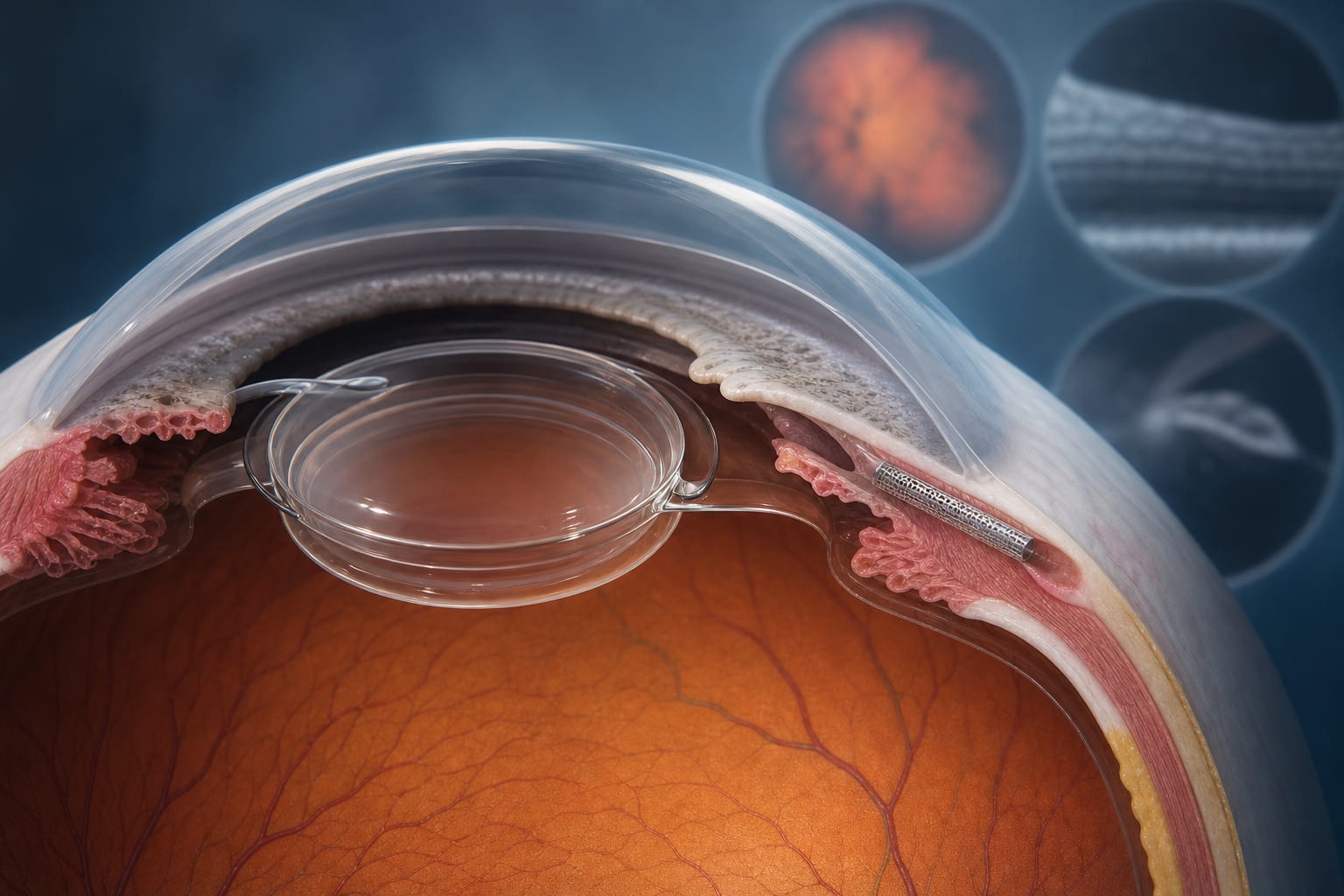
Combined penetrating keratoplasty (PKP) and intrascleral fixation of a four-haptic intraocular lens (IOL)
Target Population
Aphakic patients with corneal disorders and insufficient capsular support
Care Setting
Ophthalmology department
Key Highlights
Mean BCVA improved from 3.00 logMAR preoperatively to 1.04 logMAR at 6 months.
Four of five grafts remained clear at 6 months.
All IOLs remained centered and stable postoperatively.
No major intraoperative complications occurred.
Mean ECD at 6 months was 2,445 cells/mm2.
Guideline-Based Recommendations
Diagnosis
Assessment of corneal pathology and capsular support in aphakic eyes.
Management
Consider combined PKP and intrascleral fixation of a four-haptic IOL for selected patients.
Monitoring & Follow-up
Regular follow-up for BCVA, IOP, graft clarity, ECD, and IOL position.
Risks
Potential for complications related to surgery and graft failure.
Patient & Prescribing Data
Five consecutive aphakic patients with corneal disorders.
Topical corticosteroids, antibiotic eye drops, and tacrolimus eye drops were used postoperatively.
Clinical Best Practices
Perform thorough preoperative assessment of corneal and ocular health.
Ensure proper IOL centration during surgery.
Implement a tapering regimen for postoperative medications.