Case Report: Discordant diffuse large B-cell lymphoma and splenic peripheral T-cell lymphoma revealed by persistent splenomegaly and cytopenia - Scorecard - MDSpire
Advertisement
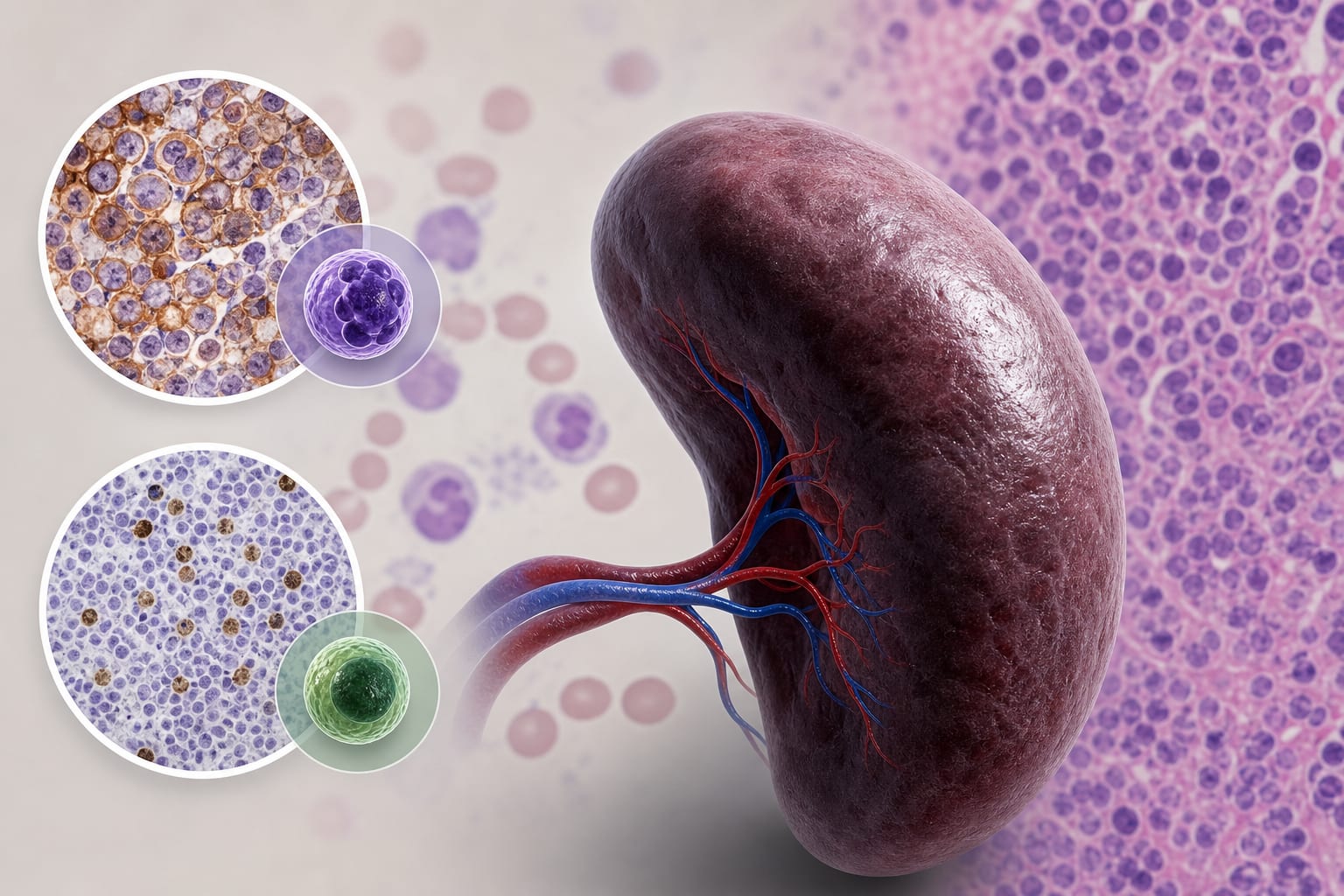
Case Study: Coexisting Diffuse Large B-Cell Lymphoma and Splenic Peripheral T-Cell Lymphoma Identified Through Ongoing Splenomegaly and Blood Cell Deficiencies
Clinical Scorecard: Case Study: Coexisting Diffuse Large B-Cell Lymphoma and Splenic Peripheral T-Cell Lymphoma Identified Through Ongoing Splenomegaly and Blood Cell Deficiencies
At a Glance
Category
Detail
Condition
Coexisting Diffuse Large B-Cell Lymphoma and Splenic Peripheral T-Cell Lymphoma
Key Mechanisms
Discordant lymphomas involving mature B-cell and T-cell neoplasms.
Target Population
Patients with lymphoma presenting with atypical clinical manifestations.
Care Setting
Oncology and hematology clinics.
Key Highlights
Uncommon coexisting lymphomas can be missed due to atypical presentations.
Persistent splenomegaly and cytopenia may indicate a second lymphoma component.
Integrated pathological reassessment is crucial in cases of discordant lymphoma.
Guideline-Based Recommendations
Diagnosis
Repeat tissue sampling and integrated pathological reassessment for persistent symptoms.
Management
Consideration of dose-reduced chemotherapy regimens and splenectomy for suspected hypersplenism.
Monitoring & Follow-up
Close monitoring for signs of relapse and progression in lymphoma patients.
Risks
Risk of misdiagnosis due to overlapping symptoms of different lymphoma types.
Patient & Prescribing Data
71-year-old male with aggressive lymphoma and splenomegaly.
Received R-CHOPE chemotherapy, followed by splenectomy and additional therapies.
Clinical Best Practices
Maintain a high index of suspicion for discordant lymphomas in atypical presentations.
Utilize comprehensive diagnostic tools including flow cytometry and immunohistochemistry.