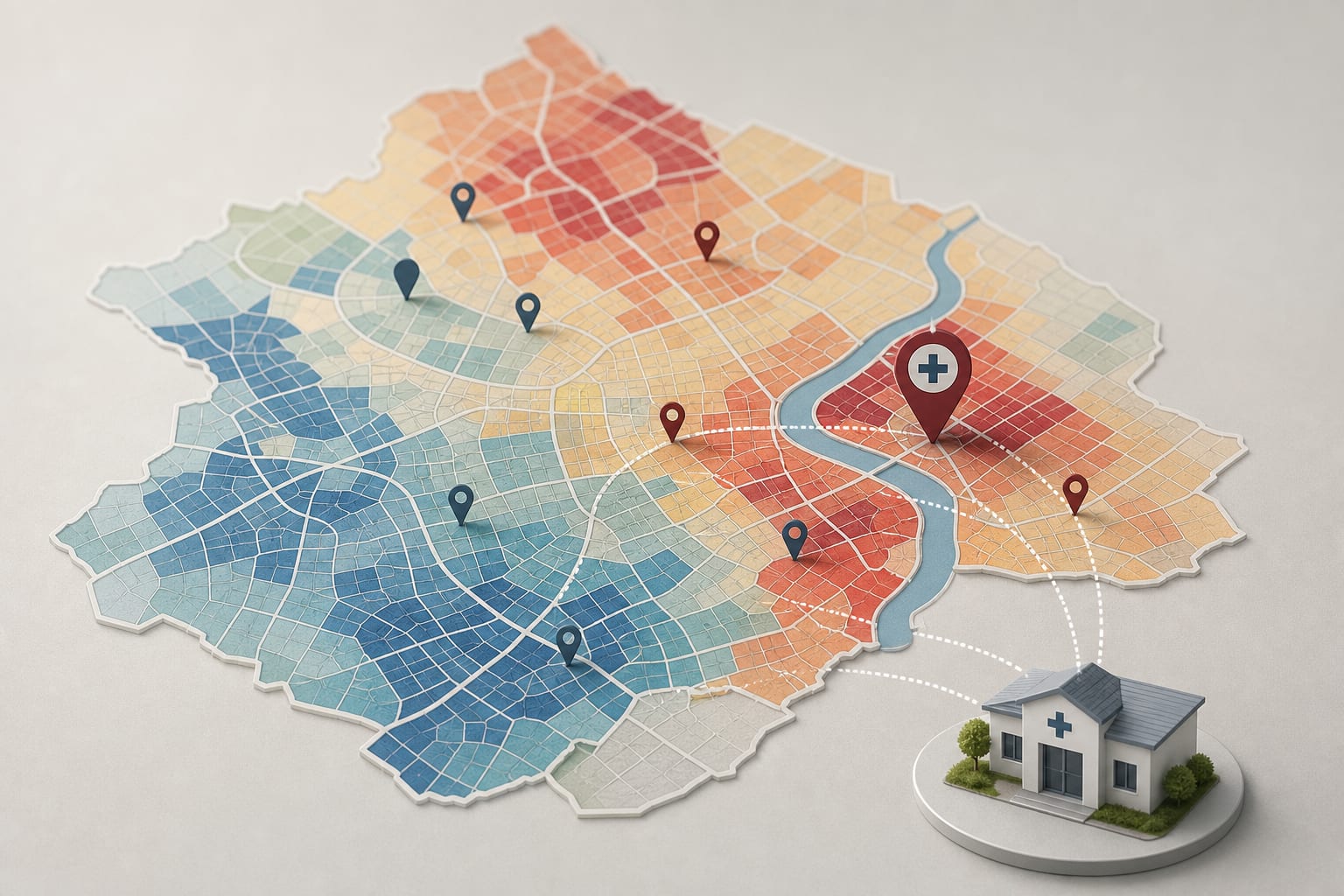
Validity of Area-Based Social Risk Indices Used at Higher-Level Geographies and Clinic Locations
-
By
-
Nathaniel Hendrix
-
Nicole Gladish
-
Neil S. Kamdar
-
David H. Rehkopf
-
June 30, 2026
-
Clinical Scorecard: Assessing the Reliability of Social Risk Indices Based on Geographic Areas and Clinical Settings
At a Glance
| Category | Detail |
|---|
| Condition | Social Risk Indices |
| Key Mechanisms | Poor air quality, inadequate health care access, deficient transportation infrastructure |
| Target Population | Patients in primary care settings across the US |
| Care Setting | Primary care clinics |
Key Highlights
- Study assessed correlations of social risk indices at different geographic levels.
- Three social risk indices were evaluated: ReADI, SDI, and SVI.
- Data included 2,995,479 patients from 809 clinics.
- Indices calculated using American Community Survey data from 2016 to 2020.
- High correlation observed between indices at block group and Census tract levels.
Guideline-Based Recommendations
Diagnosis
- Use area-based social risk indices to assess health outcomes.
Management
- Consider geographic social risk factors in patient care.
Monitoring & Follow-up
- Evaluate health outcomes in relation to social risk indices.
Risks
- Social risks can negatively impact health outcomes.
Patient & Prescribing Data
Diverse cohort including various demographics.
Social risk indices may inform treatment approaches.
Clinical Best Practices
- Incorporate social risk assessments in clinical evaluations.
- Utilize high-resolution geographic data for better risk stratification.
Related Resources & Content