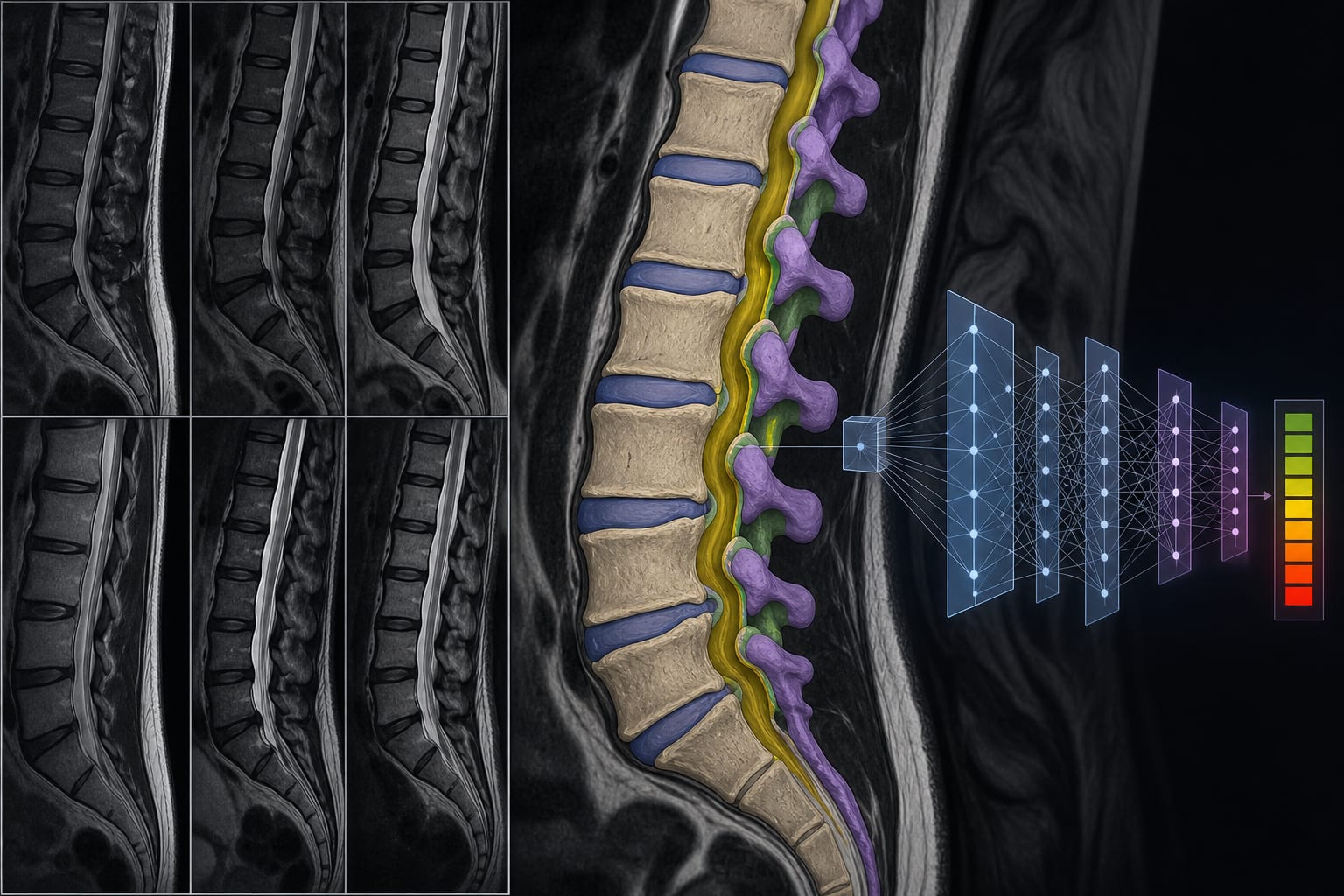
The role of lumbar core muscle morphology in residual chronic low back pain after PLIF: a retrospective analysis
-
By
-
Jiajia Xu
-
Ning Xiao
-
Guangwei Liu
-
Zhihuang Sun
-
Zhuo Wang
-
Xianyu Zhang
-
Jian Jiang
-
Guobao Wu
-
July 1, 2026
-
Clinical Scorecard: Investigating the Impact of Lumbar Core Muscle Structure on Persistent Chronic Low Back Pain Following PLIF: A Retrospective Study
At a Glance
| Category | Detail |
|---|
| Condition | Residual Chronic Low Back Pain (rCLBP) |
| Key Mechanisms | Correlation between lumbar core muscle morphology and rCLBP post-PLIF |
| Target Population | Patients aged 45-80 who underwent PLIF surgery |
| Care Setting | Retrospective analysis of surgical outcomes in a clinical setting |
Key Highlights
- Lower cross-sectional area (CSA) of psoas major and paraspinal muscles associated with rCLBP
- Lower mean density (HU) of quadratus lumborum linked to increased rCLBP risk
- Longer disease duration and larger Cobb angle correlated with rCLBP, though not statistically significant
- Muscle morphology may influence postoperative pain outcomes
- Postoperative muscle recovery remains unassessed
Guideline-Based Recommendations
Diagnosis
- Classify patients with pain ≥3 months post-PLIF and VAS ≥4 as rCLBP
Management
- Consider preoperative assessment of lumbar muscle morphology in surgical planning
Monitoring & Follow-up
- Evaluate postoperative pain and muscle recovery over time
Risks
- Patients with lower muscle CSA and density may have higher risk of rCLBP
Patient & Prescribing Data
Patients aged 45-80 with degenerative lumbar spine conditions undergoing PLIF
Analgesic therapies have not shown long-term benefits for rCLBP
Clinical Best Practices
- Incorporate muscle morphology assessment in preoperative evaluations
- Monitor muscle recovery and pain levels postoperatively
- Educate patients on the potential impact of muscle health on recovery
Related Resources & Content