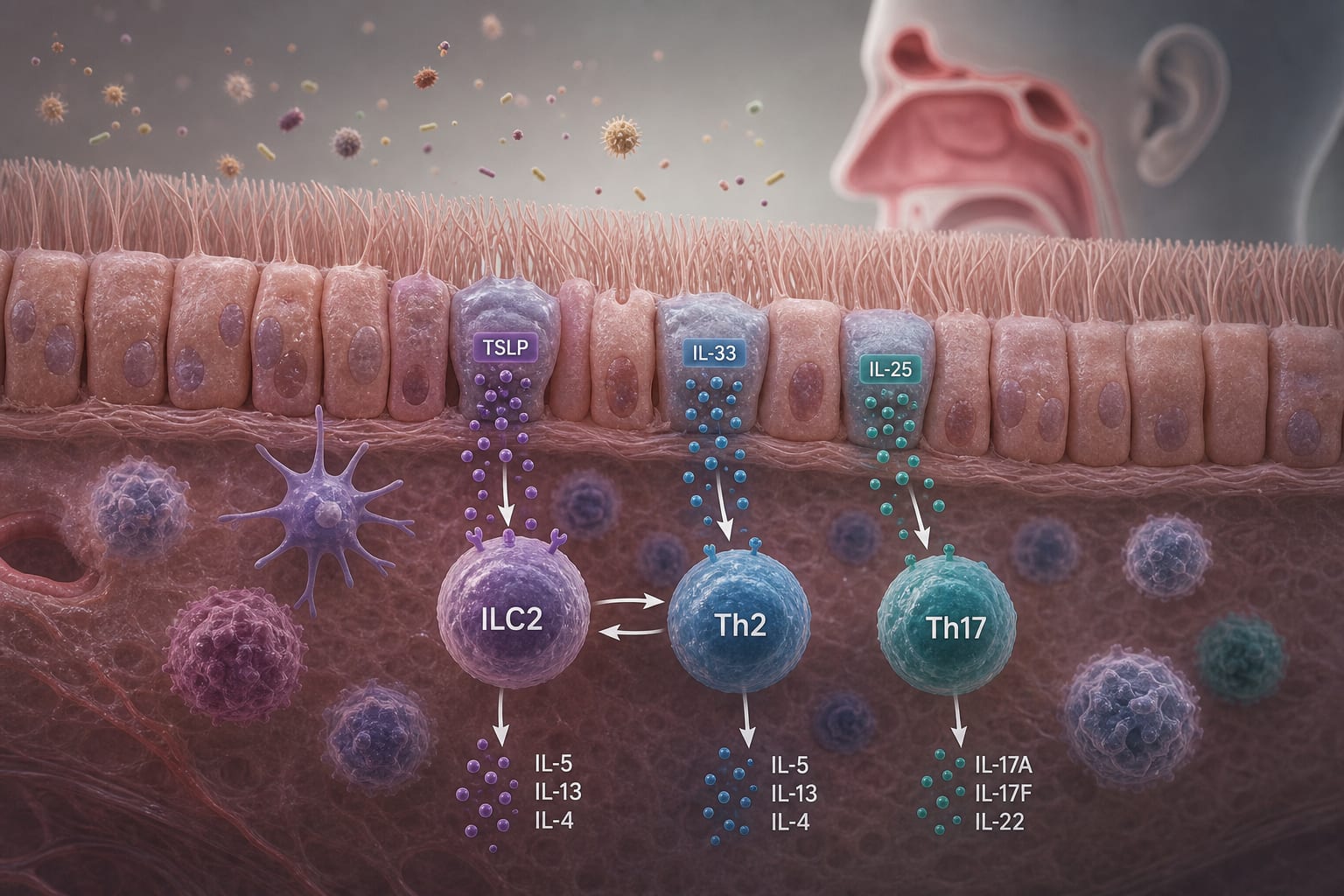
Immune-Inflammatory Endotypes in Chronic Rhinosinusitis: From Epithelial Alarmins to Tailored Treatment Approaches
By
Hanxiong Li
Longting Wang
Dingbo Li
July 17, 2026
Clinical Scorecard: Immune-Inflammatory Endotypes in Chronic Rhinosinusitis: From Epithelial Alarmins to Tailored Treatment Approaches
At a Glance
Category Detail
Condition Chronic Rhinosinusitis (CRS) Key Mechanisms Immune-inflammatory endotyping, T1, T2, and T3 immune responses, cytokine profiles Target Population Patients with chronic rhinosinusitis, including those with and without nasal polyps Care Setting Otolaryngology
Key Highlights
CRS is classified into CRSwNP and CRSsNP based on the presence of nasal polyps. Immunological endotyping provides a nuanced understanding of CRS pathophysiology. Eosinophilic CRS (ECRS) is linked to higher rates of nasal polyp recurrence and comorbid asthma. Targeted biologic therapies have shown efficacy in patients with T2 inflammation. Geographical and ethnic differences affect endotype prevalence and disease severity. Guideline-Based Recommendations
Diagnosis
Utilize immunological endotyping for accurate diagnosis and characterization of CRS. Management
Implement tailored therapeutic strategies based on identified immune-inflammatory endotypes. Monitoring & Follow-up
Monitor for disease recurrence and surgical outcomes in relation to endotype classification. Risks
Consider the impact of comorbid conditions such as asthma and AERD in CRS management. Patient & Prescribing Data
Patients with chronic rhinosinusitis exhibiting various immune responses.
Targeted therapies, including monoclonal antibodies against IL-4, IL-5, and IgE, are effective for T2 inflammation.
Clinical Best Practices
Integrate clinical features with molecular and cellular profiles for personalized treatment. Recognize the importance of population-specific factors in CRS management. Related Resources & Content