JAK inhibitors in rheumatoid arthritis-associated interstitial lung disease: a review of mechanisms and clinical evidence
-
By
-
Zhiying Wu
-
Li Jiang
-
Xu Zheng
-
Wanlin Zhou
-
Zuofeng Wang
-
Weilin Xie
-
July 1, 2026
-
Clinical Scorecard: Exploring the Role of JAK Inhibitors in Interstitial Lung Disease Linked to Rheumatoid Arthritis: Mechanisms and Clinical Insights
At a Glance
| Category | Detail |
|---|
| Condition | Rheumatoid arthritis-associated interstitial lung disease (RA-ILD) |
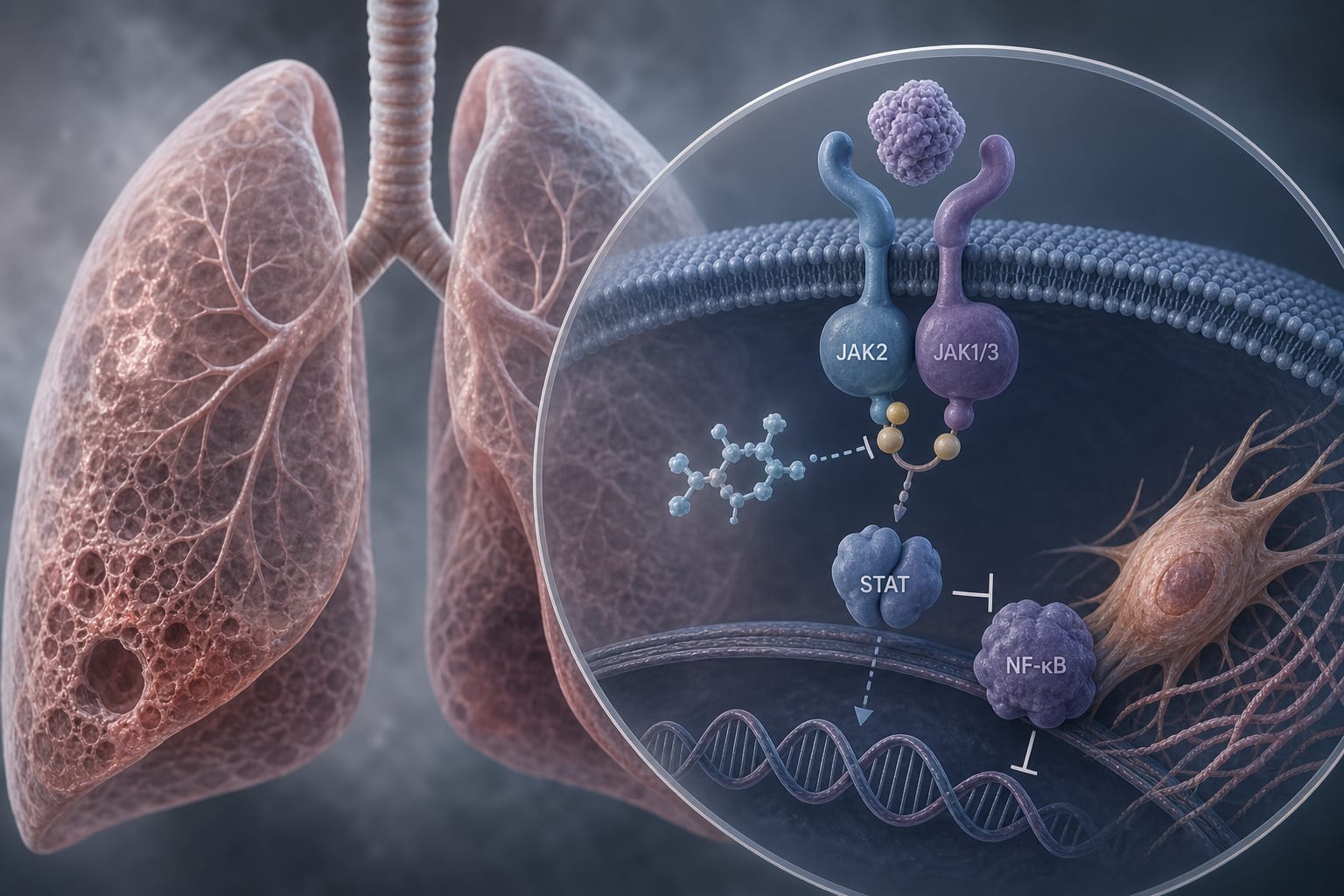
| Key Mechanisms | Inhibition of the IL-17A/JAK2/NF-κB axis and modulation of lung immunity. |
| Target Population | Patients with rheumatoid arthritis experiencing interstitial lung disease. |
| Care Setting | Rheumatology and pulmonary care. |
Key Highlights
- JAK inhibitors may stabilize or improve lung function and radiological findings in RA-ILD.
- No increased risk of incident ILD with JAK inhibitors compared to other treatments.
- Potential safety concerns include higher mortality risk in older patients or those with cardiovascular comorbidities.
- Effective management requires careful patient selection and risk-benefit assessment.
- Current evidence is primarily from observational studies and meta-analyses.
Guideline-Based Recommendations
Diagnosis
- Consider RA-ILD in patients with rheumatoid arthritis presenting respiratory symptoms.
Management
- Utilize JAK inhibitors as a treatment option for RA-ILD, considering individual patient factors.
Monitoring & Follow-up
- Regularly assess lung function and radiological findings in patients on JAK inhibitors.
Risks
- Monitor for potential increased mortality and severe outcomes, especially in older patients.
Patient & Prescribing Data
Patients with rheumatoid arthritis and interstitial lung disease.
JAK inhibitors show comparable efficacy to abatacept or rituximab in managing RA-ILD.
Clinical Best Practices
- Conduct thorough risk-benefit assessments before initiating JAK inhibitors.
- Incorporate multidisciplinary approaches involving rheumatology and pulmonary specialists.
Related Resources & Content