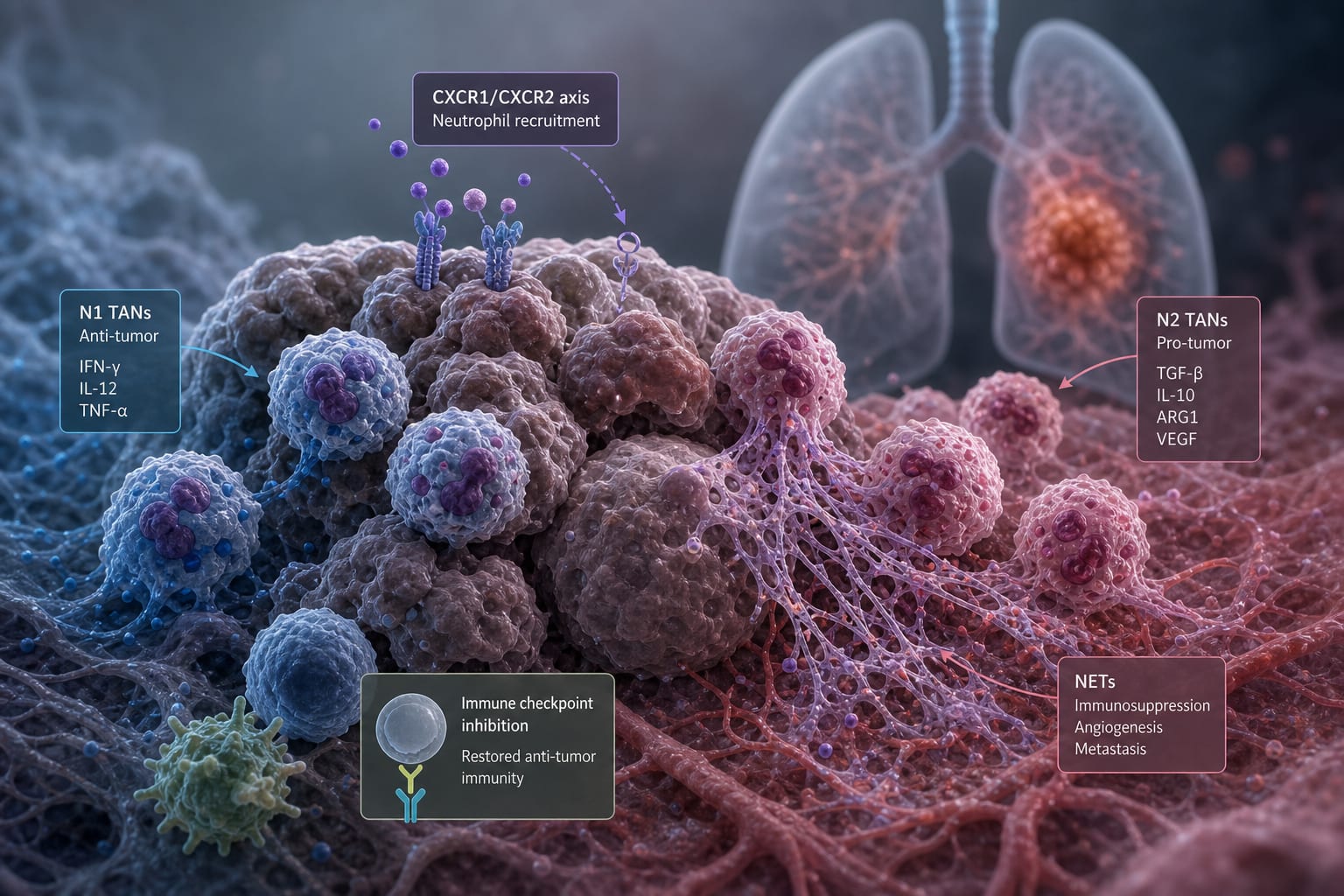
Neutrophils Associated with Tumors in Lung Adenocarcinoma: Exploring Mechanisms and Potential Therapeutic Approaches
-
By
-
Ruichen Zhang
-
July 20, 2026
Clinical Scorecard: Neutrophils Associated with Tumors in Lung Adenocarcinoma: Exploring Mechanisms and Potential Therapeutic Approaches
At a Glance
| Category | Detail |
|---|
| Condition | Lung Adenocarcinoma (LUAD) |
| Key Mechanisms | Tumor-associated neutrophils (TANs) exhibit dual functions influenced by the TGF-β and IFN-γ pathways, with recruitment via the CXCR1/CXCR2 axis. |
| Target Population | Patients with lung adenocarcinoma, particularly those experiencing immunotherapy resistance. |
| Care Setting | Oncology and immunotherapy clinics. |
Key Highlights
- TANs can polarize into anti-tumorigenic N1 or pro-tumorigenic N2 phenotypes.
- Neutrophil extracellular traps (NETs) play a role in tumor promotion and suppression.
- Current therapeutic strategies target TANs with various inhibitors and modulators.
- Primary and acquired resistance to immune checkpoint inhibitors remains a challenge.
- The regulatory network of TANs in LUAD is complex and requires further elucidation.
Guideline-Based Recommendations
Diagnosis
- Consider the role of TANs in the tumor microenvironment when diagnosing LUAD.
Management
- Explore TAN-targeted therapies such as CXCR1/2 inhibitors and PAD4 inhibitors.
Monitoring & Follow-up
- Monitor for off-target toxicity and infection risk associated with TAN-targeted therapies.
Risks
- Lack of predictive biomarkers for TAN-targeted therapies poses a risk in treatment planning.
Patient & Prescribing Data
Patients diagnosed with lung adenocarcinoma, particularly those with advanced disease.
Therapies targeting TANs may improve outcomes in patients with immunotherapy resistance.
Clinical Best Practices
- Integrate multi-dimensional frameworks that connect mechanistic insights with clinical applications.
- Utilize single-cell analyses to understand TAN heterogeneity in LUAD.
- Focus on combination therapies that target both TANs and other immune components.
Related Resources & Content