Editorial: The Role of Neuroglia in Immune Responses
-
By
-
Friederike Pfeiffer
-
Alexei Verkhratsky
-
Olga Garaschuk
-
June 16, 2026
Clinical Scorecard: Editorial: The Role of Neuroglia in Immune Responses
At a Glance
| Category | Detail |
|---|
| Condition | |
| Key Mechanisms | Regulation of immune processes by neuroglial cells including microglia, astrocytes, oligodendrocytes, ependymal cells, and their interactions. |
| Target Population | |
| Care Setting | |
Key Highlights
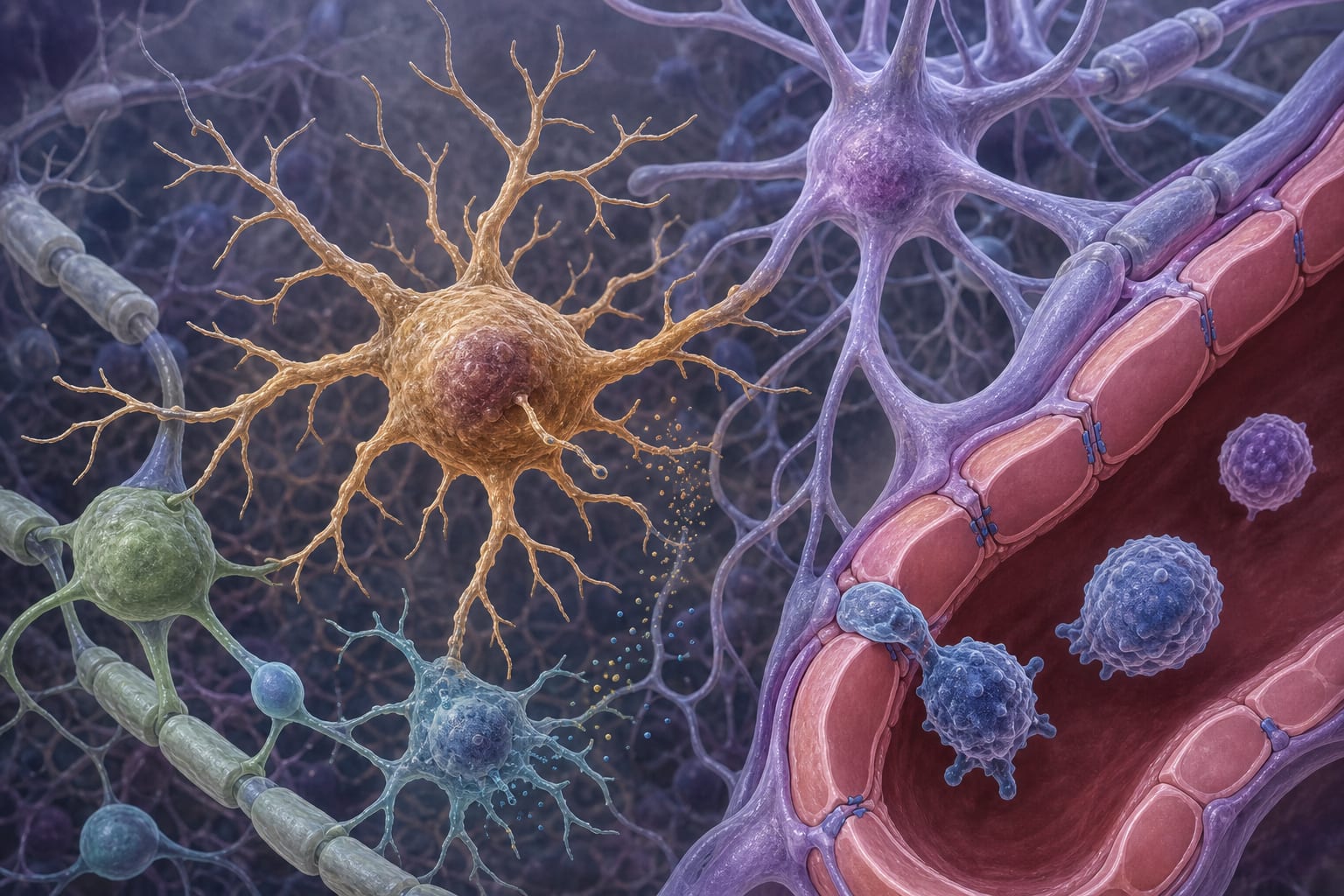
- Neuroglia play crucial roles in immune surveillance and response within the CNS.
- Microglia act as resident macrophage-like cells, responding to injury and infection.
- Astrocytes contribute to blood-brain barrier maintenance and modulate immune responses.
- Oligodendrocyte precursor cells (OPCs) have complex immune functions beyond myelination.
- Ependymal cells play a role in regulating CNS immunity and CSF communication.
- Dysregulation of neuroglial functions can lead to neuroinflammatory disorders.
Guideline-Based Recommendations
Diagnosis
Management
Monitoring & Follow-up
- Assess the immune responses of neuroglial cells in patients with CNS diseases.
- Monitor ependymal cell function in relation to CNS disorders.
Risks
Patient & Prescribing Data
Senolytic therapies may have beneficial effects on clinical outcomes in older patients with neuroinflammatory conditions.
Clinical Best Practices
- Investigate the interactions between different neuroglial cell types.
- Utilize animal models to study the immune functions of neuroglia.
- Consider age-related factors in the treatment of neuroinflammatory diseases.
- Assess the role of ependymal cells in neuroinflammatory conditions.
Related Resources & Content