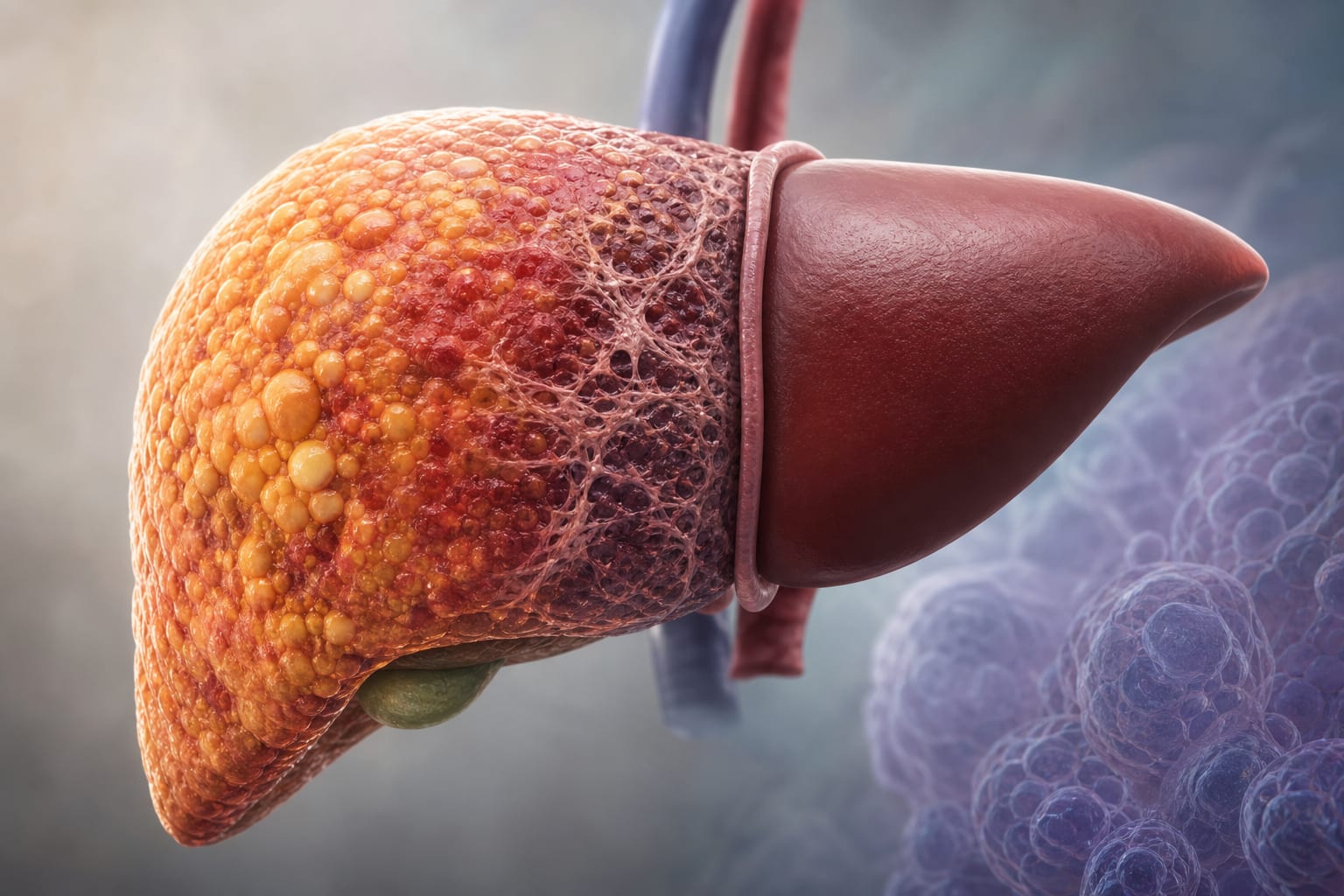
Effects of Tirzepatide on Metabolic Dysfunction-Associated Steatotic Liver Disease (MASLD) in Obese Patients: Insights from a Multicenter Real-World Study
By
Martina Galasso
Ludovica Verde
Renato Patrone
Giovanni Ragozzino
Giuseppe Annunziata
Annamaria Colao
Luigi Barrea
Giovanna Muscogiuri
July 6, 2026
Clinical Scorecard: Effects of Tirzepatide on Metabolic Dysfunction-Associated Steatotic Liver Disease (MASLD) in Obese Patients: Insights from a Multicenter Real-World Study
At a Glance
Category Detail
Condition Metabolic dysfunction-associated steatotic liver disease (MASLD) Key Mechanisms Tirzepatide acts as a dual GIP and GLP-1 receptor agonist, promoting weight loss and improving metabolic control. Target Population Adults with obesity (BMI ≥30.0 kg/m²) and MASLD (FLI > 44). Care Setting Real-world clinical practice.
Key Highlights
Significant reductions in body weight, BMI, and waist circumference after 3 months of tirzepatide treatment. Improvements in fasting glucose, HbA1c, insulin, and HOMA-IR were observed. Liver enzymes (AST, ALT, GGT) and lipid parameters significantly decreased. ΔFLI was positively associated with Δweight, ΔBMI, ΔWC, and Δhs-CRP. Δhs-CRP was identified as the only independent predictor of ΔFLI. Guideline-Based Recommendations
Diagnosis
Diagnosis of MASLD is based on Fatty Liver Index (FLI) > 44. Management
Weight reduction and improvement of insulin resistance are key management strategies for MASLD. Monitoring & Follow-up
Monitor metabolic parameters including glucose, insulin, and liver enzymes during treatment. Risks
Exclusion of patients with known chronic liver diseases, significant alcohol consumption, or prior treatment with GLP-1 receptor agonists. Patient & Prescribing Data
Adults with overweight or obesity and MASLD.
Tirzepatide was administered at doses of 2.5–5 mg weekly for 3 months.
Clinical Best Practices
Consider tirzepatide for patients with obesity and MASLD to address metabolic dysfunction. Regularly assess liver function and metabolic parameters during treatment. Related Resources & Content