Screening of serum biomarkers for coronary artery calcification using DIA quantitative proteomics and construction of a regression model - Scorecard - MDSpire
Advertisement
Screening of serum biomarkers for coronary artery calcification using DIA quantitative proteomics and construction of a regression model
Clinical Scorecard: Evaluation of Serum Biomarkers for Coronary Artery Calcification Through DIA Quantitative Proteomics and Development of a Predictive Regression Model
At a Glance
Category
Detail
Condition
Key Mechanisms
Involves inflammatory responses, extracellular matrix remodeling, and osteoblastic transformation of smooth muscle cells, as evidenced by the study's findings.
Target Population
Care Setting
Key Highlights
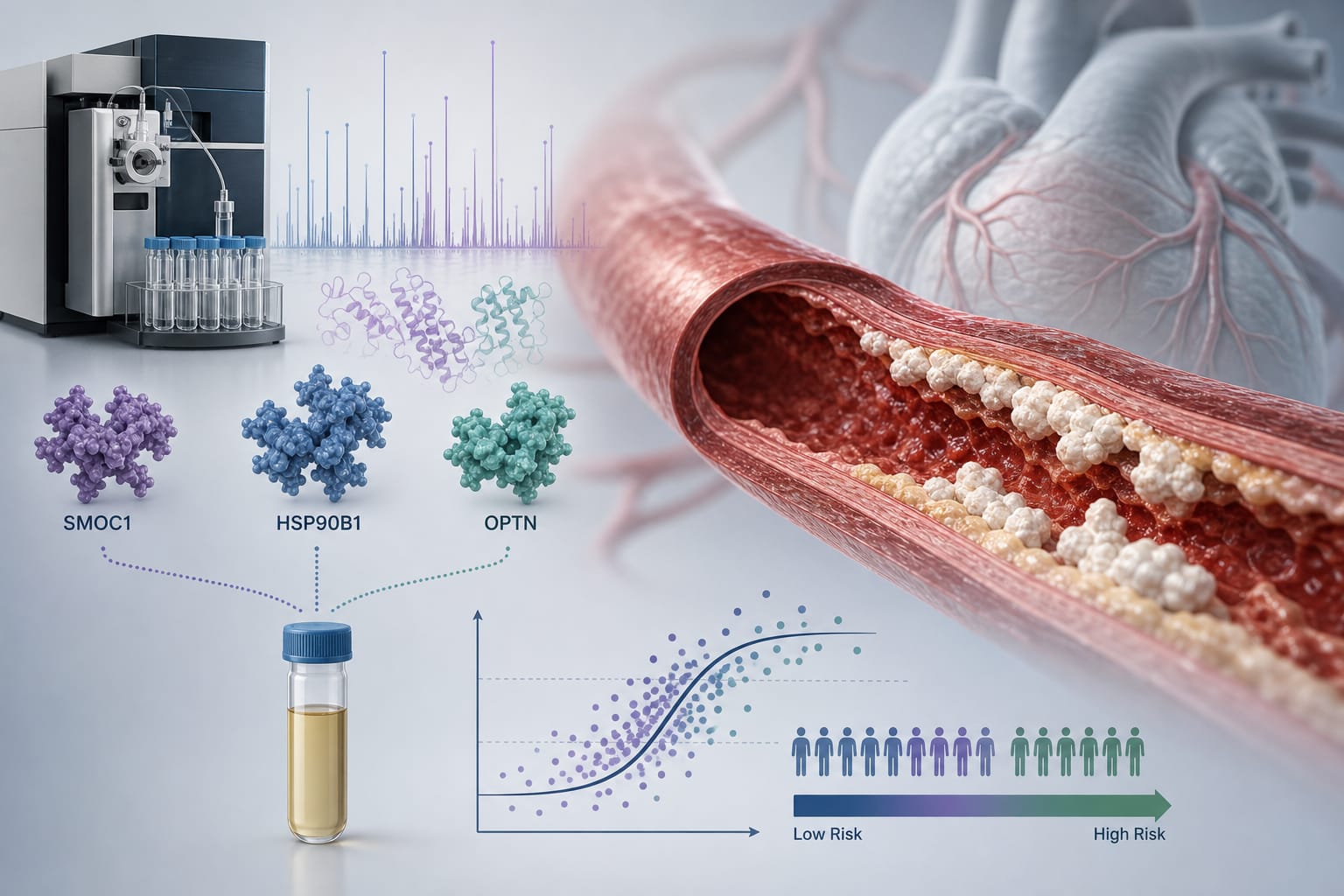
Identified SMOC1, HSP90B1, and OPTN as potential serum biomarkers for CAC, with detailed methodology leading to an AUC of 0.894.
Guideline-Based Recommendations
Diagnosis
Management
Monitoring & Follow-up
Regular assessment of serum biomarkers alongside traditional clinical indicators, with specific intervals based on risk stratification.
Risks
Patient & Prescribing Data
The study emphasizes the need for individualized risk prediction models incorporating serum biomarkers, particularly in patients with identified risk factors.
Clinical Best Practices
Utilize proteomics for identifying disease-specific biomarkers and implement nomogram models for personalized risk assessment in cardiovascular disease, with training for clinicians on their use.