Global trends and emerging frontiers of large language models in cancer research
-
By
-
Dianzhe Tian
-
Zhixuan Xie
-
Zixuan Hu
-
Zuyi Yang
-
Hu Tian
-
Youxin Chen
-
Haitao Zhao
-
Shunda Du
-
Fengdan Wang
-
Lei Zhang
-
Yiyao Xu
-
Xin Lu
-
June 3, 2026
-
Clinical Scorecard: Worldwide Developments and New Horizons of Large Language Models in Oncology Research
At a Glance
| Category | Detail |
|---|
| Condition | Cancer |
| Key Mechanisms | Integration of multimodal data for diagnosis and patient management |
| Target Population | Patients with cancer |
| Care Setting | Clinical research and decision-making |
Key Highlights
- Over 18 million new cancer cases and more than 10 million cancer-related deaths globally in 2023.
- Large language models (LLMs) can enhance clinical decision-making and patient management.
- LLMs assist in generating teaching content for medical education.
- Bibliometric analysis reveals trends and hotspots in LLMs in cancer research.
- ClinicalTrials.gov serves as a key resource for accessing global clinical research information.
Guideline-Based Recommendations
Diagnosis
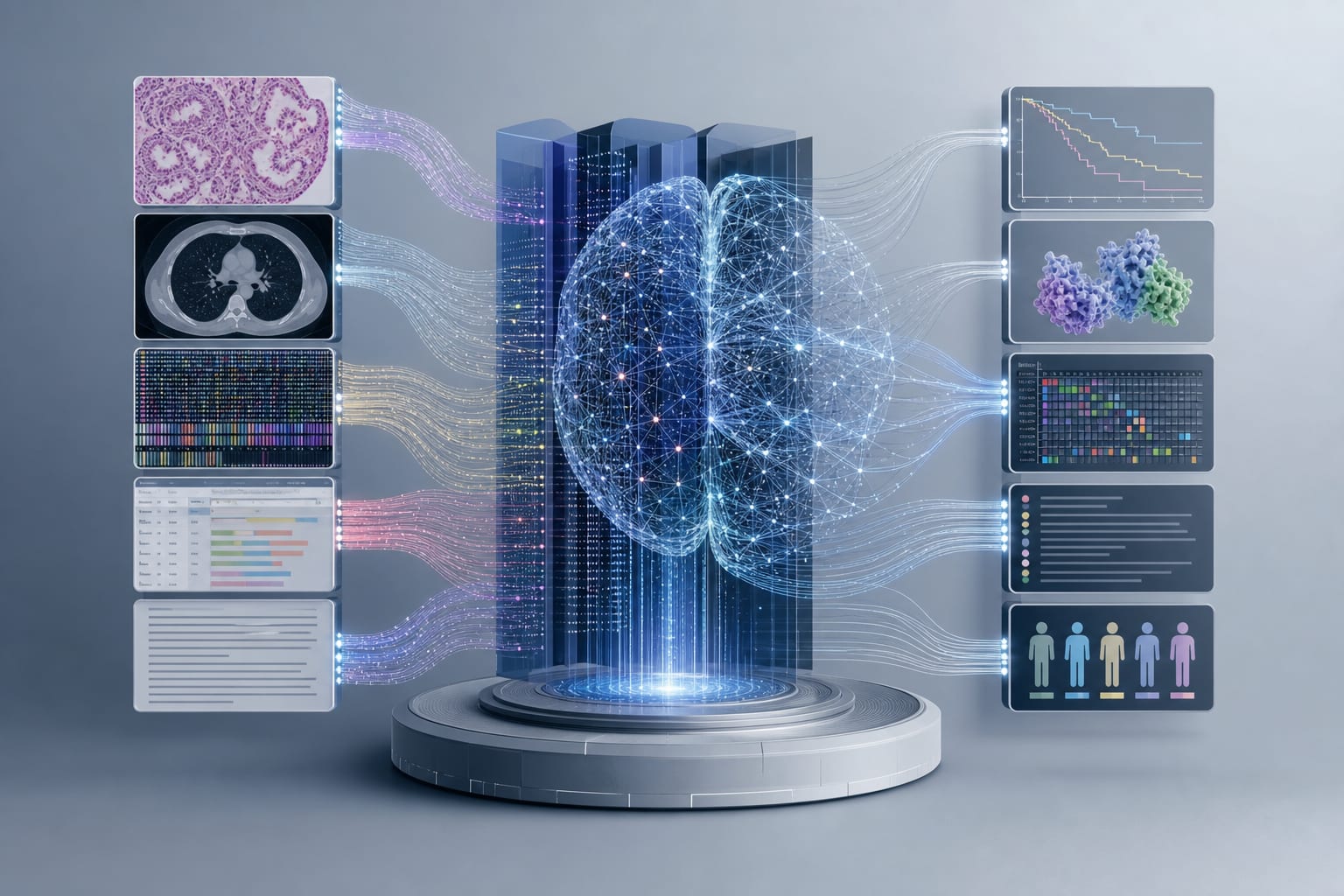
- LLMs can support diagnosis and prognostic prediction by integrating multimodal data.
Management
- LLMs assist in creating patient questions for consultations and optimizing pre-clinical examination processes.
Monitoring & Follow-up
- LLMs provide evidence-based postoperative care recommendations.
Risks
- Challenges include processing unstructured information and integrating multimodal data.
Patient & Prescribing Data
Patients undergoing cancer treatment and management.
LLMs can alleviate emotional distress through empathetic communication.
Clinical Best Practices
- Utilize LLMs for simplifying imaging and pathology reports.
- Incorporate LLMs in training resident physicians.
Related Resources & Content