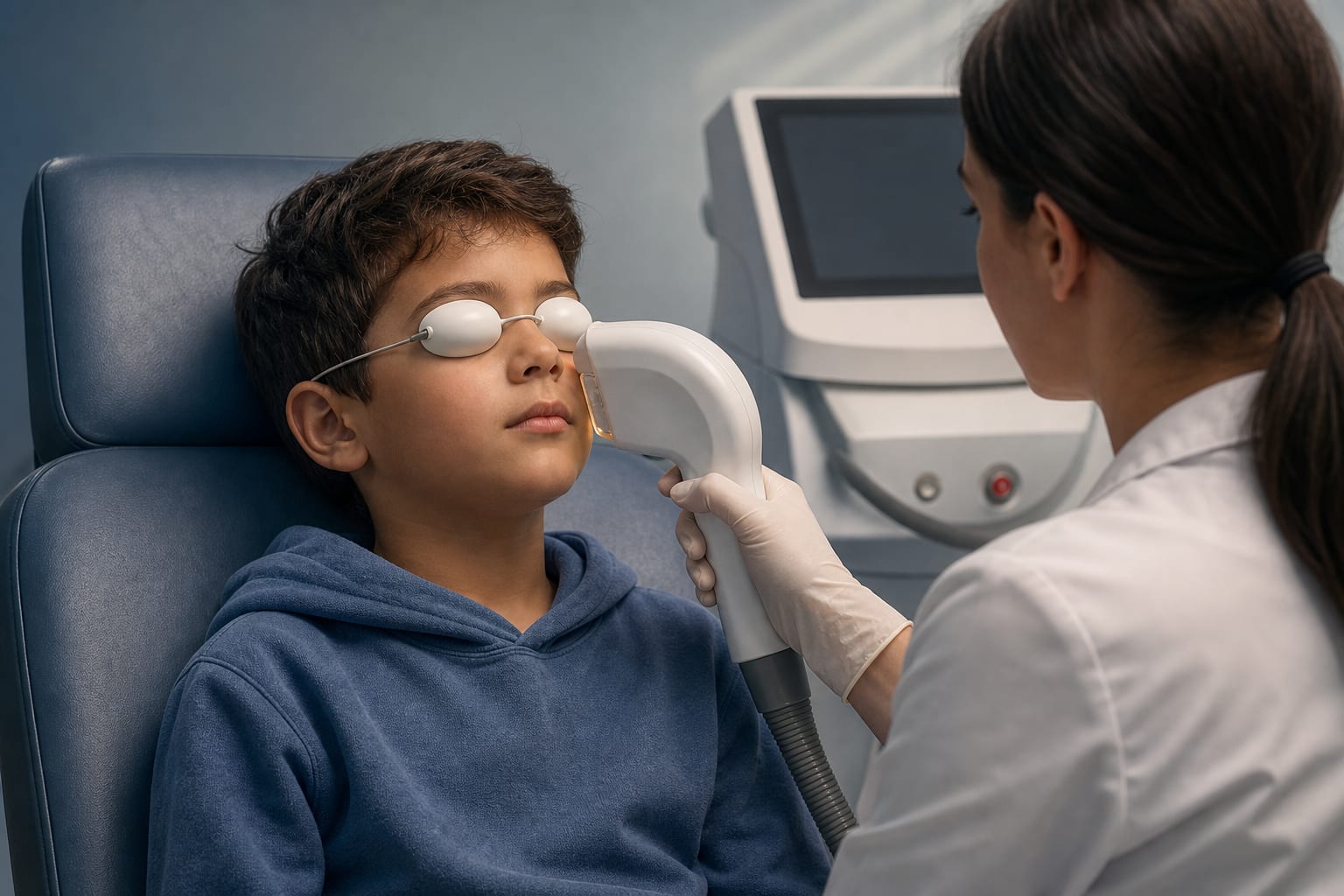
The therapeutic effect of IPL on children with vernal keratoconjunctivitis - Scorecard - MDSpire

The therapeutic effect of IPL on children with vernal keratoconjunctivitis

  • By

  • Jiao Jiang

  • Shaoyi Wang

  • Shaohua Chen

  • Shuoshuo Meng

  • Yang Yang

  • June 22, 2026

  • 0 min

Share

Clinical Scorecard: Evaluating the Impact of Intense Pulsed Light Therapy on Pediatric Vernal Keratoconjunctivitis

At a Glance

CategoryDetail
ConditionVernal Keratoconjunctivitis (VKC)
Key MechanismsIntense Pulsed Light (IPL) treatment closes abnormal dilated blood vessels, controls inflammatory factors, and improves meibomian gland function.
Target PopulationChildren diagnosed with VKC, particularly those under the age of 15.
Care SettingOphthalmology Department

Key Highlights

  • IPL treatment significantly extended the recurrence interval of VKC (log-rank P = 0.003).
  • No adverse reactions were reported in either the IPL or control group.
  • Conventional drug therapy included antihistamines, mast cell stabilizers, and glucocorticoids.

Guideline-Based Recommendations

Diagnosis

  • Diagnosis of VKC based on clinical symptoms and signs.

Management

  • Conventional drug therapy combined with IPL treatment for VKC.

Monitoring & Follow-up

  • Regular follow-ups every 4 weeks for a minimum of 12 months post-treatment.

Risks

  • No adverse reactions reported during the study.

Patient & Prescribing Data

Children under 15 years with recurrent VKC.

IPL is used as an adjunctive treatment to prolong recurrence intervals.

Clinical Best Practices

  • Use IPL in conjunction with conventional drug therapy for VKC management.
  • Monitor ocular surface symptoms and signs regularly.

Related Resources & Content

Original Source(s)

Related Content