Clinical outcome prediction of Contour Neurovascular System treatment based on pre-treatment geometric and hemodynamic characteristics - Scorecard - MDSpire
Coming Soon: Introducing MDSpire News. Learn more
Conexiant’s news site is now MDSpire News. Learn more

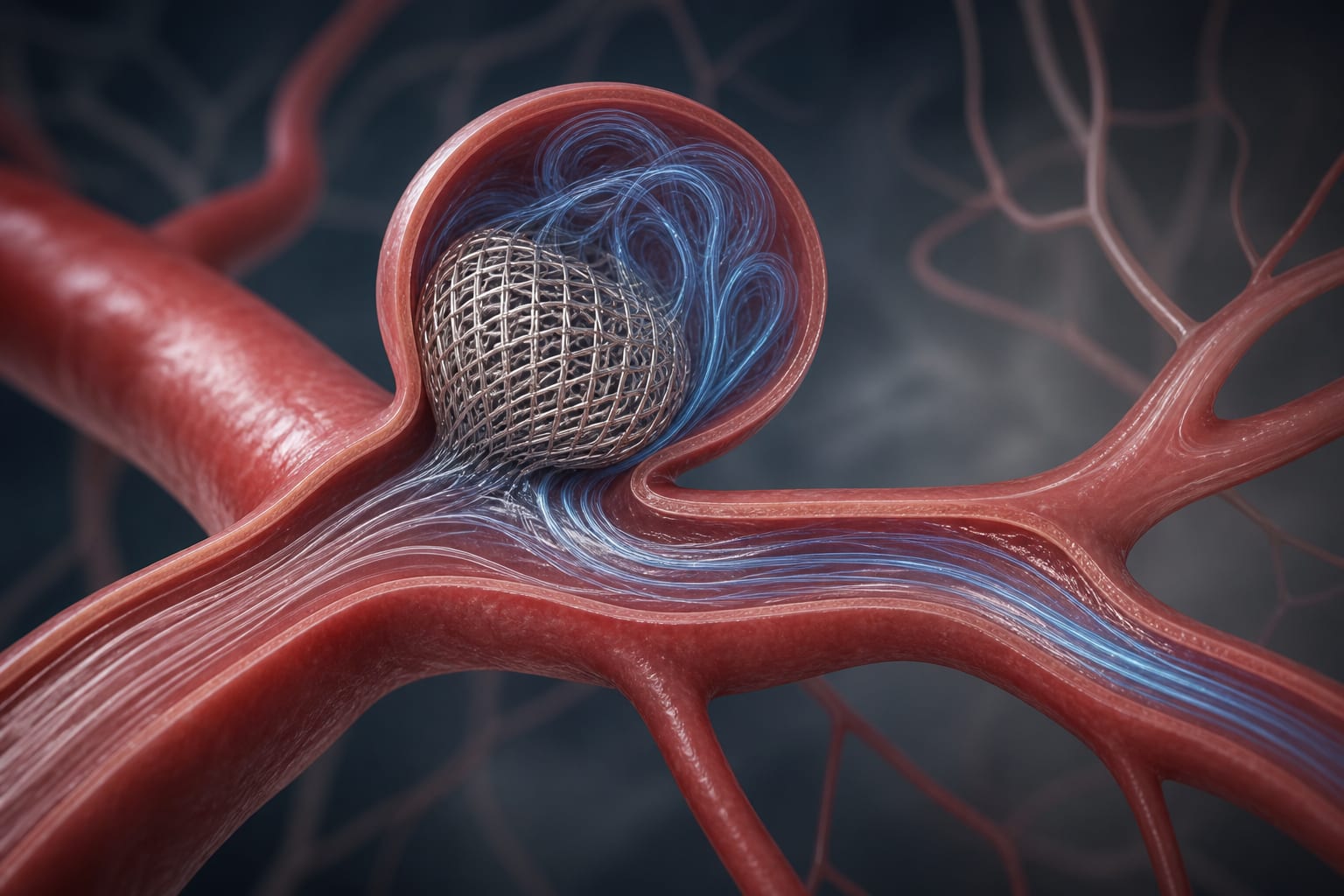
Predicting Clinical Outcomes of Contour Neurovascular System Therapy Using Pre-Treatment Geometric and Hemodynamic Factors

  • By

  • Fina Gießler

  • Anna Bernovskis

  • Franziska Gaidzik

  • Jana Korte

  • Philipp Berg

  • Sönke Peters

  • Naomi Larsen

  • Sylvia Saalfeld

  • August 22, 2026

Share

Clinical Scorecard: Predicting Clinical Outcomes of Contour Neurovascular System Therapy Using Pre-Treatment Geometric and Hemodynamic Factors

At a Glance

CategoryDetail
ConditionIntracranial Aneurysms
Key MechanismsPre-treatment geometric and hemodynamic characteristics affecting treatment outcomes.
Target PopulationPatients with wide-necked bifurcation aneurysms undergoing CNS treatment.
Care SettingNeurointerventional research and clinical assessment.

Key Highlights

  • CNS therapy shows a pooled adequate occlusion rate of 84%.
  • Incomplete occlusion and device deformation can necessitate further intervention.
  • Significant associations found between IA neck diameters and deformation patterns.
  • Clinical outcomes evaluated through follow-up imaging over a median of 574 days.
  • Negative outcomes typically observed 3-12 months post-treatment.

Guideline-Based Recommendations

Diagnosis

  • Utilize 3D rotational angiography for pre-treatment imaging.

Management

  • Consider the Contour Neurovascular System for treatment of wide-necked bifurcation aneurysms.

Monitoring & Follow-up

  • Conduct follow-up imaging to assess clinical outcomes and device deformation.

Risks

  • Monitor for incomplete occlusion, device displacement, and aneurysm recurrence.

Patient & Prescribing Data

Initial outcomes suggest safety and efficacy, but ongoing assessment of clinical outcomes and device performance is critical.

Clinical Best Practices

  • Evaluate pre-treatment geometric and hemodynamic factors to predict outcomes.
  • Classify CNS shape modifications to inform clinical decisions.

Related Resources & Content

Original Source(s)

Related Content