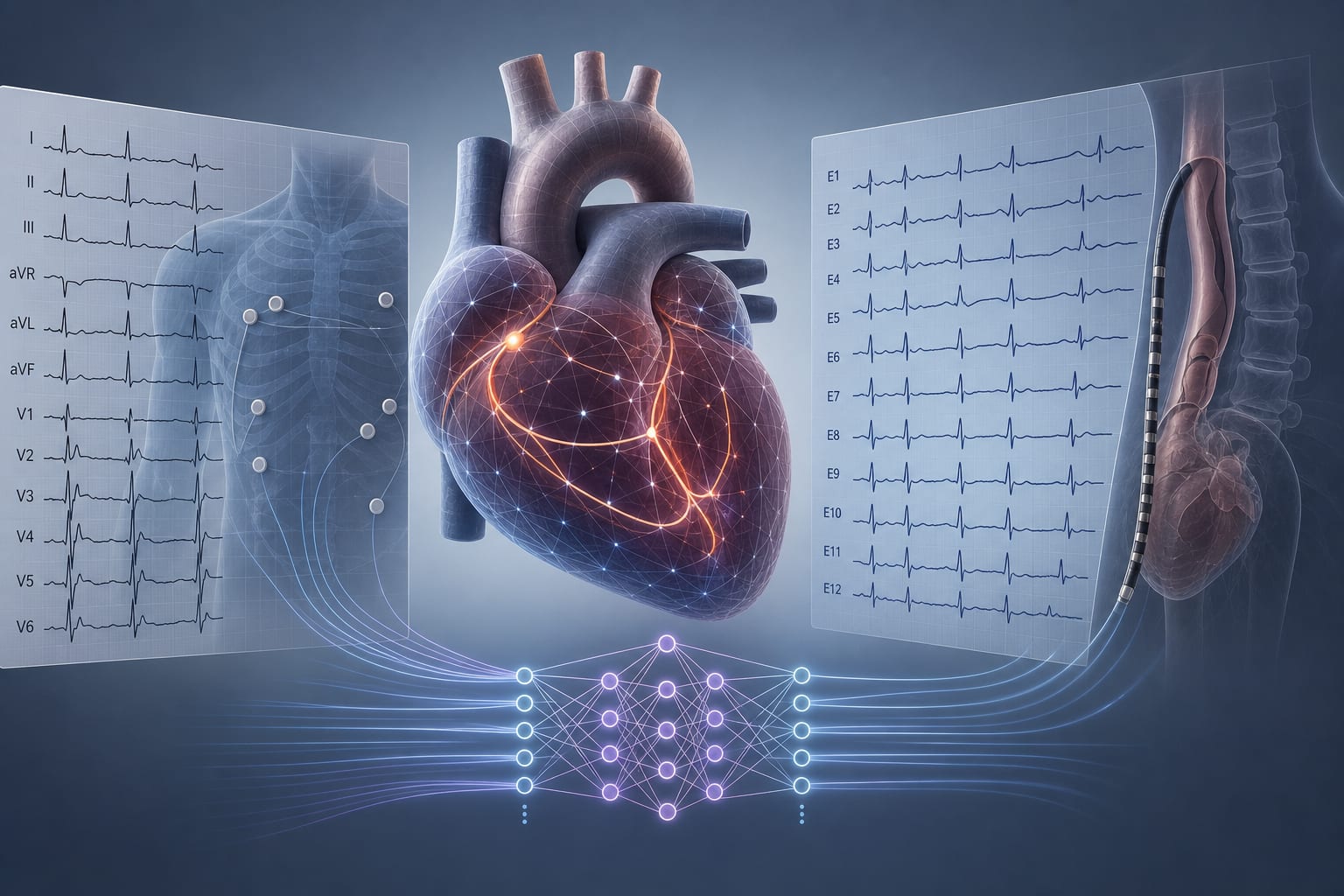
A deep learning model based on combining surface and esophageal ECG data for diagnosis of paroxysmal supraventricular tachycardia - Scorecard - MDSpire
Clinical Scorecard: A deep learning approach integrating surface and transesophageal ECG data for the identification of paroxysmal supraventricular tachycardia
At a Glance
Category
Detail
Condition
Paroxysmal Supraventricular Tachycardia (PSVT)
Key Mechanisms
Integration of surface and transesophageal ECG data for classification
Target Population
Patients undergoing transesophageal electrophysiological study for PSVT
Care Setting
Cardiac electrophysiology
Key Highlights
Focus on S-F AVNRT and O-AVRT types of PSVT
Use of deep learning algorithms for ECG classification
Combination of surface and esophageal ECG data
Retrospective data collection from multiple hospitals
High accuracy and stability of the ResNet model in ECG tasks
Guideline-Based Recommendations
Diagnosis
Utilize surface ECG and transesophageal ECG for identifying PSVT types
Management
Consider catheter radiofrequency ablation planning based on ECG findings
Monitoring & Follow-up
Monitor ECG signals during PSVT episodes for accurate classification
Risks
Potential for inconsistent outcomes due to manual ECG analysis
Patient & Prescribing Data
Patients with successful induction of PSVT during TE-EPS
ECG features critical for guiding management strategies
Clinical Best Practices
Ensure accurate ECG signal interpretation by experienced professionals
Utilize AI models for enhanced classification of PSVT types
Adhere to ethical guidelines and regulatory standards in data collection
A VHA study across 11 vendors finds AI-generated primary care notes score lower than clinician-written notes, with the largest deficits in thoroughness, organization, and usefulness
Surgeons from around the world came to the Baptist Health Education Center this week to learn from Baptist Health Heart & Vascular Care experts as part of the International Society for Minimally Invasive Cardiothoracic Surgery (ISMICS) annual meeting