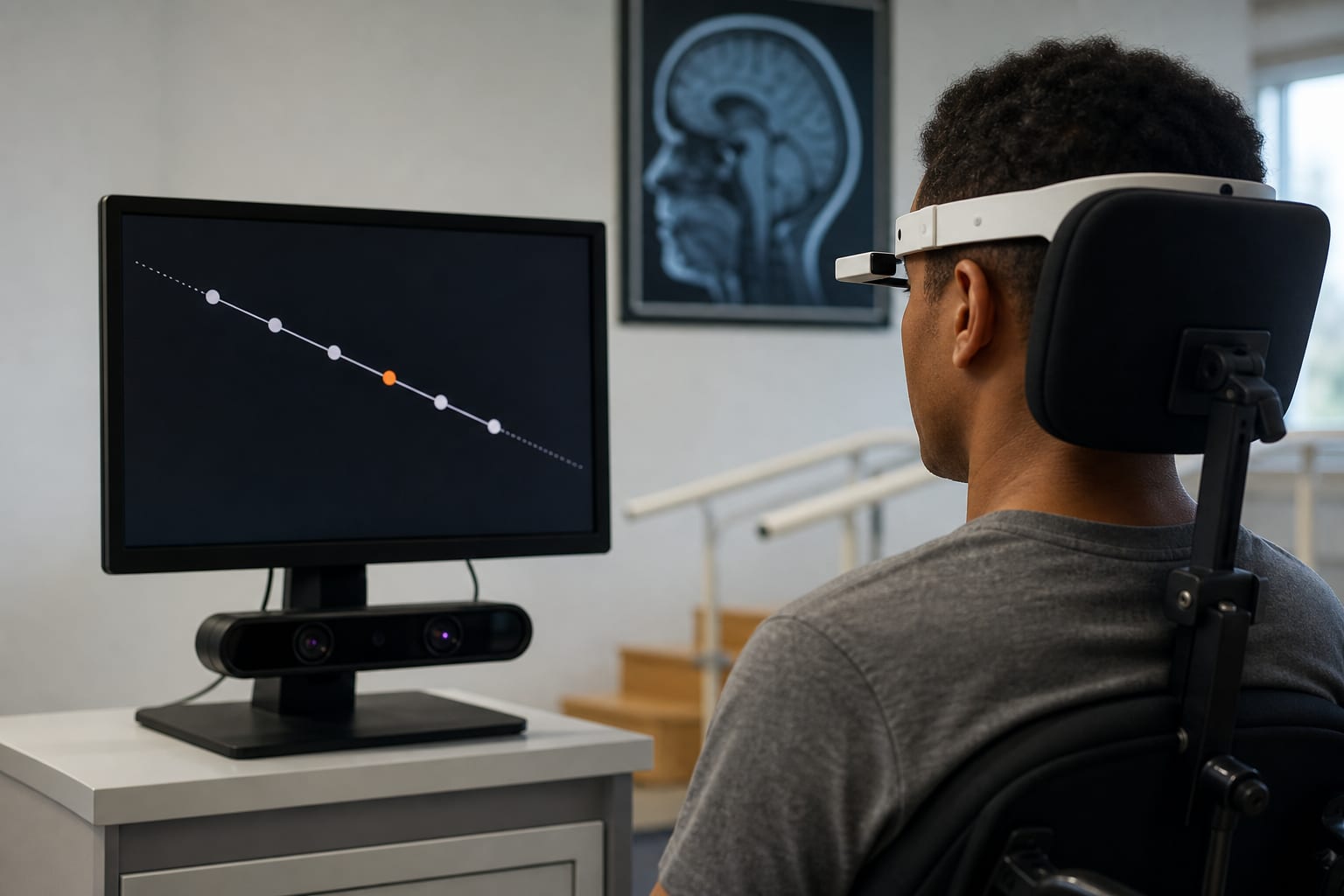
Oculomotor markers of functional impairment in traumatic brain injury using simple and predictive visual tracking
-
By
-
Shimrit Shani
-
Oren Kadosh
-
Yaron Sacher
-
Keren Cismariu-Potash
-
Yoram S. Bonneh
-
July 10, 2026
Clinical Scorecard: Oculomotor Indicators of Functional Limitations in Traumatic Brain Injury Through Simple Predictive Visual Tracking
At a Glance
| Category | Detail |
|---|
| Condition | Traumatic Brain Injury (TBI) |
| Key Mechanisms | Disruption of oculomotor functions including smooth pursuit, saccadic accuracy, and visual tracking under occlusion. |
| Target Population | Patients with traumatic brain injury undergoing inpatient rehabilitation. |
| Care Setting | Inpatient rehabilitation settings. |
Key Highlights
- TBI patients show significant oculomotor deficits compared to age-matched controls.
- Oculomotor measures correlate with functional status as indexed by the Functional Independence Measure.
- No association found between oculomotor deficits and initial injury severity as measured by the Glasgow Coma Scale.
- Study supports the use of eye-tracking assessments for evaluating current functional status in TBI.
- Potential for longitudinal monitoring of TBI recovery using oculomotor measures.
Guideline-Based Recommendations
Diagnosis
- Utilize eye-tracking assessments to evaluate oculomotor dysfunction in TBI patients.
Management
- Incorporate oculomotor measures into rehabilitation protocols to monitor functional status.
Monitoring & Follow-up
- Consider repeated eye-tracking assessments throughout the rehabilitation period for ongoing evaluation.
Risks
- Oculomotor deficits may not correlate with initial injury severity, indicating the need for comprehensive assessments.
Patient & Prescribing Data
30 patients with TBI, including severe, moderate, and mild cases.
Oculomotor assessments can provide insights into current functional capabilities during rehabilitation.
Clinical Best Practices
- Implement brief, clinic-friendly eye-tracking assessments for TBI patients.
- Focus on multiple oculomotor indices to capture a comprehensive view of functional status.
Related Resources & Content