Early Local Recurrence of Well-Differentiated Liposarcoma of the Hypopharynx in a Young Adult: A Case Report and Literature Review - Scorecard - MDSpire
Advertisement
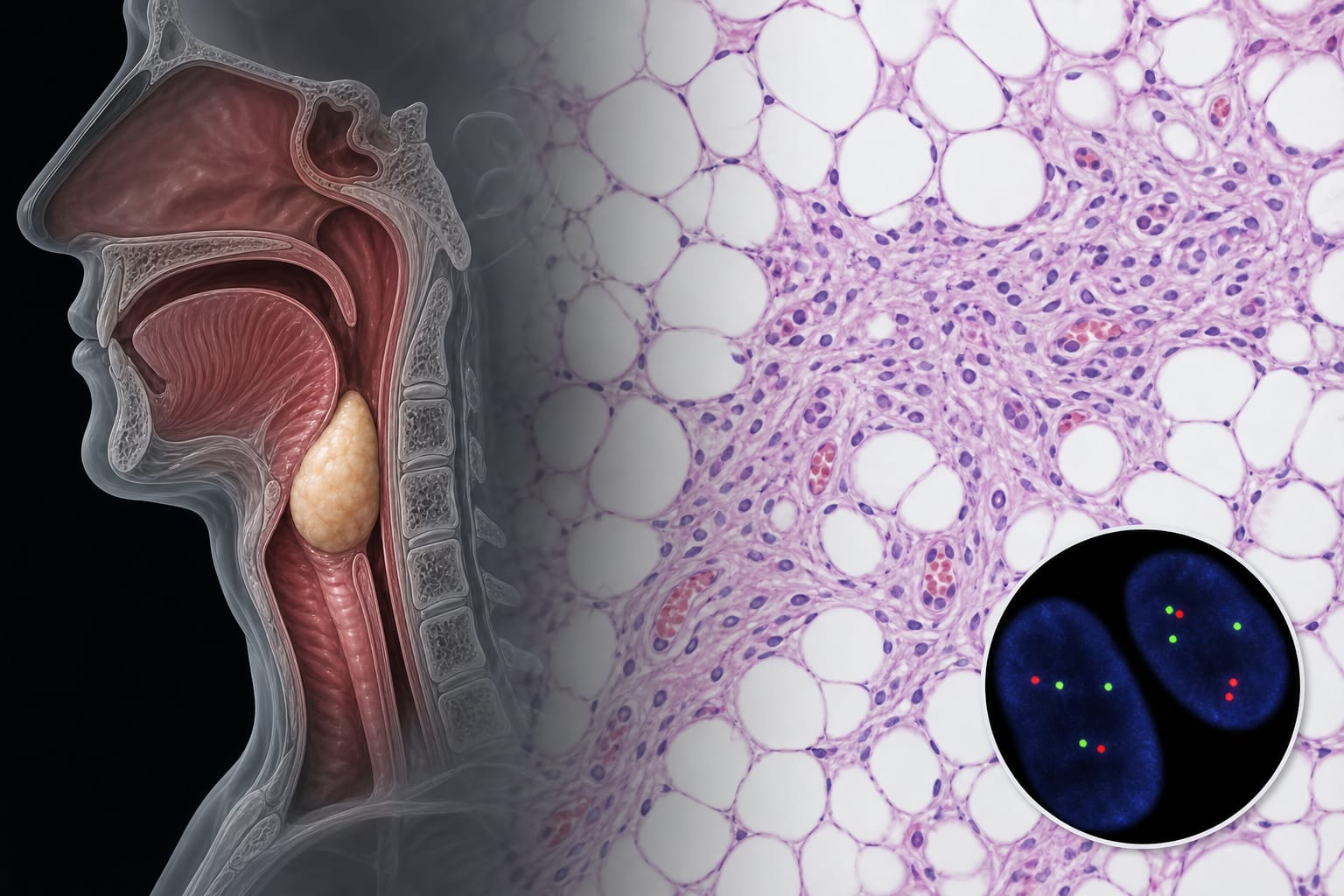
Early Local Recurrence of Well-Differentiated Liposarcoma of the Hypopharynx in a Young Adult: A Case Report and Literature Review
Clinical Scorecard: Case Report and Literature Review of Early Local Recurrence in a Young Adult with Well-Differentiated Liposarcoma of the Hypopharynx
At a Glance
Category
Detail
Condition
Well-Differentiated Liposarcoma (WDLPS)
Key Mechanisms
Indolent growth, limited metastatic potential, local recurrence
Target Population
Young adults, particularly those with hypopharyngeal lesions
Care Setting
Clinical oncology and surgical pathology
Key Highlights
WDLPS is a low-grade malignant neoplasm with a propensity for local recurrence.
Primary WDLPS in the hypopharynx is rare in young adults.
Diagnosis requires histopathology, immunohistochemistry, and molecular confirmation.
Early local recurrence can occur even after complete surgical excision.
Close surveillance is essential for early detection of recurrence.
Guideline-Based Recommendations
Diagnosis
Integration of histopathology, immunohistochemistry, and molecular confirmation for accurate diagnosis.
Management
Transoral excision under general anesthesia for localized tumors.
Monitoring & Follow-up
Serial laryngoscopic examinations and radiological surveillance post-surgery.
Risks
Potential for early local recurrence after surgical intervention.
Patient & Prescribing Data
Young adults with well-differentiated liposarcoma of the hypopharynx.
Surgical excision is the primary treatment, but close follow-up is critical.
Clinical Best Practices
Utilize immunohistochemistry for MDM2 and CDK4 in diagnosis.