Independent risk factors for clinically significant acute poisoning in children presenting to the emergency department: a 4-year cohort study of 2,345 cases - Scorecard - MDSpire
Advertisement
Independent risk factors for clinically significant acute poisoning in children presenting to the emergency department: a 4-year cohort study of 2,345 cases
Clinical Scorecard: Identifying Independent Risk Factors for Significant Acute Poisoning in Pediatric Emergency Cases: A Four-Year Analysis of 2,345 Children
At a Glance
Category
Detail
Condition
Acute Poisoning in Pediatrics
Key Mechanisms
Independent risk factors include age, intentional self-harm, pre-hospital delay, multiple-agent exposure, and specific toxicants.
Target Population
Children under 18 years
Care Setting
Pediatric Emergency Department
Key Highlights
Clinically significant poisoning occurred in 18.0% of cases (422 patients).
Independent risk factors identified include age >12 years, intentional self-harm, and exposure to psychotropic drugs.
The study achieved an AUC-ROC of 0.892 for model discrimination.
Guideline-Based Recommendations
Diagnosis
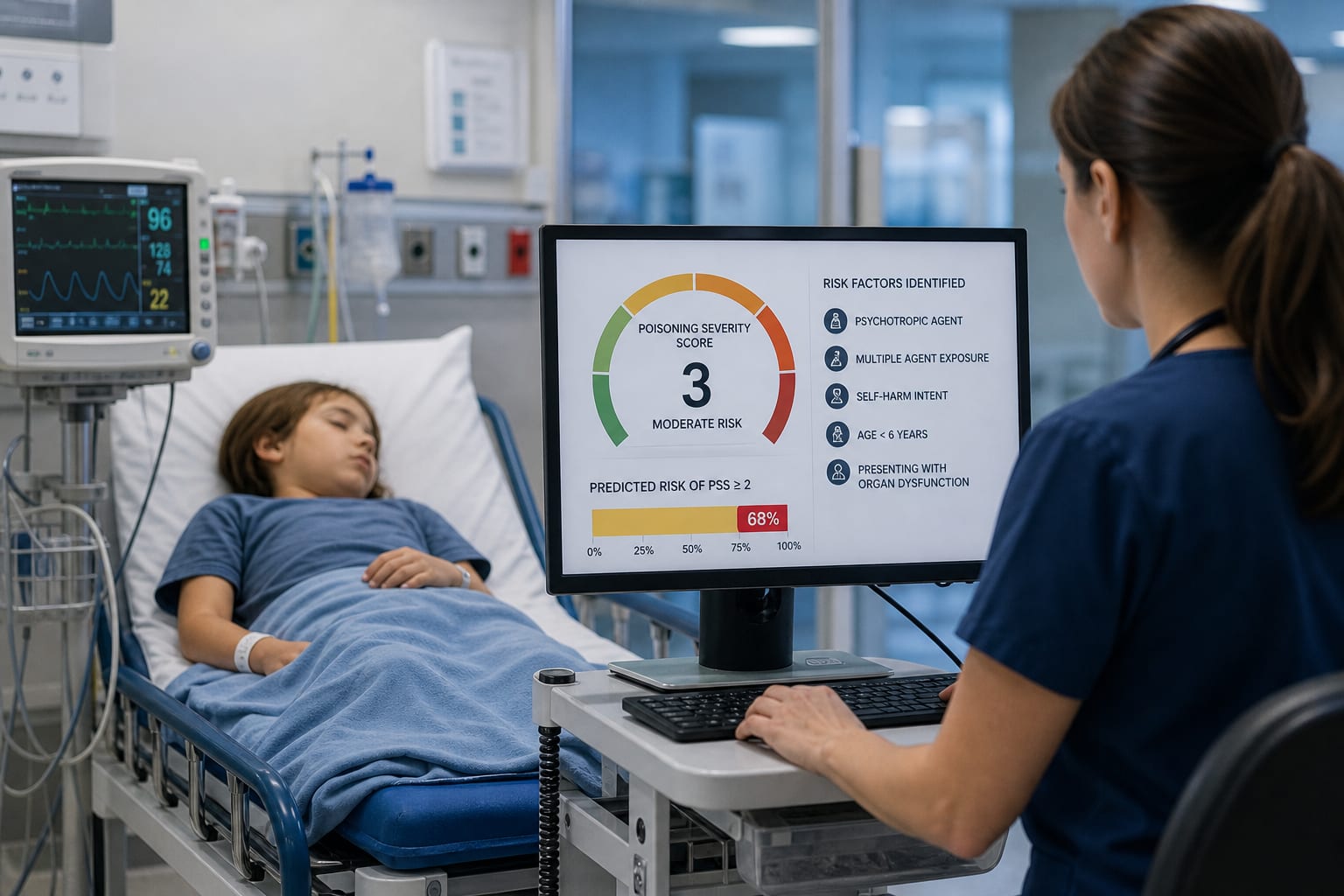
Utilize the Poisoning Severity Score (PSS) for stratifying severity.
Management
Prioritize cases with identified risk factors for advanced care.
Monitoring & Follow-up
Monitor for acute organ dysfunction and Multiple Organ Dysfunction Syndrome (MODS) in significant cases.
Risks
Mortality was 1.2%, occurring exclusively in the PSS ≥ 2 group.
Patient & Prescribing Data
Children presenting with acute poisoning in emergency settings.
Higher rates of PICU admission (71.1%) and blood purification (44.1%) in significant poisoning cases.
Clinical Best Practices
Implement early risk stratification at triage based on identified factors.
Ensure thorough assessment of potential intentional self-harm in adolescents.