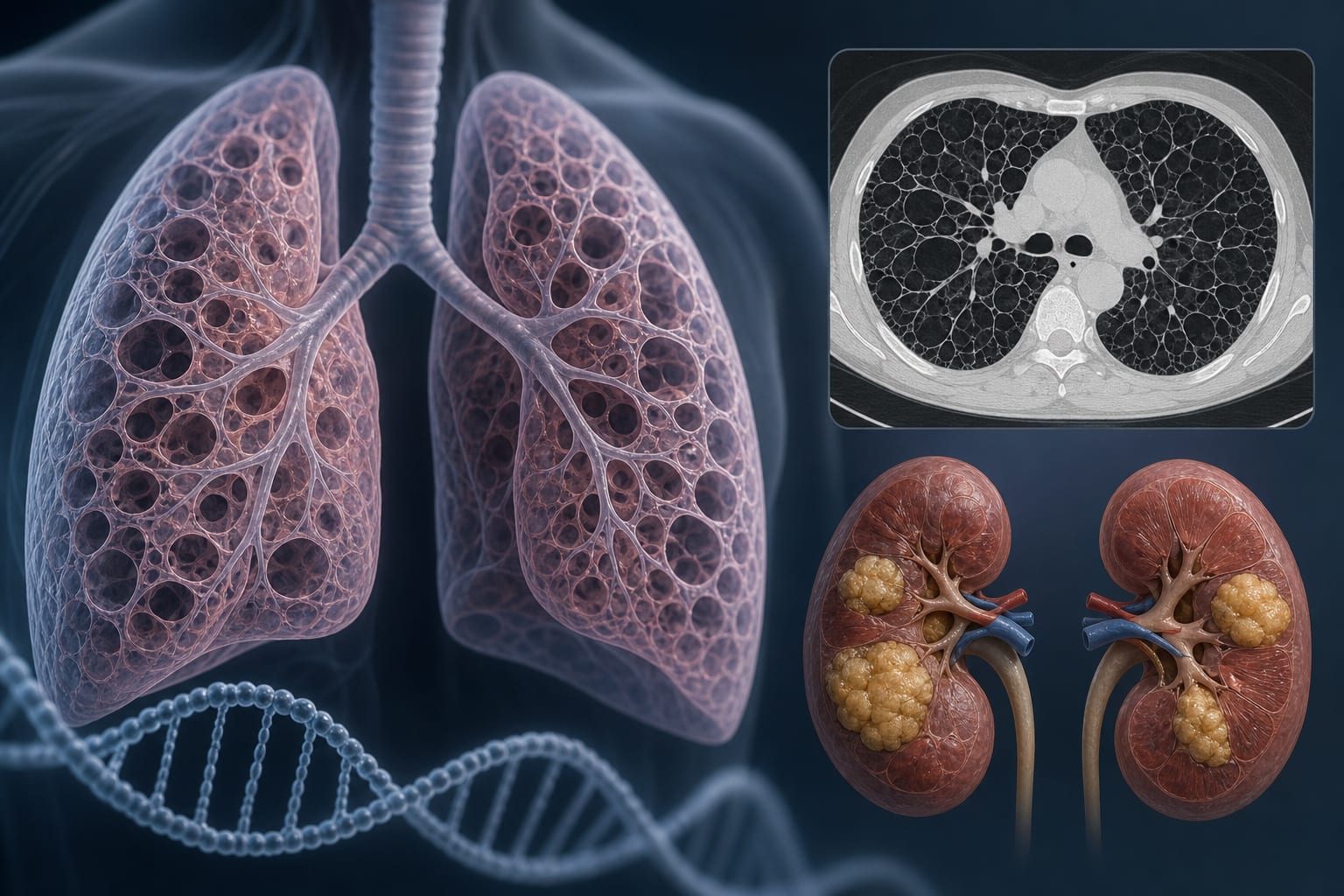
Smooth muscle-like cell proliferation leading to cystic lung destruction
Target Population
Women of reproductive age with Tuberous Sclerosis Complex
Care Setting
Outpatient follow-up after initial hospitalization
Key Highlights
Diagnosis confirmed through genetic testing for TSC2 variant
Patient treated with sirolimus (1 mg/day) with therapeutic drug monitoring
Regular follow-up included pulmonary function tests and serial imaging
No significant adverse effects observed during treatment
Reduction in renal angiomyolipoma volume noted
Guideline-Based Recommendations
Diagnosis
Diagnosis of LAM can be established without lung biopsy if criteria are met: TSC, serum VEGF-D ≥ 800 pg/mL, renal angiomyolipoma, or lymphangioleiomyoma/chylous effusion
Management
Initiate treatment with sirolimus and monitor trough levels between 3 and 5 ng/mL
Monitoring & Follow-up
Regular follow-up every 3 months with pulmonary function tests and imaging
Risks
Potential for pneumothorax recurrence and drug-related adverse events
Patient & Prescribing Data
Female patient in her mid-30s with TSC and recurrent pneumothoraces
Individualized sirolimus dosing to balance efficacy and toxicity
Clinical Best Practices
Early recognition of TSC-LAM symptoms
Systematic family screening for early detection and prevention of disease transmission
Comprehensive evaluation for multisystemic manifestations of TSC