A multimodal ultrasound-based model combining tumor radiomics and axillary lymph node morphologic classification for predicting axillary nodal burden in breast cancer - Scorecard - MDSpire
Advertisement
A multimodal ultrasound-based model combining tumor radiomics and axillary lymph node morphologic classification for predicting axillary nodal burden in breast cancer
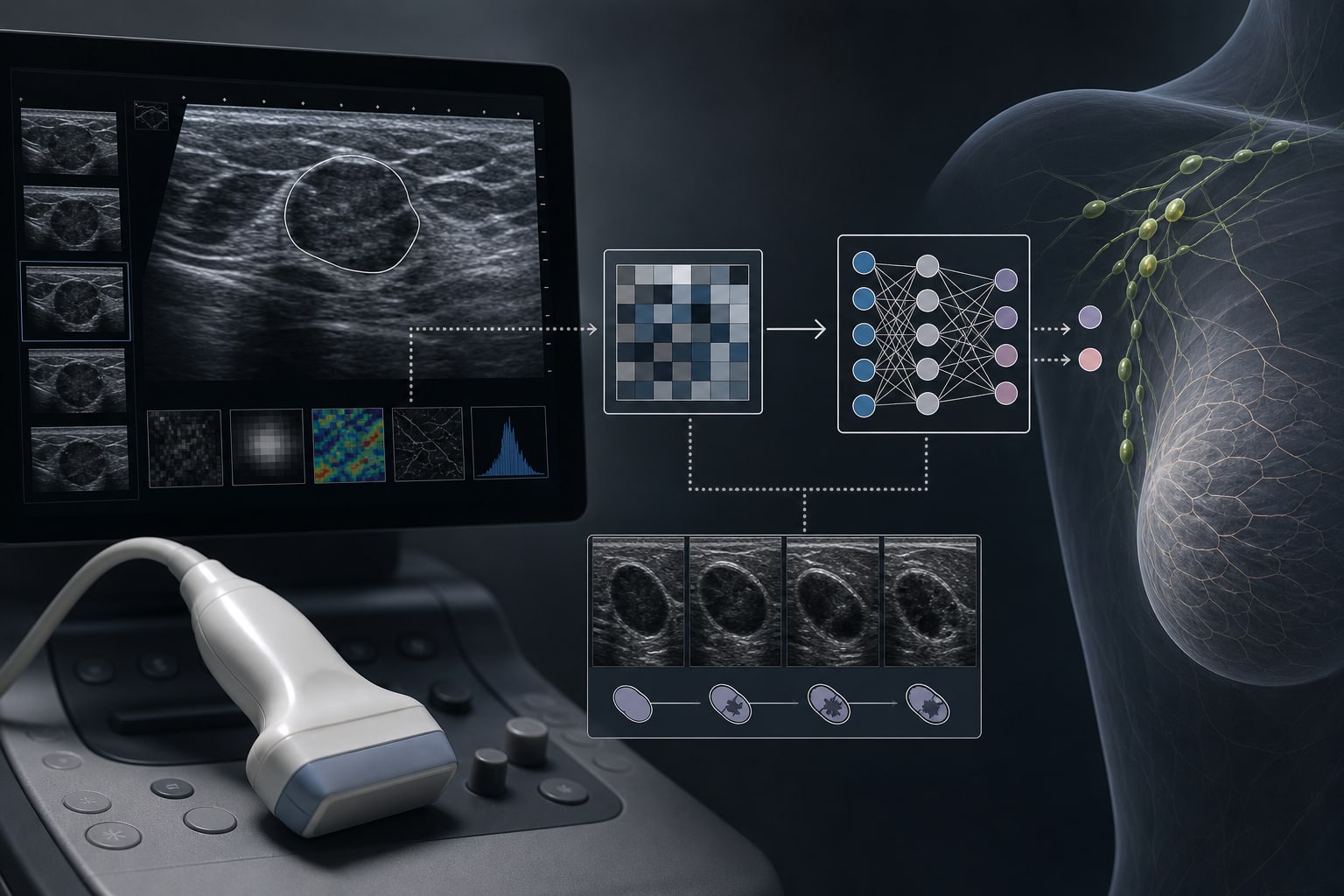
Clinical Scorecard: An Integrated Ultrasound Model Utilizing Tumor Radiomics and Axillary Lymph Node Morphological Assessment for Predicting Nodal Involvement in Breast Cancer
At a Glance
Category
Detail
Condition
Key Mechanisms
Integration of tumor radiomics and axillary lymph node morphological assessment (source needed)
Target Population
Patients with pathologically confirmed breast cancer (source needed)
Care Setting
Key Highlights
Developed a multimodal ultrasound-based model for predicting axillary nodal metastasis burden (source needed)
Achieved AUC of 0.90 for predicting ALN metastasis with combined model (source needed)
Identified Ki-67 as an independent predictor of nodal burden (source needed)
Model performed consistently across Ki-67 subgroups (source needed)
Guideline-Based Recommendations
Diagnosis
Utilize ultrasound imaging for assessment of axillary lymph node involvement (source needed)
Incorporate radiomic features and ALN morphological classification in evaluations (source needed)
Management
Consider omitting axillary lymph node dissection in selected patients with limited nodal burden (source needed)
Monitoring & Follow-up
Monitor axillary nodal status preoperatively to guide treatment decisions (source needed)
Risks
Be aware of complications from sentinel lymph node dissection, including numbness and lymphedema (source needed)
Patient & Prescribing Data
583 patients with pathologically confirmed breast cancer
Integration of imaging features may improve preoperative risk assessment
Clinical Best Practices
Employ multimodal approaches for accurate preoperative assessment of ALN status (source needed)