Clinical Scorecard: Comparison of Overweight Rates in 7,600 Children Using Body Mass Index Versus Waist-to-Height Ratio: Insights from the ALSPAC Study
At a Glance
Category
Detail
Condition
Pediatric excess adiposity (overweight and obesity)
Key Mechanisms
Waist-to-height ratio (WHtR) as a sensitive and specific surrogate marker of total and central adiposity (adiposopathy), compared to BMI
Target Population
Children and adolescents (ages 9 to 24 years), with adult validation
Care Setting
Primary care and public health settings for screening and diagnosis
Key Highlights
BMI overestimates overweight prevalence by approximately 2.3 to 2.8 times compared to WHtR in children, adolescents, and young adults.
New pediatric WHtR cut points (Agbaje WHtR cutoff) effectively classify fat mass categories and predict risk of prediabetes and type 2 diabetes in adults.
WHtR high fat and excess fat categories are associated with significantly increased odds of prediabetes and type 2 diabetes, respectively.
Guideline-Based Recommendations
Diagnosis
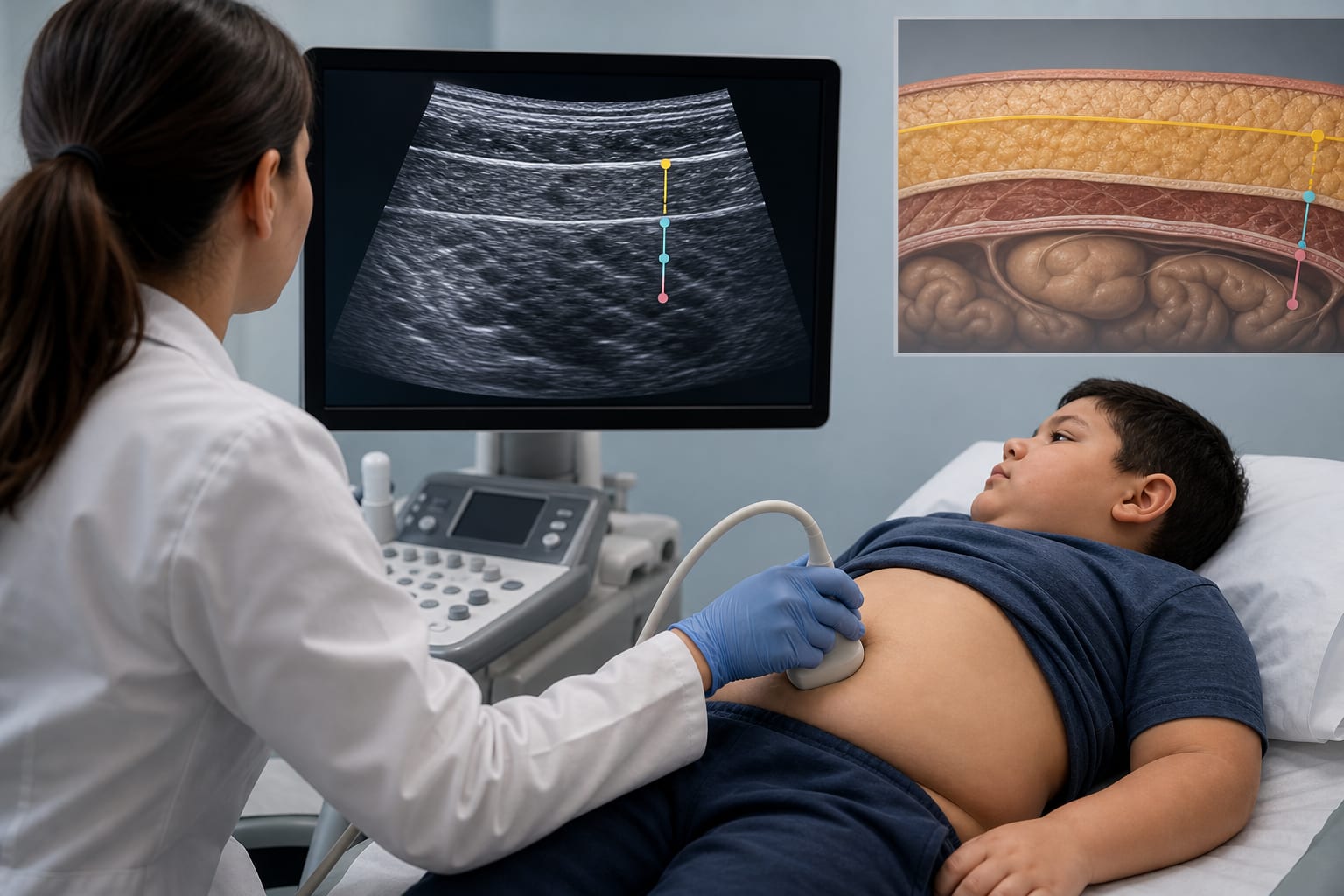
Use WHtR in addition to BMI for more accurate assessment of excess adiposity in pediatric populations.
Adopt WHtR cut points: <0.40 low fat; 0.40 to <0.50 (males) or <0.51 (females) normal fat; 0.50 to <0.53 (males) or 0.51 to <0.54 (females) high fat; >0.53 (males) or >0.54 (females) excess fat.
Confirm excess adiposity by anthropometric measures such as WHtR when direct body fat measurement is unavailable.
Management
Utilize WHtR as a cost-effective, universally accessible tool for prevention, diagnosis, and management of pediatric adiposity.
Target interventions for children identified with high or excess fat WHtR categories to reduce risk of metabolic complications.
Monitoring & Follow-up
Monitor WHtR longitudinally from childhood through young adulthood to track adiposity changes.
Incorporate WHtR measurements in routine clinical assessments alongside BMI.
Risks
Recognize that BMI alone may misclassify adiposity status, potentially delaying appropriate interventions.
High and excess fat WHtR categories are linked to increased risk of prediabetes and type 2 diabetes.
Patient & Prescribing Data
Pediatric and young adult populations with risk of overweight and obesity
WHtR provides improved risk stratification for metabolic diseases compared to BMI, guiding targeted preventive and therapeutic strategies.
Clinical Best Practices
Incorporate WHtR measurement in pediatric clinical assessments to improve accuracy of adiposity classification.
Use validated pediatric WHtR cut points for diagnosis and risk stratification.
Educate healthcare providers on limitations of BMI and advantages of WHtR in pediatric populations.
Apply WHtR screening to identify children at risk for prediabetes and type 2 diabetes for early intervention.
Utilize WHtR as a practical, low-cost tool accessible in primary care and public health settings.