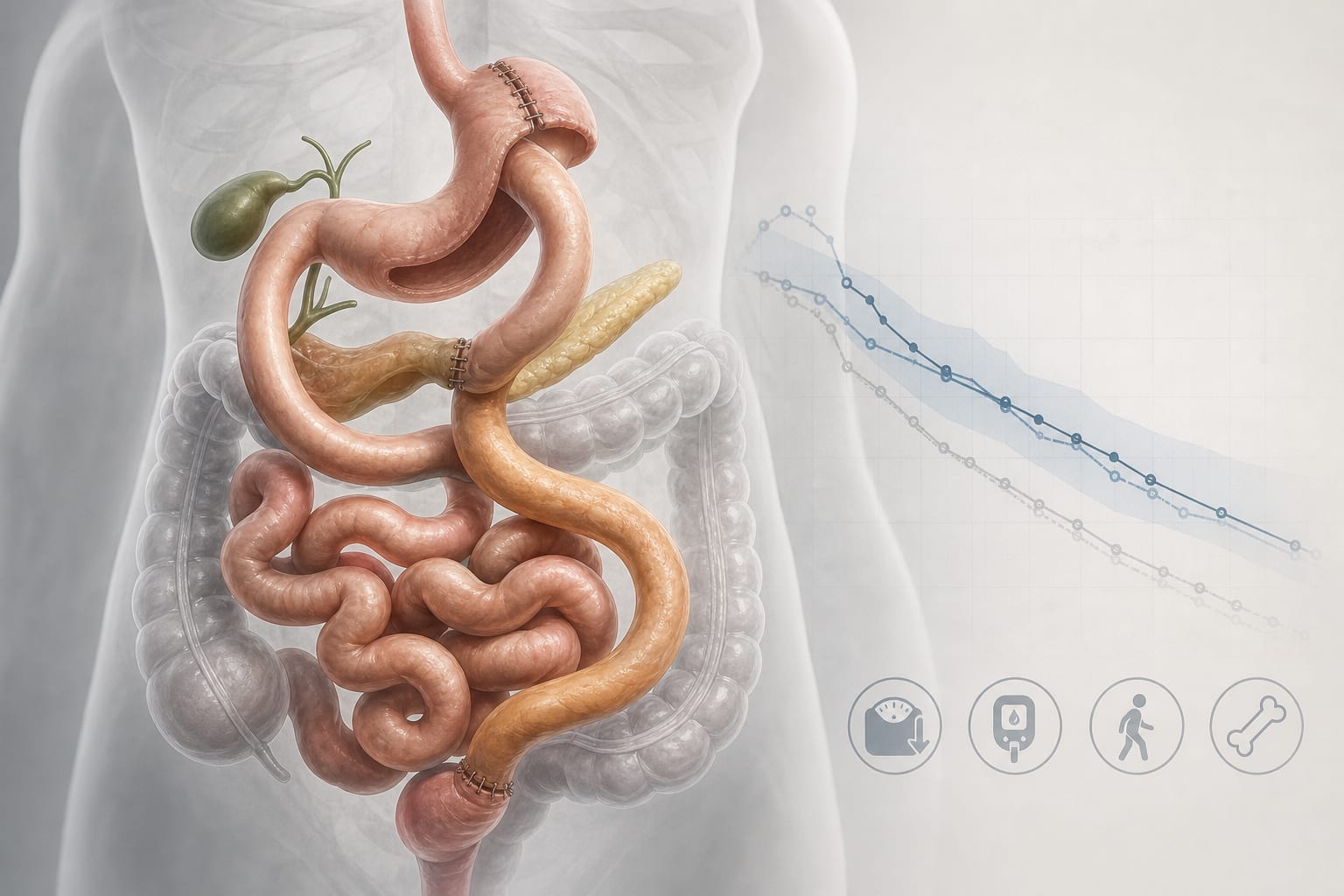
Clinical Scorecard: The Link Between Bariatric Surgery and Increased Risk of Alcohol-Related Liver Disease and Psychiatric Conditions Related to Alcohol Use Disorder
At a Glance
Category
Detail
Condition
Alcohol use disorder (AUD), alcohol-related liver disease (ALD), and psychiatric disorders associated with AUD following bariatric surgery
Key Mechanisms
Altered alcohol pharmacokinetics, neuro-hormonal shifts affecting reward and dopamine signaling, vitamin D deficiency impacting mental health and liver disease severity
Target Population
Patients with clinically severe obesity undergoing bariatric surgery (sleeve gastrectomy, adjustable gastric band, Roux-en-Y gastric bypass)
Care Setting
Hospital inpatient care and surgical follow-up settings
Key Highlights
Bariatric surgery is associated with increased risk of developing AUD, ALD, and psychiatric disorders related to alcohol use.
Mechanisms include rapid peak blood alcohol concentration, neuro-hormonal changes affecting reward pathways, and vitamin D deficiency.
US clinical guidelines exclude patients with current alcohol or drug use disorders from bariatric surgery candidacy.
Guideline-Based Recommendations
Diagnosis
Use ICD-9-CM codes to identify bariatric surgery history and outcomes such as AUD, ALD, and psychiatric disorders.
Exclude patients with pre-existing AUD, liver disease, psychiatric disorders related to AUD, or vitamin D deficiency prior to surgery.
Management
Screen patients for alcohol and drug use disorders before bariatric surgery as per US clinical guidelines.
Monitor for development of AUD, ALD, and psychiatric conditions postoperatively.
Monitoring & Follow-up
Regular assessment of alcohol use patterns and liver function after bariatric surgery.
Evaluate vitamin D levels and consider supplementation to mitigate associated risks.
Risks
Increased risk of alcohol-related liver disease and psychiatric disorders following bariatric surgery.
Potential vitamin D deficiency contributing to mental health disorders and liver disease severity.
Patient & Prescribing Data
Patients undergoing bariatric surgery without prior history of AUD, liver disease, psychiatric disorders related to AUD, or vitamin D deficiency.
Postoperative monitoring should include vigilance for new onset AUD, ALD, and psychiatric disorders; vitamin D status may influence outcomes.
Clinical Best Practices
Exclude patients with active alcohol or drug use disorders from bariatric surgery candidacy.
Implement preoperative screening and postoperative surveillance for alcohol-related complications.
Consider the role of vitamin D deficiency in postoperative mental health and liver disease risk and manage accordingly.
Use propensity score matching in research to balance confounding variables when studying bariatric surgery outcomes.
by Edilmar Alvarado-Tapias, David Marti-Aguado, Kevin Kennedy, Carlos Fernández-Carrillo, Meritxell Ventura-Cots, Dalia Morales-Arraez, Stephen R. Atkinson, Ana Clemente-Sanchez, Josepmaria Argemi, Ramon Bataller