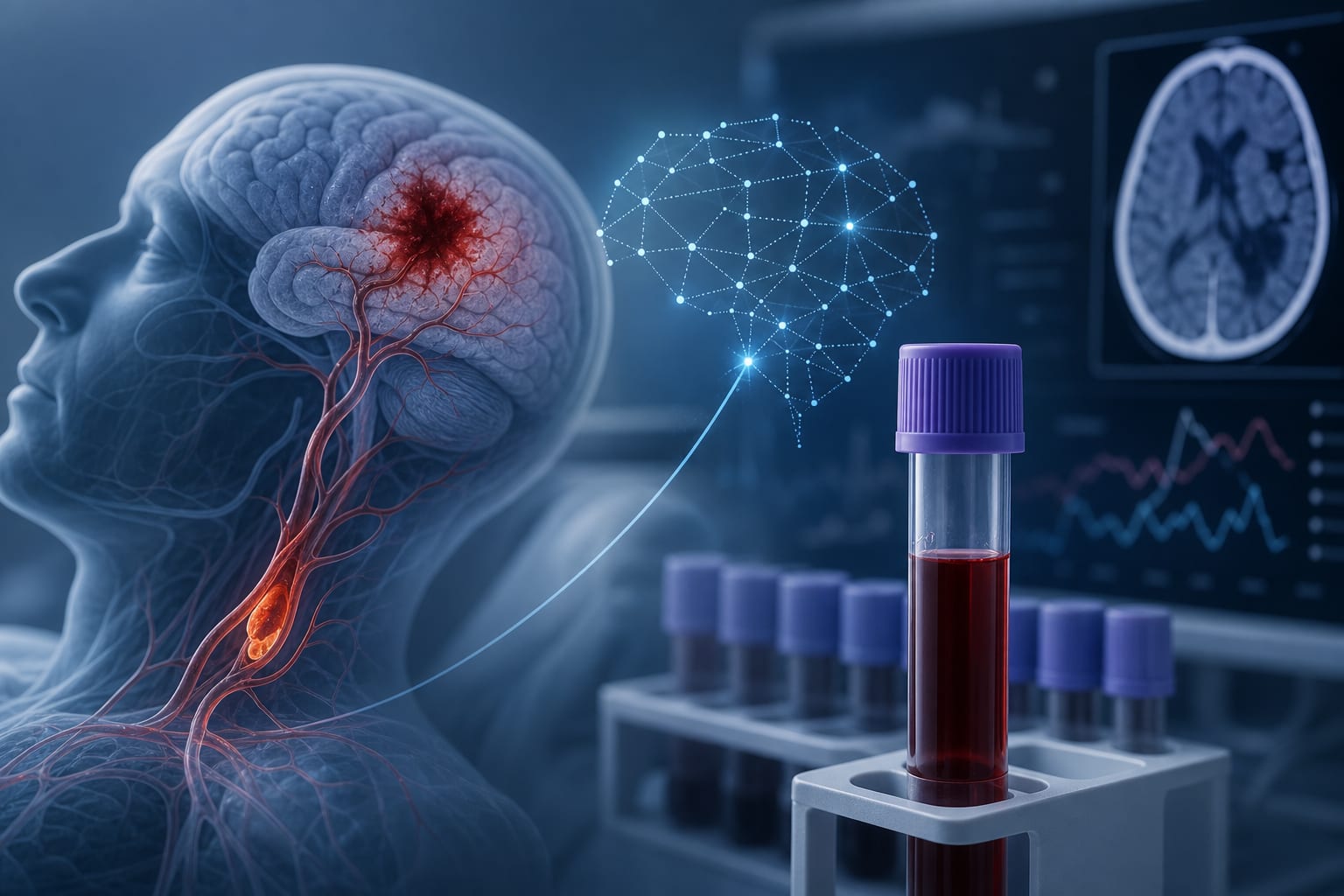
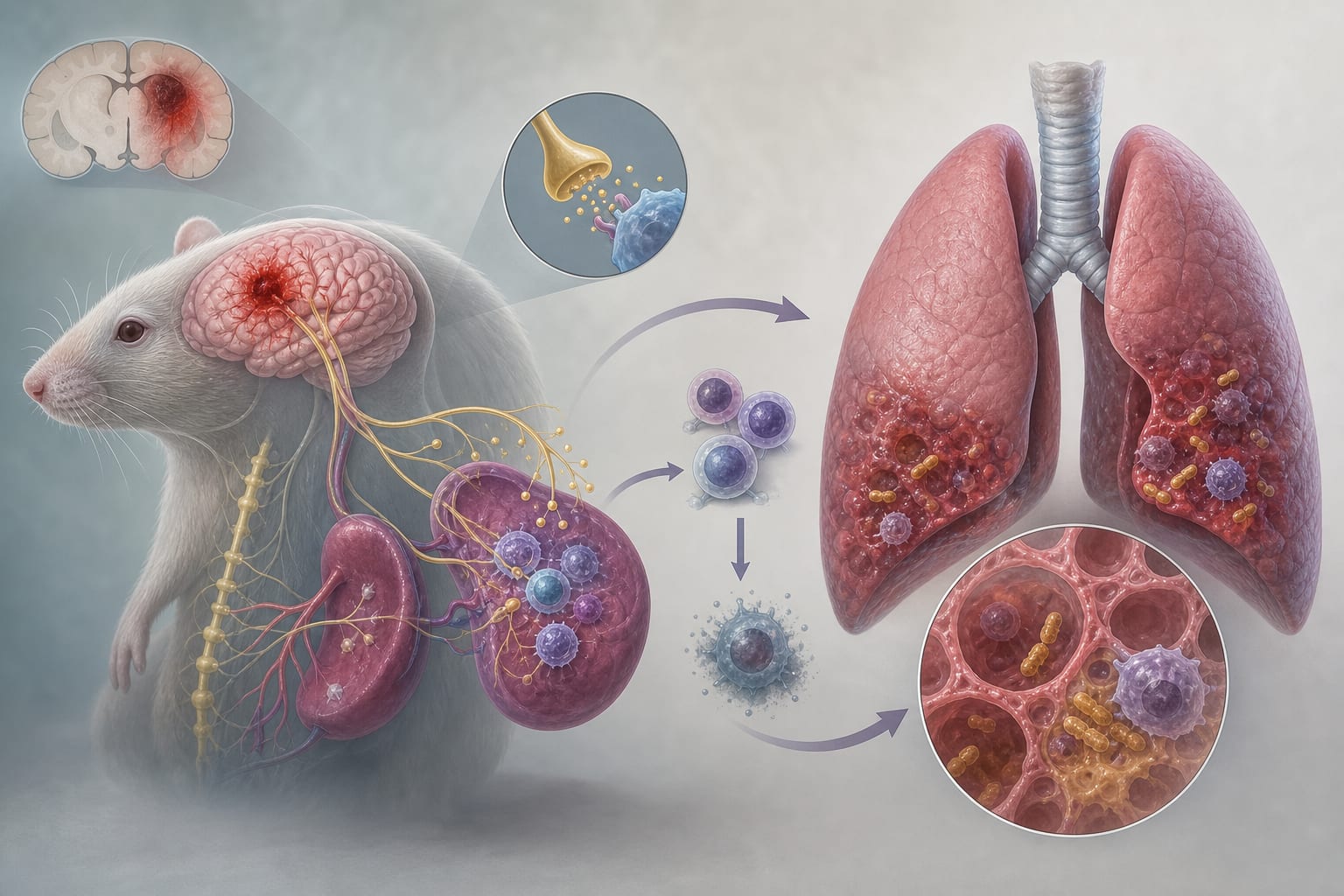
Forecasting Sepsis in Adults with Severe Cerebrovascular Disorders in the Neurological Intensive Care Setting
-
By
-
Haiyang Sun
-
Shuyun Sun
-
Yan Huang
-
Jingbo Sun
-
Chuanchuan Yu
-
Lixin Wang
-
Xiao Cheng
-
July 7, 2026
Clinical Scorecard: Forecasting Sepsis in Adults with Severe Cerebrovascular Disorders in the Neurological Intensive Care Setting
At a Glance
| Category | Detail |
|---|
| Condition | Sepsis in acute moderate-to-severe stroke patients |
| Key Mechanisms | Immune imbalance characterized by cytokine storm and immunosuppression |
| Target Population | Adults with severe cerebrovascular disorders (acute ischemic stroke or cerebral hemorrhage) |
| Care Setting | Neurological Intensive Care Unit (NICU) |
Key Highlights
- Prevalence of sepsis in acute moderate-to-severe stroke patients was 12.1%
- Four key variables identified for predicting sepsis: Hyperlipidaemia, IL-10, NIHSS, and Blood creatinine
- Prediction model achieved an AUC of 0.816, indicating good diagnostic performance
- Lower GCS scores and higher NIHSS scores associated with comorbidity sepsis
- Study conducted from January 2020 to November 2022
Guideline-Based Recommendations
Diagnosis
- Use the 2016 sepsis definition and diagnostic criteria by ASICM and ESICM
Management
- Timely identification and intervention for patients with sepsis
Monitoring & Follow-up
- Monitor GCS and NIHSS scores for early detection of sepsis risk
Risks
- Increased mortality and neurological deficits associated with post-stroke infections
Patient & Prescribing Data
Patients aged > 18 years with NIHSS > 14 or GCS < 8
Combination of blood biomarkers IL-10, MIP-1β, TNF-α, nNOS, iNOS, MMP-9, S-100β, and ET-1 for sepsis prediction
Clinical Best Practices
- Implement a prediction model based on identified biomarkers for early sepsis detection
- Ensure adherence to ethical guidelines in clinical studies
Related Resources & Content