Histopathological biomarkers of immunotherapy outcome in advanced colorectal cancer: a multicentre retrospective study
-
By
-
Jianying Chen
-
Yanzhi Chen
-
Zhigang Chen
-
July 6, 2026
-
Clinical Scorecard: Histopathological Indicators of Immunotherapy Response in Advanced Colorectal Cancer: A Multicenter Retrospective Analysis
At a Glance
| Category | Detail |
|---|
| Condition | Advanced Colorectal Cancer (aCRC) |
| Key Mechanisms | Immune checkpoint inhibitors (ICIs) targeting PD-1/PD-L1 axis |
| Target Population | Patients with advanced colorectal cancer treated with ICIs |
| Care Setting | Multicenter retrospective study |
Key Highlights
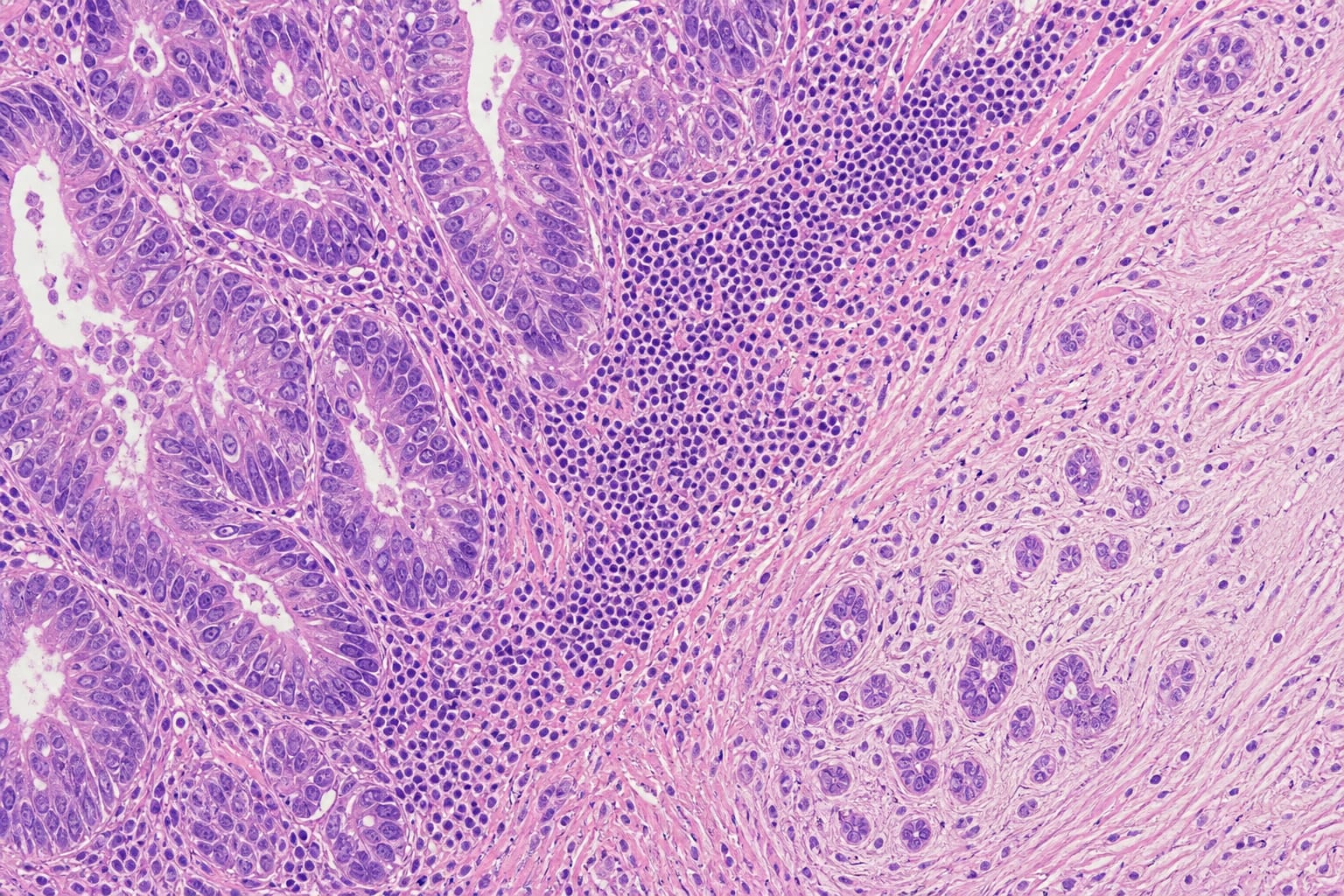
- High standardized tumor-infiltrating lymphocytes (sTILs) associated with better objective response rates (ORR)
- Low tumor-stroma ratio (TSR) linked to longer progression-free survival (PFS)
- Combination of high sTILs and low TSR identifies immune-active phenotype in proficient mismatch repair (pMMR) patients
Guideline-Based Recommendations
Diagnosis
- Histopathological assessment of H&E-stained slides for prognostic features
Management
- Consider standardized assessment of sTILs, TSR, and tumor budding in treatment planning for aCRC
Monitoring & Follow-up
- Utilize histopathological features to stratify treatment outcomes and survival
Risks
- Patients with pMMR tumors may have heterogeneous responses to ICIs
Patient & Prescribing Data
210 patients with pathologically confirmed aCRC receiving PD-1/PD-L1 inhibitors
High sTILs and low TSR are associated with improved treatment outcomes
Clinical Best Practices
- Incorporate histopathological features into routine clinical assessments for aCRC
- Use standardized methods for evaluating sTILs, TSR, and tumor budding
Related Resources & Content