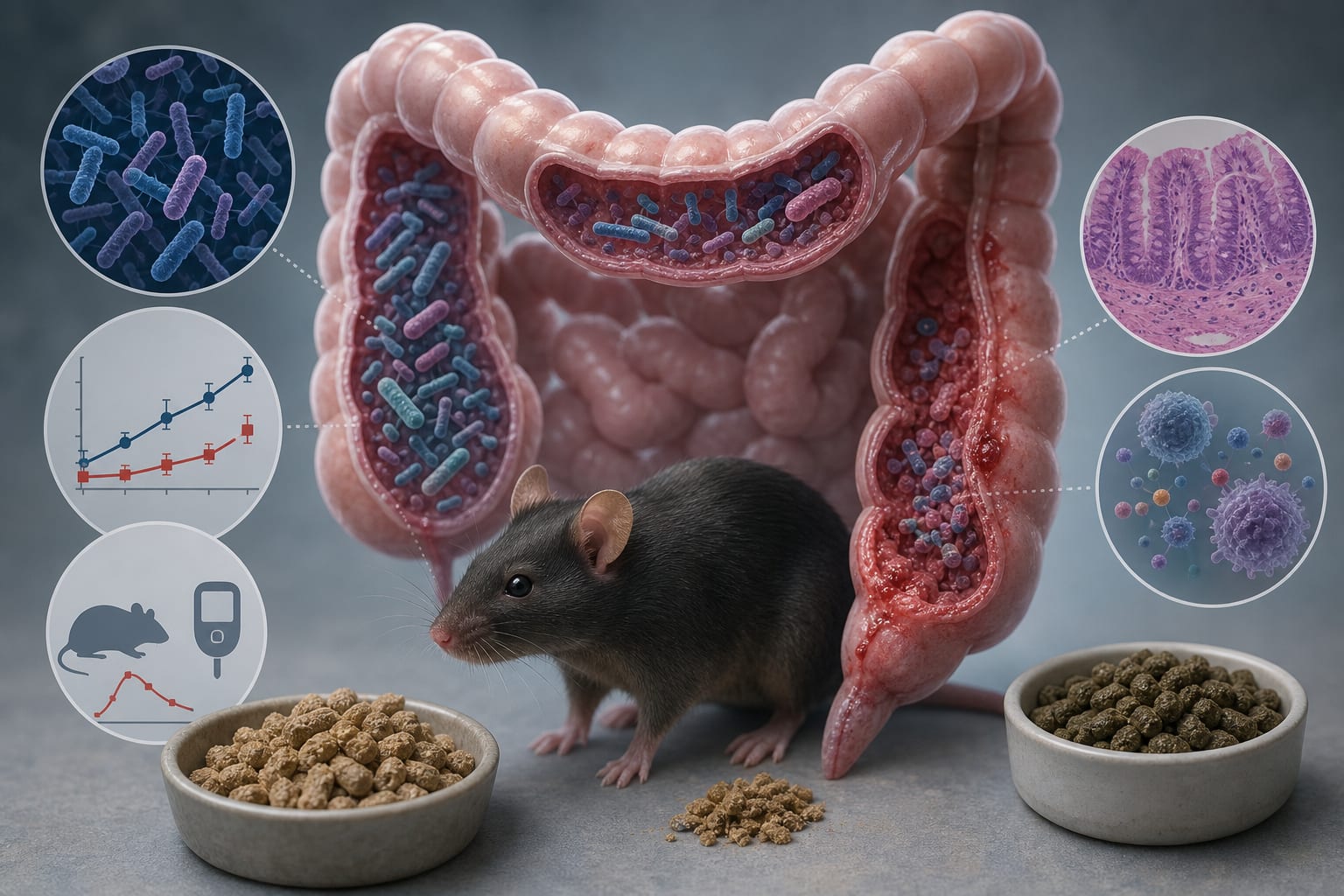
Clinical Scorecard: Impact of a Sucrose-Excluded Low-Fat Diet on Metabolic Health via Gut Microbiome Disruption and Colonic Inflammation in Murine Models
At a Glance
Category
Detail
Condition
Metabolic Dysfunction
Key Mechanisms
Gut microbiome disruption and colonic inflammation
Target Population
C57BL/6 mice
Care Setting
Laboratory animal research
Key Highlights
Sucrose-free low-fat diet (SF-LFD) impaired glucose tolerance and reduced insulin sensitivity in mice.
SF-LFD caused significant alterations in circulating metabolic hormones.
Dysbiosis was observed with depletion of beneficial gut bacteria and enrichment of inflammatory taxa.
Colonic inflammation was characterized by crypt disruption and increased immune cell infiltration.
Hepatic inflammation and microvesicular steatosis were induced by SF-LFD.
Guideline-Based Recommendations
Diagnosis
Assessment of glucose tolerance and insulin sensitivity in dietary studies.
Management
Consideration of dietary composition, specifically sucrose content, in metabolic health interventions.
Monitoring & Follow-up
Regular evaluation of gut microbiome diversity and metabolic hormone levels.
Risks
Potential for colonic and hepatic inflammation with sucrose exclusion in low-fat diets.
Patient & Prescribing Data
Not applicable; study conducted in murine models.
Sucrose exclusion from low-fat diets may lead to metabolic dysfunction.
Clinical Best Practices
Incorporate gut microbiome assessments in metabolic health evaluations.
Monitor inflammatory markers in patients on low-fat diets.
These 10 states have paid family or medical leave programs and health, wellness, peer support, or monitoring resources available to physicians or other health professionals.
Investigators compared cardiovascular outcomes with tirzepatide and a placebo proxy in patients with type 2 diabetes and established atherosclerotic cardiovascular disease.