Conexiant’s news site is now MDSpire News. Learn more
Advertisement
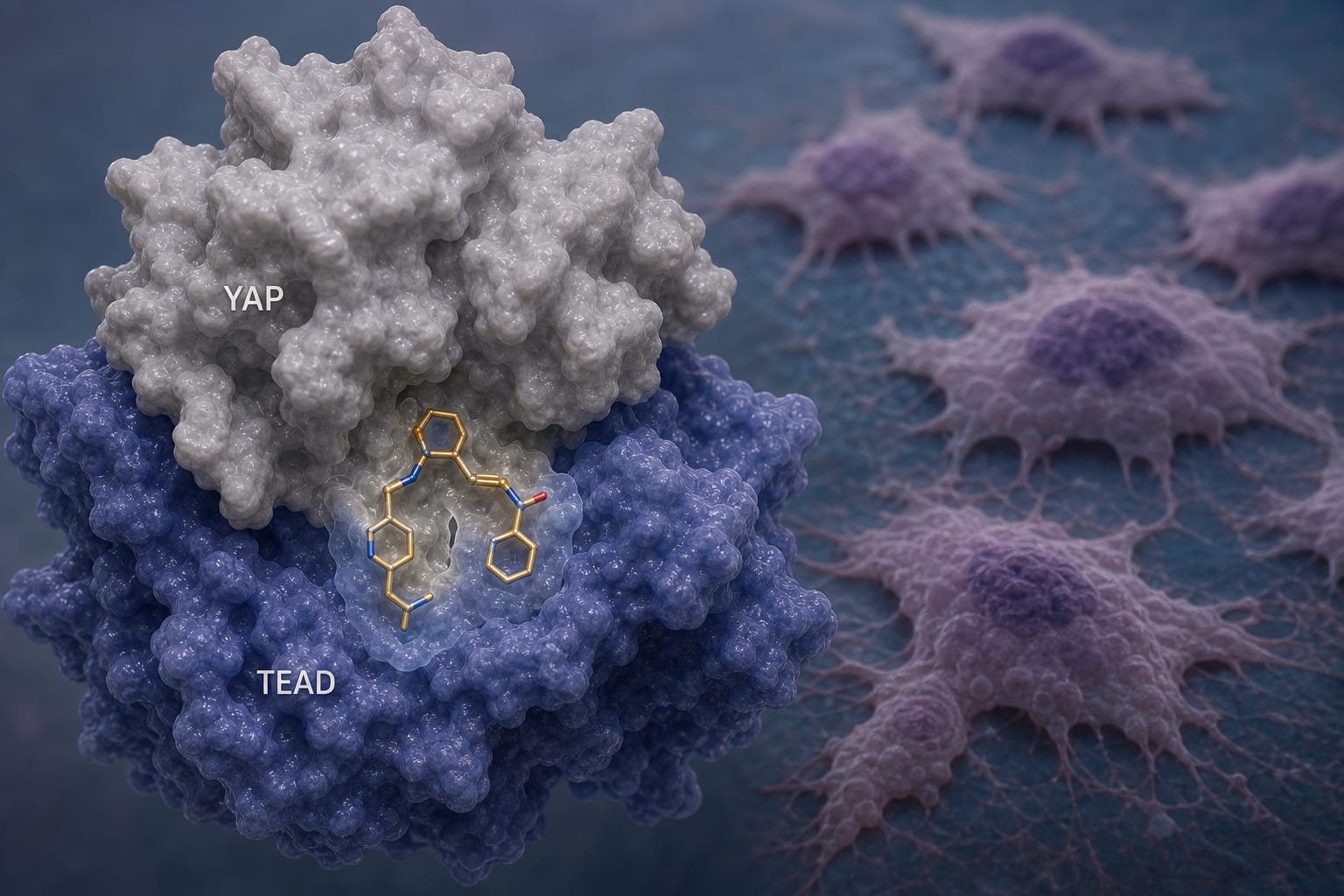
Evaluation of Computationally Identified Small Molecules Targeting the YAP–TEAD Interaction in Mesothelioma Cell Models with Altered Hippo Pathway Activity
Clinical Scorecard: Evaluation of Computationally Identified Small Molecules Targeting the YAP–TEAD Interaction in Mesothelioma Cell Models with Altered Hippo Pathway Activity
At a Glance
Category
Detail
Condition
Malignant Pleural Mesothelioma
Key Mechanisms
Aberrant signaling through the Hippo–YAP/TAZ–TEAD transcriptional axis
Target Population
Patients with Hippo pathway alterations in mesothelioma
Care Setting
Cancer research and drug discovery
Key Highlights
TEAD inhibitors like K-975 showed dose-dependent antiproliferative effects in certain mesothelioma cell lines.
Computationally nominated compounds did not demonstrate measurable antiproliferative activity.
The study highlights the disparity between computational predictions and actual cellular activity.
Negative validation findings are infrequently reported in drug discovery.
YAP/TAZ signaling contributes to therapeutic resistance in various cancers.
Guideline-Based Recommendations
Diagnosis
Assess Hippo pathway alterations in mesothelioma for targeted therapy considerations.
Management
Consider TEAD inhibitors for patients with Hippo pathway alterations.
Monitoring & Follow-up
Monitor cell viability and proliferation in response to TEAD inhibitors.
Risks
Potential for publication bias in reporting negative validation findings.
Patient & Prescribing Data
Patients with malignant pleural mesothelioma exhibiting Hippo pathway dysregulation.
K-975 and cisplatin are validated treatments, while computationally nominated compounds showed no activity.
Clinical Best Practices
Utilize both positive and negative findings to inform drug discovery efforts.
Incorporate structure-guided virtual screening in the identification of drug candidates.