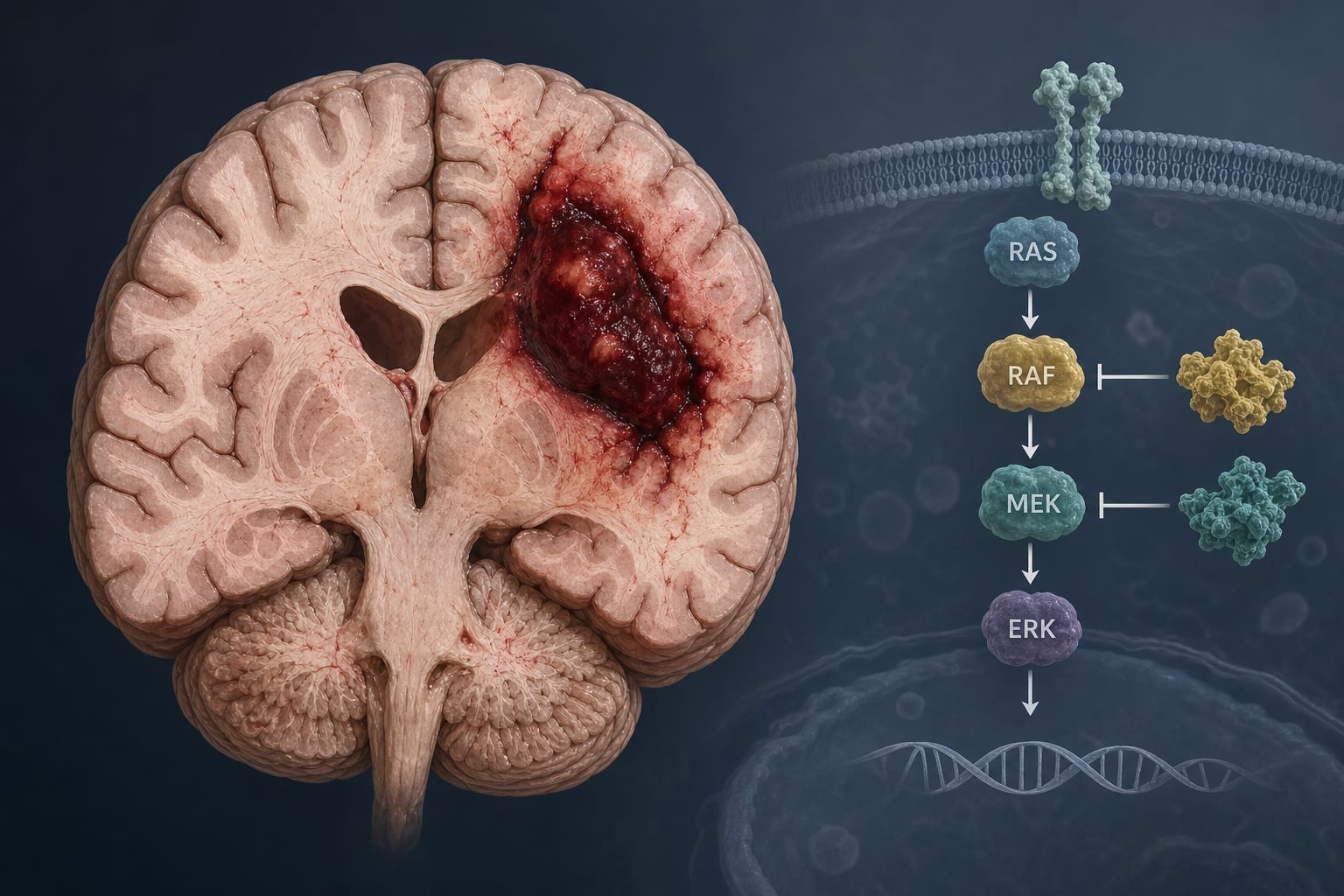
Hemorrhagic Events in Tumors and the Brain Linked to MAPK-Pathway Inhibitors: A Comprehensive Review and Mechanistic Analysis
By
Sudarshawn Damodharan
Alejandra Calderon
Mohamed S. Abdelbaki
July 15, 2026
Clinical Scorecard: Hemorrhagic Events in Tumors and the Brain Linked to MAPK-Pathway Inhibitors: A Comprehensive Review and Mechanistic Analysis
At a Glance
Category Detail
Condition Hemorrhagic Events in CNS Tumors Key Mechanisms Constitutive activation of the MAPK pathway, particularly through BRAF fusions, BRAF V600E mutations, and NF1 loss. Target Population Patients with pediatric low-grade glioma, BRAF V600E-mutant high-grade glioma, and neurofibromatosis type 1-associated tumors. Care Setting Neuro-oncology
Key Highlights
MAPK-pathway inhibitors have redefined treatment for various CNS tumors. Tovorafenib received accelerated FDA approval for relapsed or refractory BRAF-altered pLGG. Serious toxicities, including hemorrhage, are associated with MAPK-pathway inhibition. Hemorrhage is a labeled warning for selumetinib and tovorafenib. Incidence estimates of hemorrhage vary across tumor types and agents. Guideline-Based Recommendations
Diagnosis
Monitor for intratumoral and intracranial hemorrhage in patients receiving MAPK-pathway inhibitors. Management
Characterize agent-level differences in hemorrhage phenotype and severity. Monitoring & Follow-up
Integrate radiographic surveillance and co-exposure data to improve monitoring. Risks
Fatal CNS bleeding has been reported with dabrafenib-based regimens. Patient & Prescribing Data
Patients with BRAF-altered CNS tumors.
Tovorafenib shows an overall response rate of 51% in registrational populations.
Clinical Best Practices
Conduct systematic reviews to synthesize data on hemorrhagic events. Utilize standardized definitions for CNS-specific bleeding across trials. Related Resources & Content