Hypoglossal Nerve Stimulation - Summary - MDSpire
Coming Soon: Introducing MDSpire News. Learn more
Conexiant’s news site is now MDSpire News. Learn more

Stimulation of the Hypoglossal Nerve for Obstructive Sleep Apnea Treatment

  • By

  • Armita Norouzi

  • Megan L. Durr

  • September 1, 2026

Share

Objective:

To describe hypoglossal nerve stimulation (HNS) as a treatment for obstructive sleep apnea (OSA).

Approach:
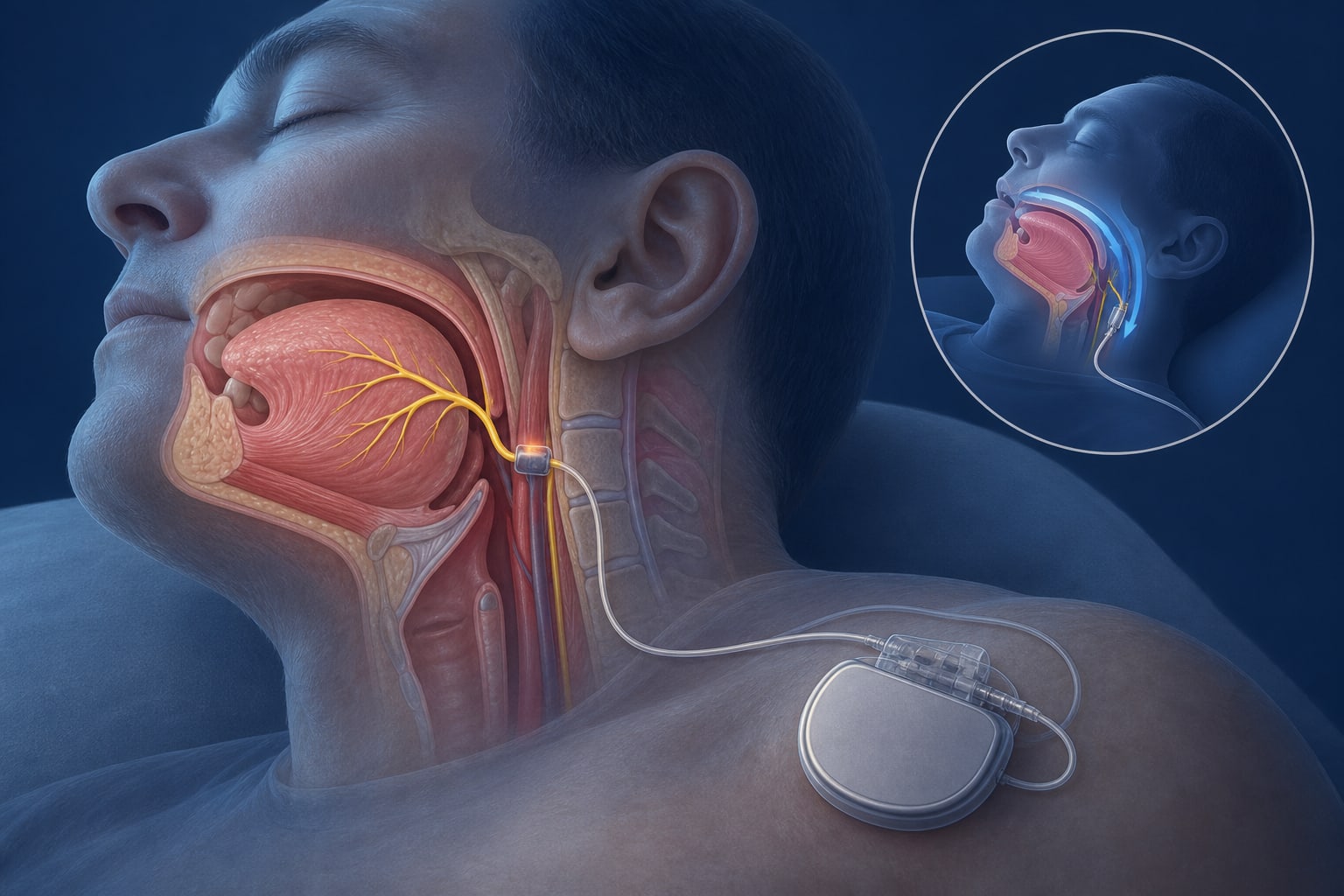
  • HNS Mechanism: HNS involves a surgically implanted device that stimulates the hypoglossal nerve to move the tongue forward, maintaining an open airway during sleep.
  • Indications: HNS is indicated for adults and select older children who cannot tolerate CPAP.
  • Surgical Procedures: Unilateral HNS requires two incisions (jaw and chest), while bilateral HNS requires one incision (chin) and uses an external battery.
Key Findings:
  • OSA leads to breathing interruptions during sleep, increasing risks for high blood pressure, heart disease, and stroke.
  • HNS can reduce sleep-related breathing problems and improve daytime alertness for many patients.
  • Outcomes of HNS treatment can vary, and it may not improve OSA in every patient.
Interpretation:

HNS is a viable alternative for OSA treatment in patients who cannot use CPAP, but individual outcomes may vary.

Limitations:
  • Possible risks include pain, bleeding, swelling, infection, and temporary tongue discomfort.
  • Nerve injury occurs in less than 1% of cases, and device adjustments or replacements may be necessary.
Conclusion:

HNS technology is evolving, with new devices and methods being developed.

Sources:

Original Source(s)

Related Content