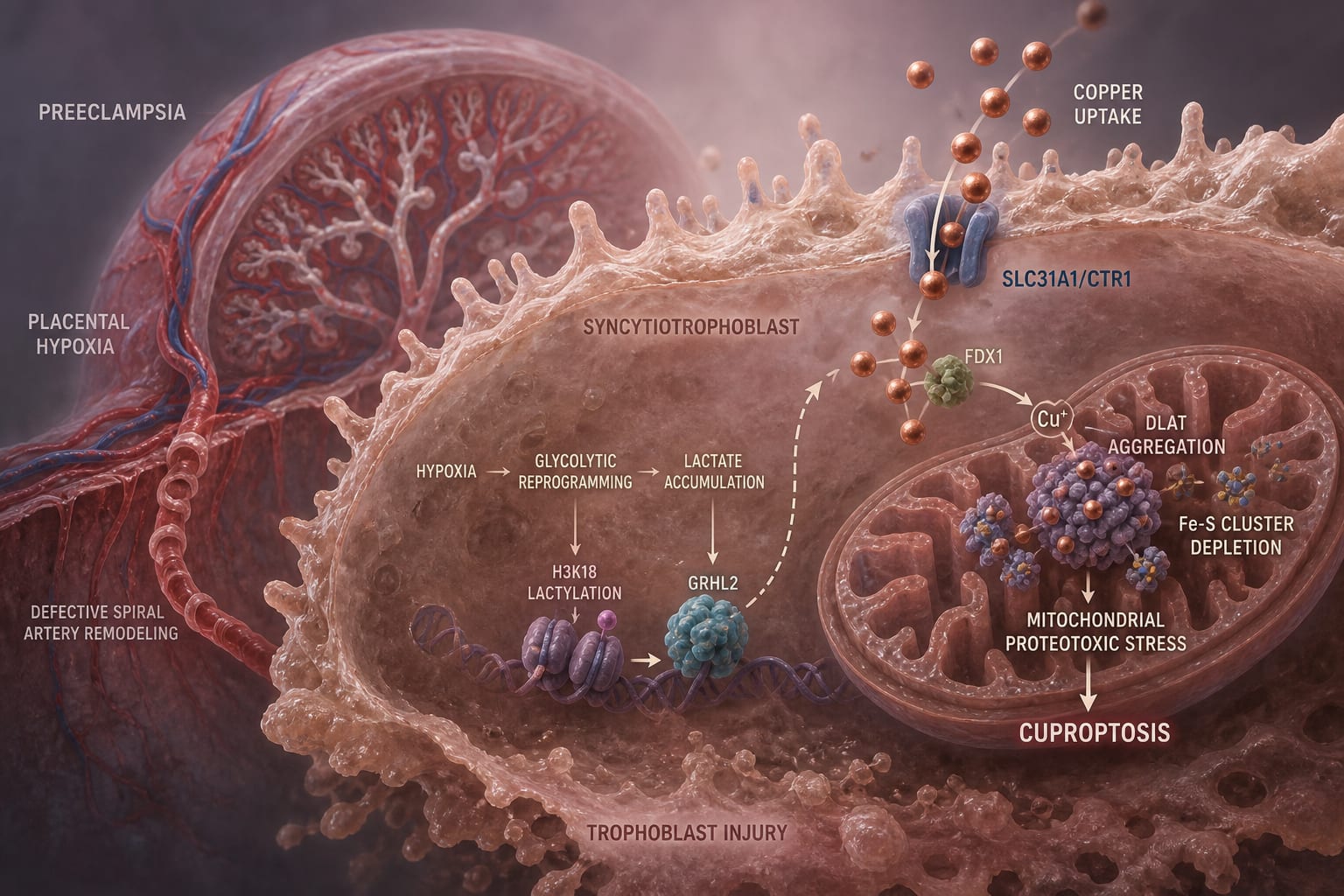
To explore the role of cuproptosis in linking placental metabolic stress to trophoblast injury in preeclampsia.
Approach:
Hypothesis Development: Proposes that hypoxia-driven glycolytic reprogramming and lactate accumulation lead to histone H3K18 lactylation, activating GRHL2 and enhancing copper uptake, resulting in trophoblast damage.
Evidence Review: Reviews clinical studies linking copper dyshomeostasis to preeclampsia and identifies differentially expressed cuproptosis-associated genes in placental tissues.
Pathway Proposal: Suggests a pathway where placental hypoxia induces lactate accumulation, which in turn modifies histones and affects copper metabolism, leading to trophoblast cuproptosis.
Key Findings:
In a case-control study involving 88 women in the third trimester, significantly higher serum copper concentrations were reported in patients with preeclampsia, alongside lower thiol levels.
Findings from a systematic review and meta-analysis of 34 studies indicated that the relationship between maternal serum copper and preeclampsia varied significantly by geographic region.
Lower concentrations of copper, zinc, selenium, and other metals have been observed in placental tissue from preeclampsia pregnancies.
Interpretation:
Existing evidence does not demonstrate that cuproptosis initiates preeclampsia, although it may intensify placental dysfunction.
Limitations:
Total serum copper may not accurately reflect the labile copper pool available to trophoblasts due to most circulating copper being bound to ceruloplasmin.
Systemic copper measurements could be confounded by inflammation and variations in nutritional status.
Conclusion:
Further investigation into copper transport, mitochondrial stress, and pathway-specific biomarkers is warranted to clarify the role of cuproptosis in preeclampsia.
Women reported improvement across 6 cognitive domains during 12 months of estriol-based treatment, while murine models suggested a potential astrocyte-mediated mechanism.