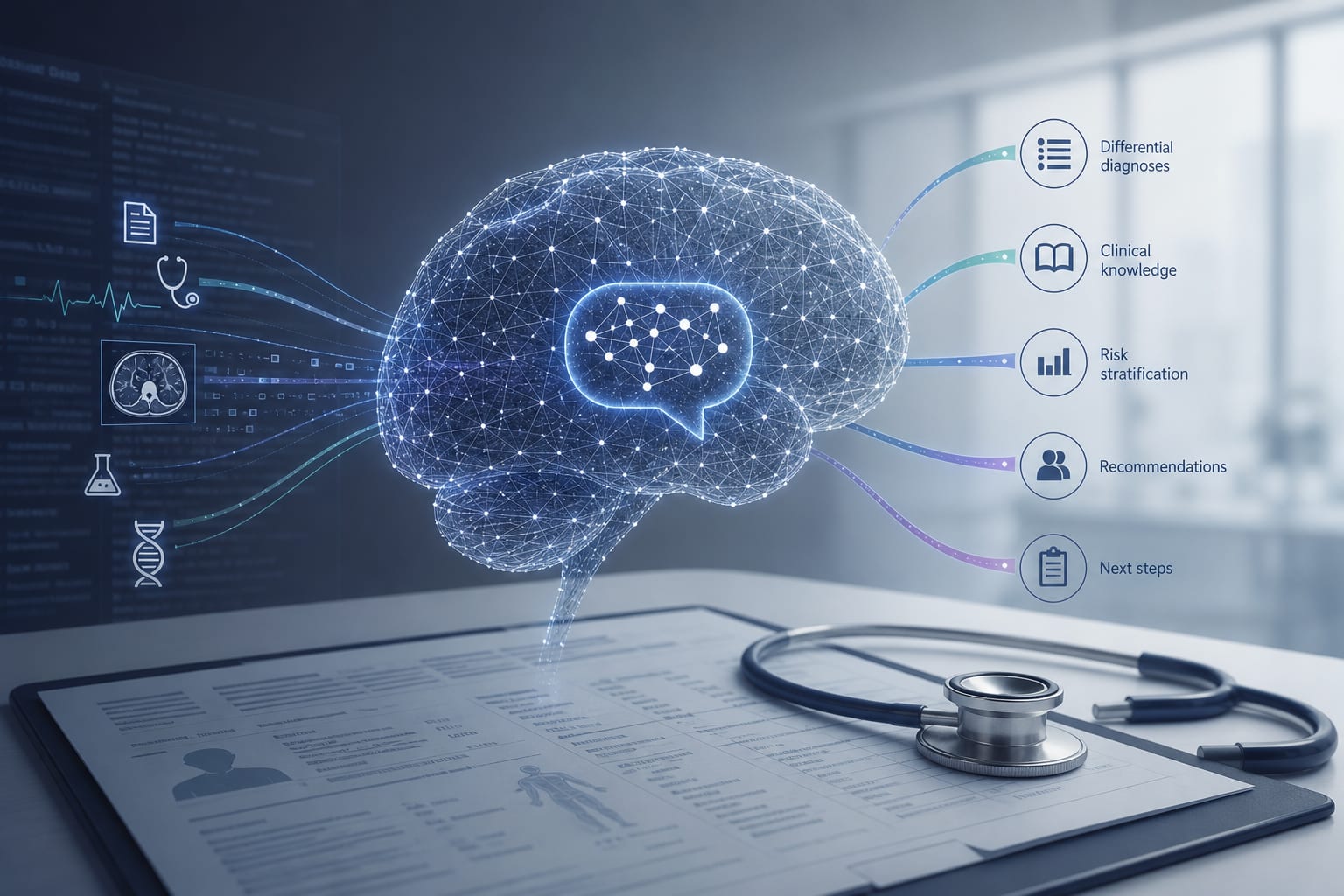
To systematically map the intellectual landscape and trace the research trajectory of large language models (LLMs) in diagnostic medicine through bibliometric analysis, highlighting the significance of this emerging field.
Approach:
Key Findings:
LLM-assisted diagnostic research has gained significant scholarly attention since the release of ChatGPT in late 2022, with over X publications in the first year.
The literature on LLMs in diagnostics has expanded across multiple clinical specialties, including X, Y, and Z.
Surveys indicate a high percentage of psychiatrists using LLMs like ChatGPT in their diagnostic processes, with X% reporting regular use.
Preliminary findings suggest potential clinical utility of LLM-assisted diagnostic tools in specific settings, with accuracy rates of X%.
Interpretation:
The integration of LLMs into clinical practice is growing, but ethical, legal, and practical challenges remain, including concerns about data privacy and model reliability, which could hinder widespread adoption.
Limitations:
The study does not provide direct guidance for the design or validation of LLM-assisted diagnostic tools, which may limit practical application.
The bibliometric analysis is trend-based and may not capture all nuances of the field, potentially overlooking emerging areas of research.
Conclusion:
A comprehensive synthesis of the existing literature on LLMs in diagnostic medicine is essential for understanding their potential and challenges, and future research should focus on addressing the identified limitations.
Claims-based target trial emulation found no clear association between continued GLP-1 receptor agonist use in early pregnancy and nonlive birth, fetal growth abnormalities, or major congenital malformations.