Impact of anti-TNF and anti-IL-12/IL-23 antibody therapy on periodontal inflammation and gingival crevicular fluid IL-6 in patients with inflammatory bowel diseases - Summary - MDSpire
Conexiant’s news site is now MDSpire News. Learn more
Advertisement
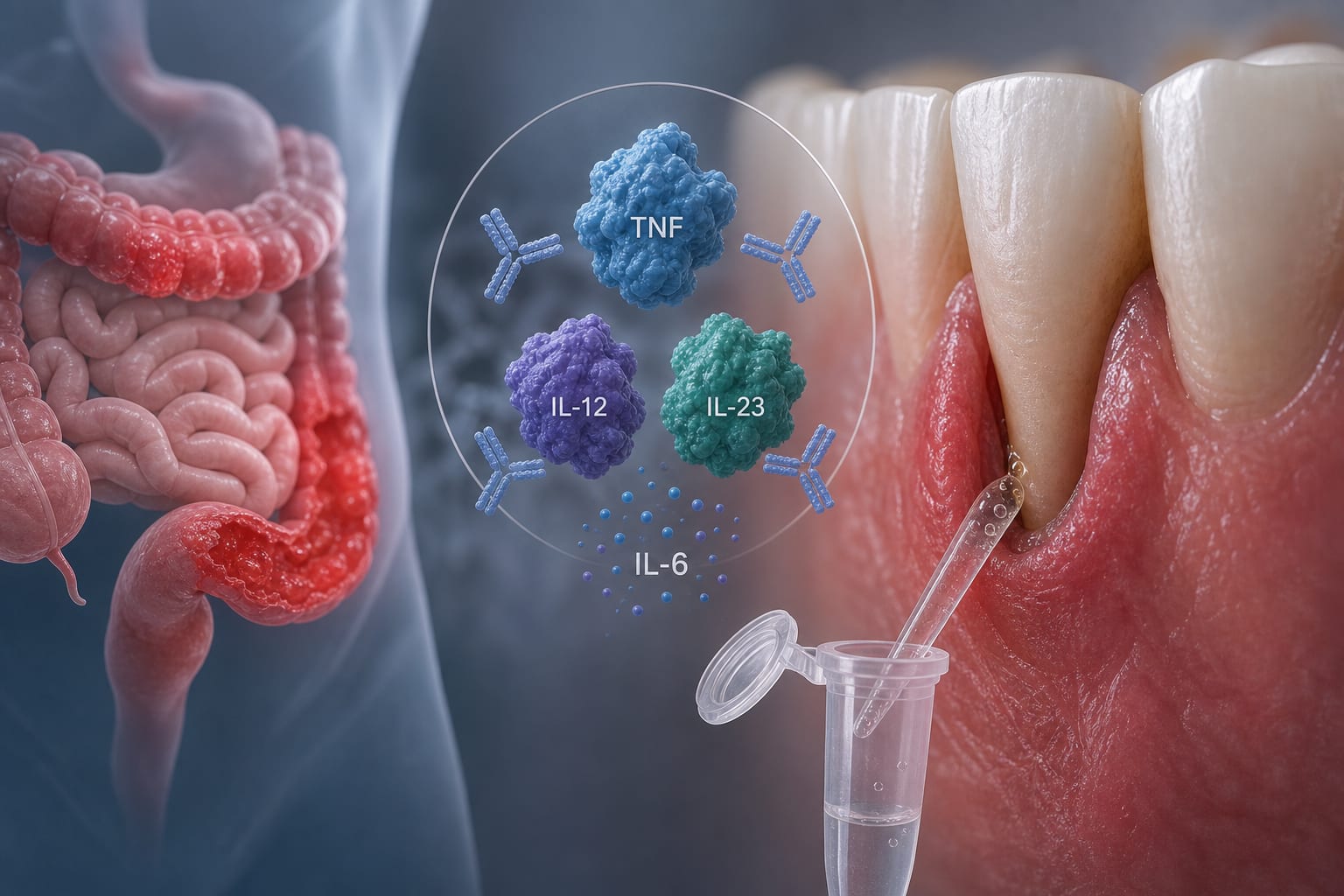
Effects of Anti-TNF and Anti-IL-12/IL-23 Antibody Treatments on Periodontal Inflammation and IL-6 Levels in Gingival Crevicular Fluid Among Inflammatory Bowel Disease Patients
To investigate the impact of anti-TNF and anti-IL-12/23 therapies on periodontal health and IL-6 levels in patients with inflammatory bowel disease (IBD).
Approach:
Study Design: Cross-sectional, hypothesis-generating study involving 45 IBD patients stratified into three groups based on biological therapy: anti-TNF, anti-IL-12/23, and a control group.
Assessment Methods: Periodontal status was evaluated using the Periodontal Screening Index (PSI), and IL-6 levels in gingival crevicular fluid (GCF) were measured using ELISA.
Key Findings:
16 patients exhibited known or previously undiagnosed periodontitis, with variability in severity.
Patients receiving anti-IL-12/23 therapy had lower mean and maximal PSI scores compared to those receiving anti-TNF therapy.
No sextants with advanced periodontal inflammation were detected in the anti-IL-12/23 group.
IL-6 levels in GCF were significantly lower in the anti-IL-12/23 group compared to controls.
Interpretation:
IL-12/23 blockade may be associated with reduced periodontal inflammation and local IL-6 activity in IBD patients.
Limitations:
The cross-sectional design limits the ability to infer causality.
The small sample size may affect the generalizability of the findings.
Conclusion:
The study provides a basis for further longitudinal investigations into the effects of cytokine-targeted biologic therapy on the oral-gut immune axis.