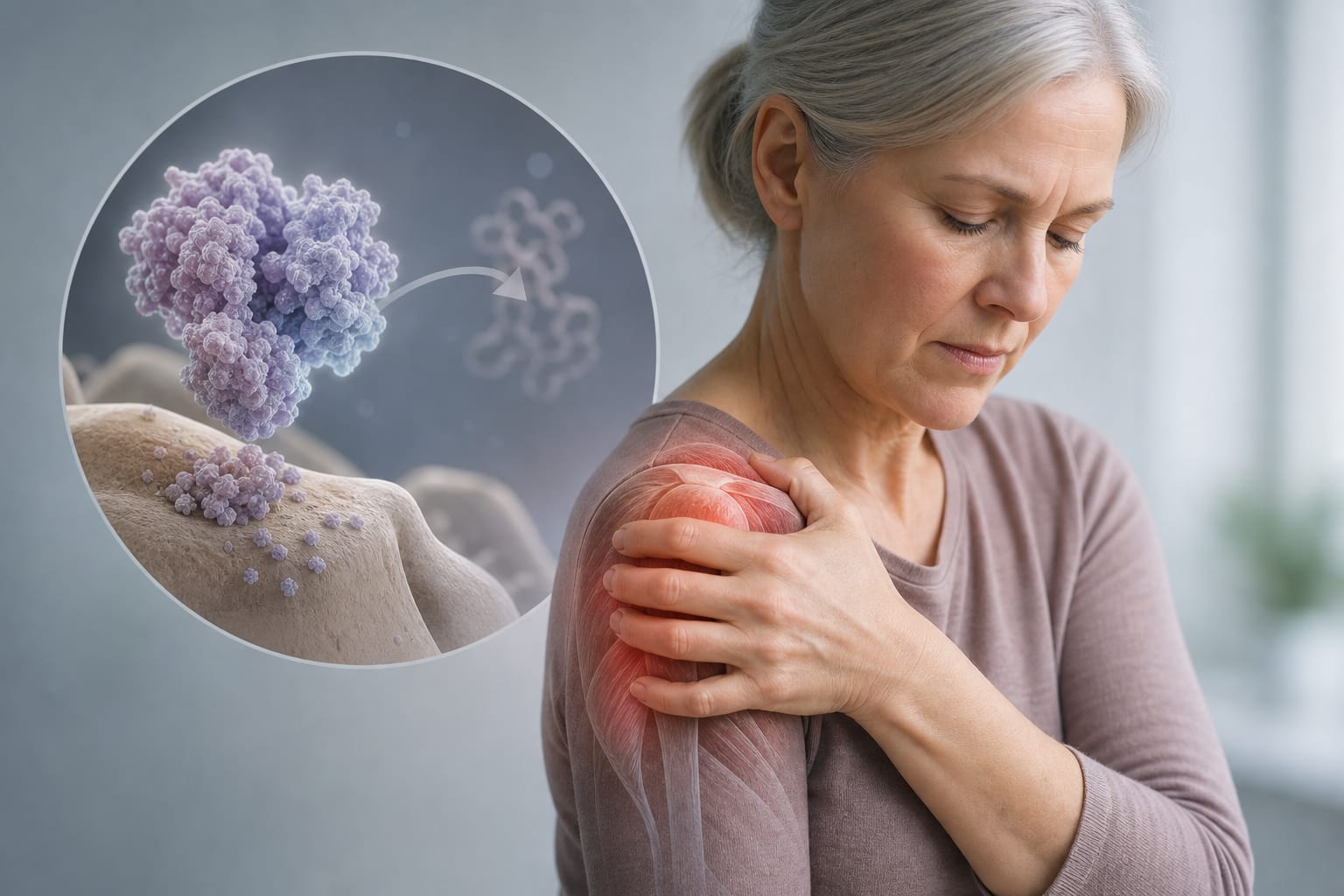
To examine predictors of baseline, 4-month, and change scores of pain severity in breast cancer survivors utilizing aromatase inhibitors, framed within a biopsychosocial model.
Key Findings:
Having a partner is associated with lower baseline pain intensity (p = 0.014).
Diminished sleep quality predicts higher pain intensity at baseline (p < 0.000) and 4 months (p = 0.031).
Reduced chest press strength is a significant predictor of increased pain at 4 months (p = 0.010).
Participation in brief physical activity counseling correlates with higher pain intensity compared to exercise group (p = 0.008).
Involvement in physical activity counseling and waitlist control groups predicts increased pain intensity over time (p = 0.006 and p = 0.029, respectively).
Interpretation:
The study highlights the complex nature of pain in breast cancer survivors on aromatase inhibitors, emphasizing the need for tailored interventions that consider biopsychosocial factors, particularly in sleep quality and physical activity.
Limitations:
The sample size may limit generalizability, particularly to diverse populations.
The study primarily focuses on a specific demographic, potentially overlooking diverse populations.
Reliance on self-reported measures may introduce bias, affecting the accuracy of pain assessments.
Conclusion:
Longitudinal research is essential to understand pain dynamics in breast cancer survivors and to enhance intervention strategies, particularly focusing on sleep quality and physical activity.