Preoperative CT markers and poor discharge functional status after burr-hole drainage for chronic subdural hematoma: a retrospective cohort study - Summary - MDSpire
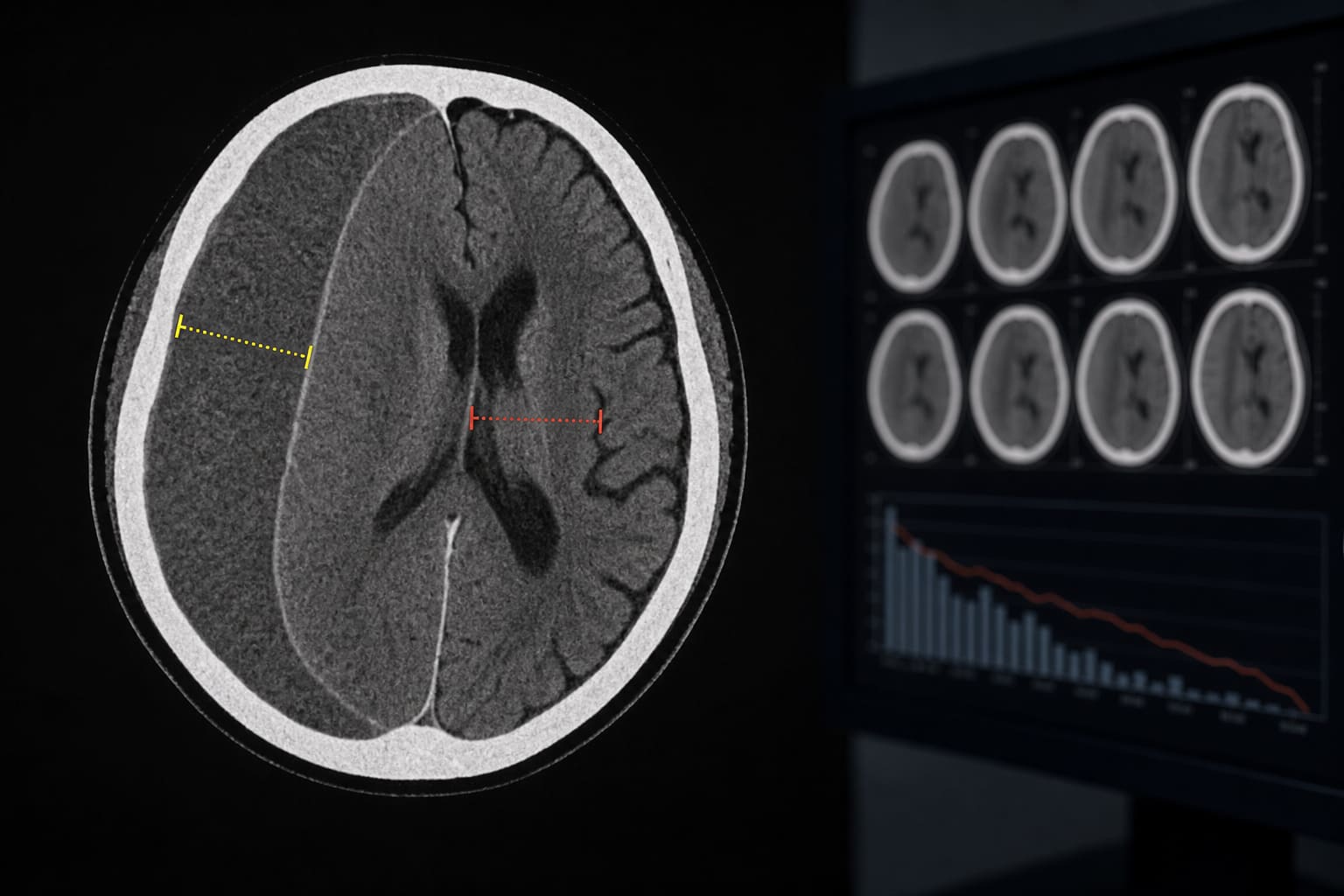
To evaluate whether preoperative CT markers, specifically hematoma thickness and midline shift, are associated with poor discharge functional status after burr-hole drainage for CSDH, after adjustment for established clinical factors.
Key Findings:
66 (25.4%) patients had poor discharge functional status.
Midline shift (aOR 1.11, p = 0.036), pre-hospital mRS (aOR 1.39, p = 0.022), and age (aOR 1.08, p < 0.001) were independently associated with poor discharge functional status.
Hematoma thickness was positively associated with poor outcome but did not meet the p < 0.05 threshold (aOR 1.05, p = 0.067).
The full model achieved an AUC of 0.733, with bootstrap-corrected AUC of 0.721.
Interpretation:
Midline shift, pre-hospital functional status, and age are independently associated with poor discharge functional status after burr-hole drainage for CSDH.
Limitations:
Retrospective design limits causal inference.
Findings are exploratory and require external validation.
Absence of prospective registration.
Conclusion:
These findings may assist in preoperative risk stratification and patient counseling but should not be used as a stand-alone basis for treatment decisions.