Diagnosis and treatment progress of upper eyelid abnormalities in thyroid-eye disease - Summary - MDSpire

Diagnosis and treatment progress of upper eyelid abnormalities in thyroid-eye disease

  • By

  • Cheng Gai

  • Bing Wang

  • July 13, 2026

Share

Objective:

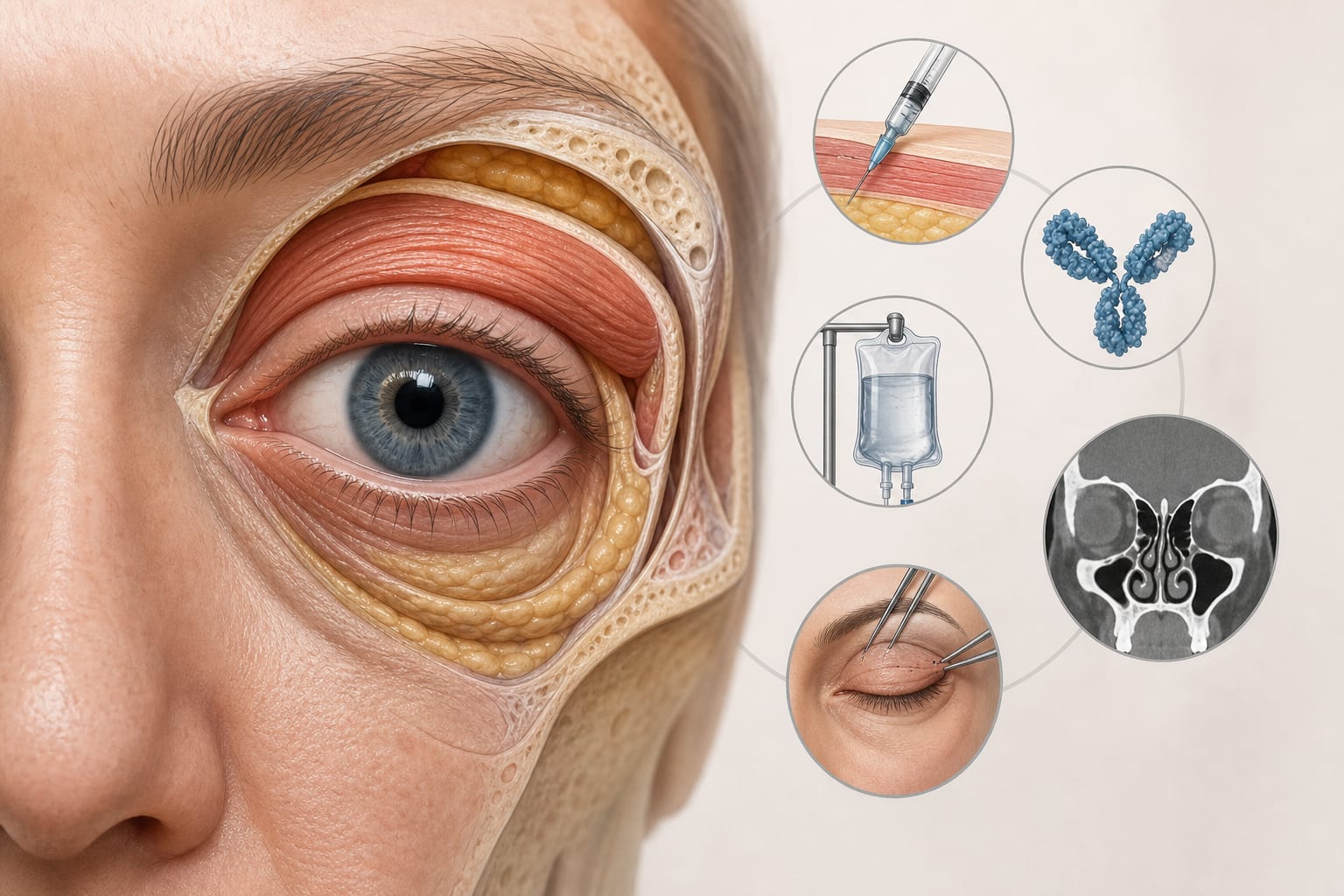
To review current knowledge on diagnosing and treating upper eyelid abnormalities associated with thyroid eye disease (TED).

Approach:
  • Treatment Options: The article examines a range of treatment options including supportive care, local injections (botulinum toxin A, hyaluronic acid, triamcinolone), systemic drugs (corticosteroids, Teprotumumab, alpha-1 antagonists), and surgical interventions (levator recessio…
Key Findings:
  • Upper eyelid abnormalities occur in 70%-90% of TED cases and significantly impair visual function and quality of life.
  • Teprotumumab, an IGF-1 receptor antagonist, shows substantial efficacy in reducing eyelid retraction and proptosis with a better safety profile than traditional glucocorticoids.
  • There is a lack of head-to-head trials comparing treatment modalities, and the optimal timing for biologics versus surgery remains unclear.
Interpretation:

Limitations:
  • Few head-to-head trials exist comparing different treatment options.
  • The optimal timing for biologics versus surgical interventions is not well established.
Conclusion:

The review provides a practical framework for clinicians and outlines research priorities in the management of upper eyelid abnormalities in TED.

Original Source(s)

Related Content