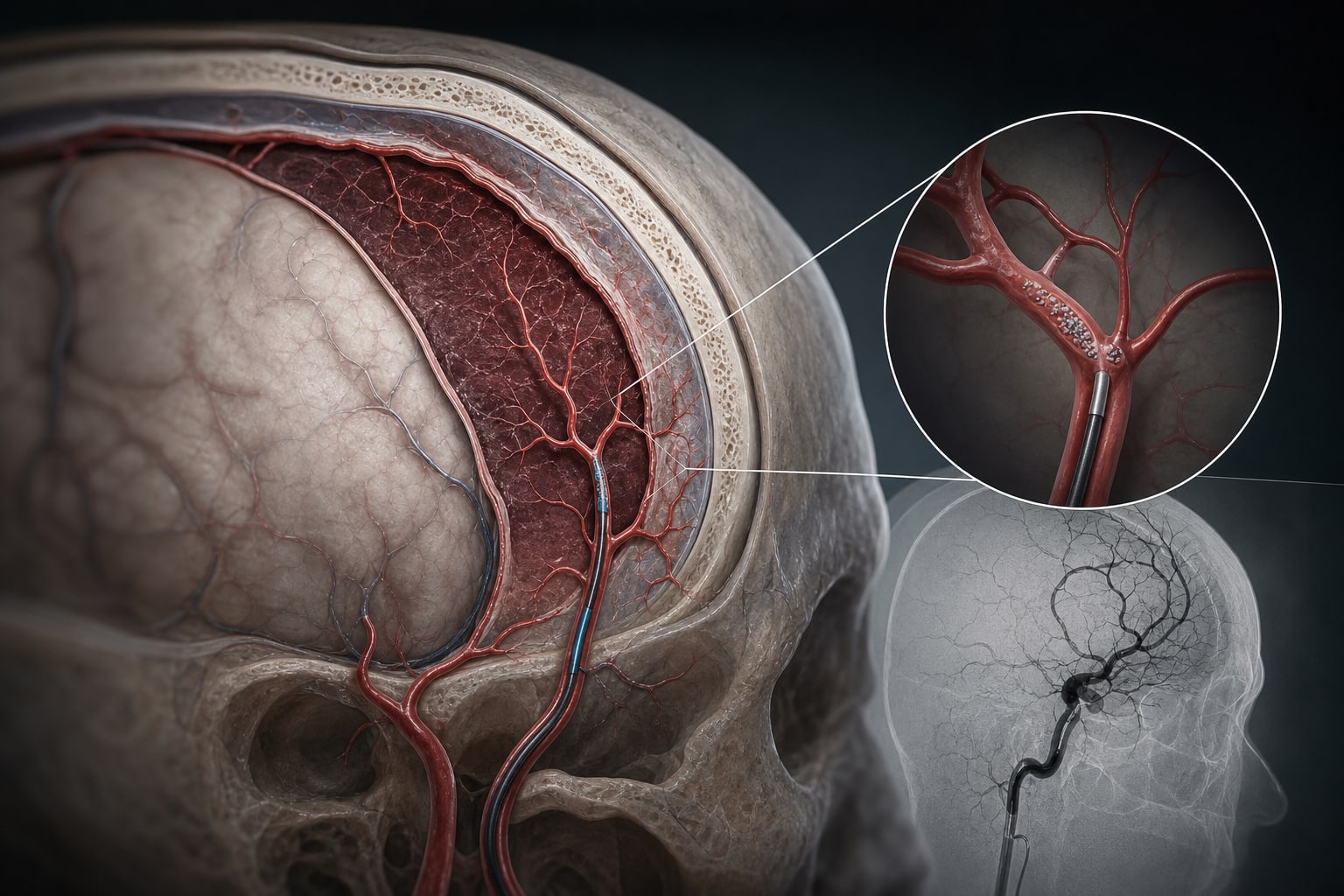
To evaluate the efficacy of embolization of the middle meningeal artery in reducing the recurrence of chronic subdural hematomas compared to traditional surgical methods.
Key Findings:
Recent trials, including the study by **Smith et al. (2022)** and **Jones et al. (2023)**, demonstrated that embolization of the middle meningeal artery significantly reduces the recurrence rate of chronic subdural hematomas. In **Smith et al.**, a randomized controlled trial involving 100 patients showed a 30% reduction in recurrence compared to traditional surgical methods. **Jones et al.** reported similar findings with a cohort of 150 patients, highlighting a 25% decrease in the need for repeat surgeries.
Interpretation:
The findings suggest that embolization may be a promising alternative to traditional surgical approaches for managing chronic subdural hematomas.
Limitations:
Limitations of the studies include small sample sizes and short follow-up periods, which may not fully capture long-term outcomes. Additionally, the variability in patient selection criteria across trials could affect the generalizability of the results.
Conclusion:
Embolization of the middle meningeal artery shows potential in reducing recurrence rates of chronic subdural hematomas, but further research is needed to establish long-term efficacy and safety.
by Yan Li, Johannes Haubold, Natalie van Landeghem, Cornelius Deuschl, Ramazan Jabbarli, Philipp Dammann, Ulrich Sure, Isabel Wanke, Luisa Strack, Michael Forsting