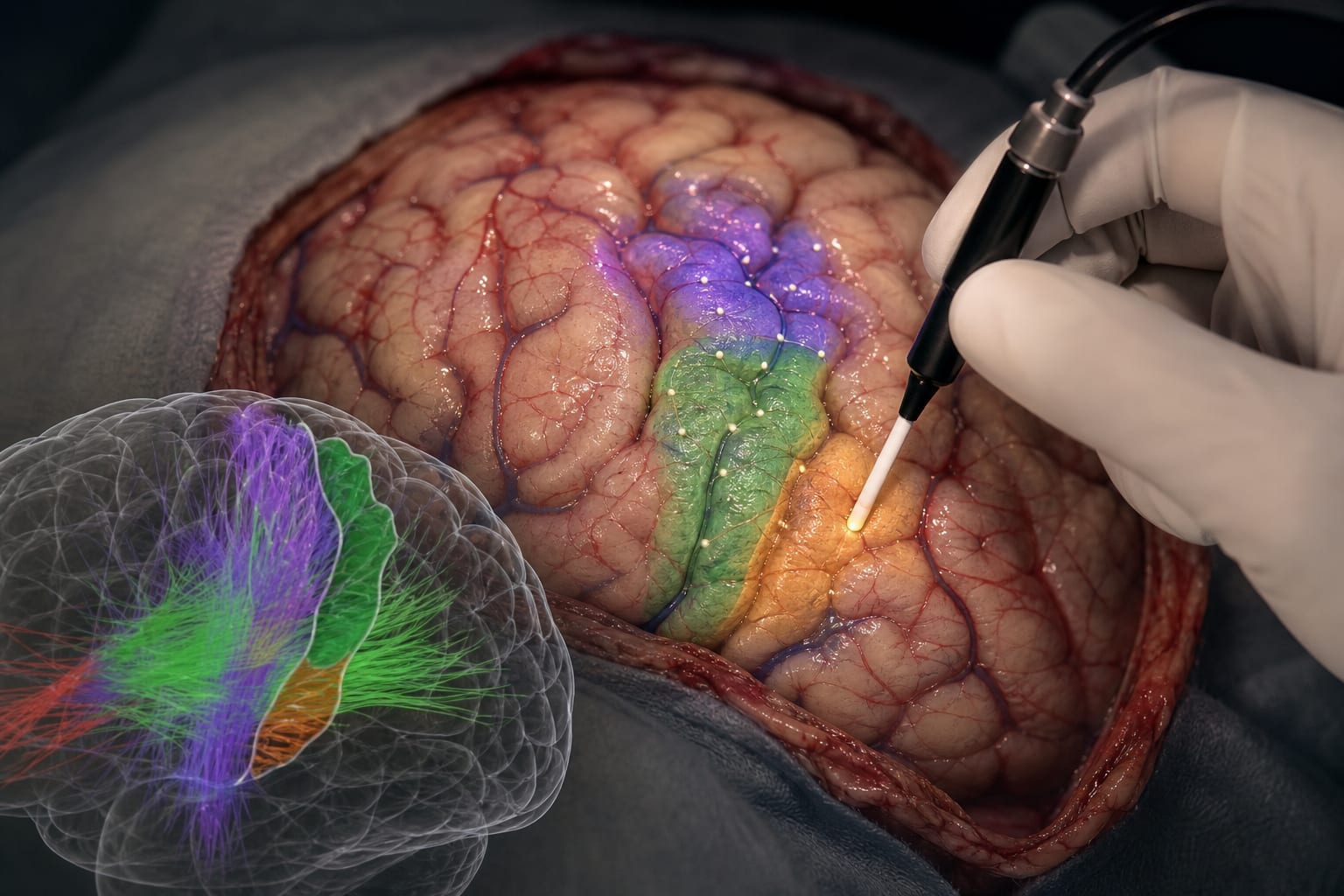
To compare functional outcomes based on mapping strategy and tumor biology in patients undergoing resection of peri-Rolandic diffuse gliomas.
Approach:
Study Design: Retrospective cohort study of adult diffuse glioma patients who underwent resection with intraoperative motor mapping at a single institution.
Patient Identification: Patients were identified from a tumor database, including those with histologically confirmed diffuse gliomas requiring intraoperative motor mapping.
Data Collection: Clinical data included demographics, pathology, surgical details, mapping technique, neurological deficits, and postoperative follow-up.
Neurological Deficits: Permanent postoperative deficits were defined as new or worsening deficits persisting for 3 months.
Statistical Analysis: Statistical analyses were performed using Python, comparing continuous and categorical variables with appropriate tests.
Key Findings:
Intraoperative motor mapping is crucial for functional preservation during glioma resection.
Awake and asleep motor mapping techniques have different applications based on tumor location and patient factors.
The study evaluates outcomes based on the 2021 WHO classification of gliomas.
Interpretation:
Limitations:
The study is retrospective and conducted at a single institution.
Focus on operative methodology rather than long-term outcomes.