Editorial: Integrating AI in forensic medicine: advancements and ethical considerations
-
By
-
Gianpietro Volonnino
-
Michele Treglia
-
Raffaele La Russa
-
June 22, 2026
-
Objective:
To analyze the potential benefits and inherent risks associated with the application of artificial intelligence in forensic medicine.
Approach:
Key Findings:
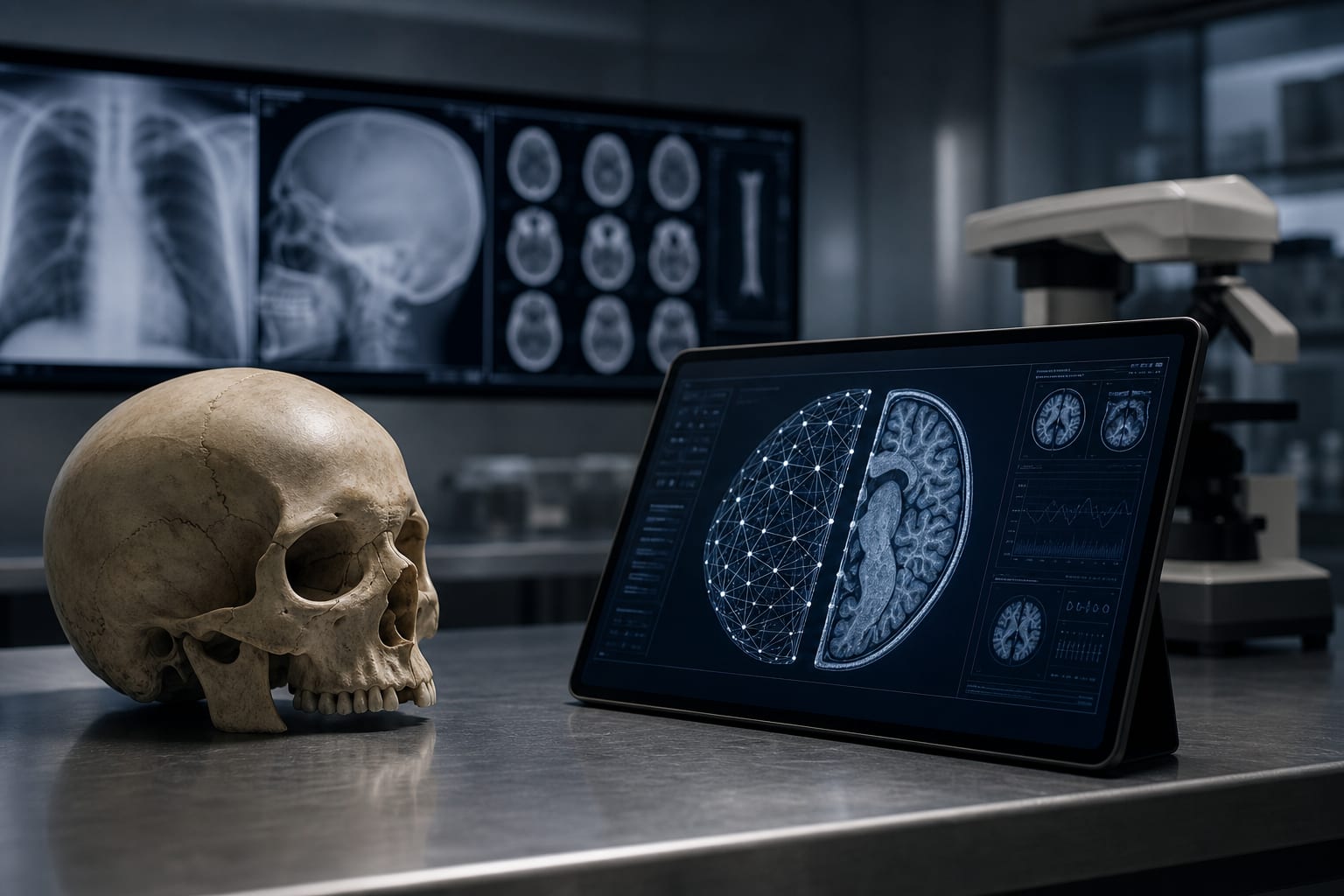
- AI can analyze gunshot wounds, determine shooting distance, and distinguish between entry and exit wounds.
- Post-mortem CT is useful for determining the cause of death.
- AI can estimate dental age with high precision in forensic odontology.
- AI supports mental illness assessment in forensic psychiatry.
- Chen et al. identified potential PMI biomarkers through metabolomics analysis.
- Delogu et al.'s AI model effectively recognizes gunshot wound characteristics.
- Wang et al.'s BIPON system improves diagnostic evidence interpretation.
Interpretation:
AI should be viewed as a decision-support tool, with final decisions remaining in human hands due to ethical and legal implications.
Limitations:
- AI models require a larger dataset for effective training and judicial application.
- Integration of AI into forensic practice necessitates collaboration among various experts.
Conclusion:
AI technologies present opportunities for methodological advancements in forensic medicine, enhancing the analytical capabilities of forensic experts.