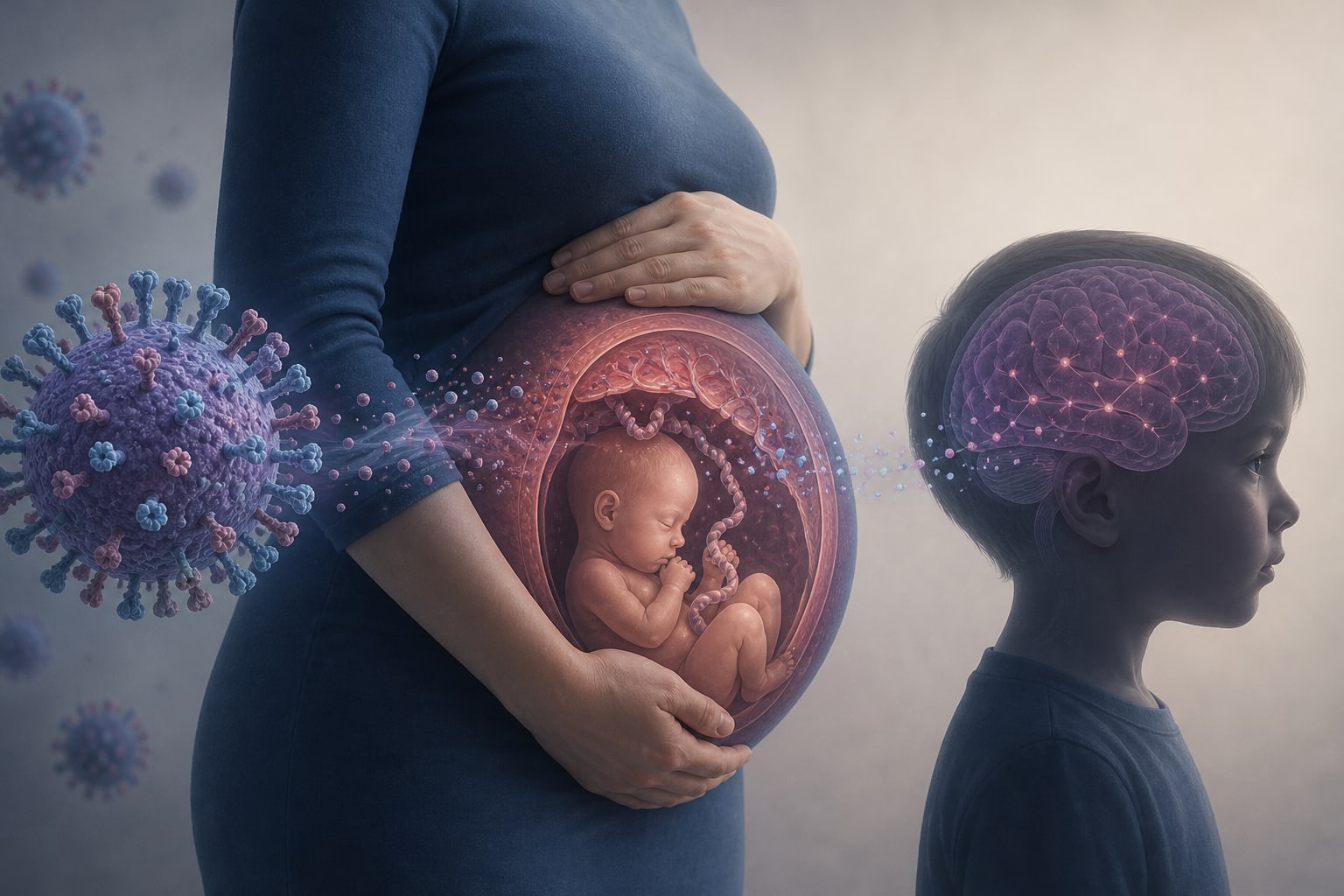
To assess associations between influenza infection during pregnancy and neuropsychiatric disorders in offspring in South Korea and Japan, while addressing familial factors and examining a broad range of outcomes.
Approach:
Design and cohorts: Binational mother-child cohort study using health insurance data collected from 2009 through 2023. The discovery cohort included 3,012,992 participants in South Korea; the Japanese replication cohort included 527,925 participants.
Exposure and outcomes: Maternal influenza exposure was the first recorded diagnosis during pregnancy (ICD-10 J09–J11). The primary outcome was the child’s first postnatal diagnosis of a neuropsychiatric disorder, including severe neuropsychiatric disorders, OCD, ADHD, ASD, and intellectual disability.
Analysis context: The study aimed to examine a broad range of outcomes while accounting for familial factors shared among relatives. The supplied excerpt does not include the specific analytical methods or results.
Interpretation:
The provided article context describes the study rationale, cohorts, exposure, and outcomes but does not report study results; no findings about associations can therefore be summarized.
Limitations:
Influenza exposure was identified from recorded diagnoses; the article notes that diagnostic and testing practices may differ between South Korea and Japan.
Conclusion:
The study aimed to evaluate maternal gestational influenza in relation to offspring neuropsychiatric outcomes using large cohorts in South Korea and Japan.
by Jaehyun Kong, Seohyun Hong, Hyesu Jo, Jaeyu Park, Kyeongeun Kim, Dongjin Yeo, Hyunjee Kim, Tae Hyeon Kim, José Francisco López-Gil, Hanseul Cho, Hyeon Seok Hwang, Selin Woo, Dong Keon Yon