Conexiant’s news site is now MDSpire News. Learn more
Advertisement
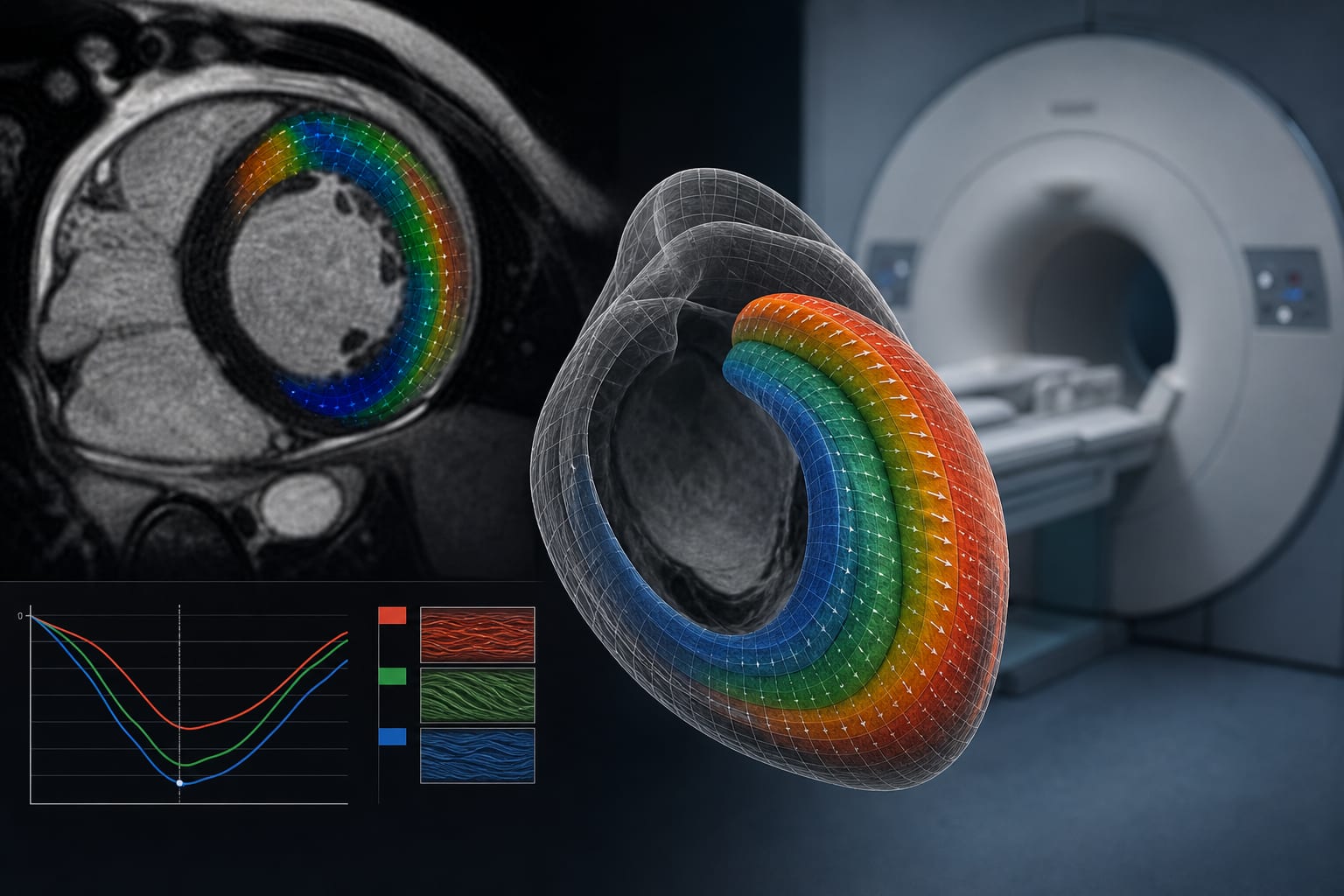
Layer-specific rapid strain-encoded cardiovascular magnetic resonance imaging in patients with suspected acute coronary syndrome: a prospective investigation
To assess the diagnostic potential of fast Strain-ENCoded (fSENC)-derived strain measurements, specifically Global Longitudinal Strain (GLS) and GLS-Dif, in patients at low-to-intermediate risk with suspected acute coronary syndrome.
Key Findings:
fSENC strain measurements demonstrated high reliability and predictive power for cardiac outcomes.
GLS-Dif effectively differentiated Non-ST Elevation Myocardial Infarction (NSTEMI) from other Acute Myocardial Infarctions (AMIs).
The study included patients with low-to-intermediate risk, enhancing real-world applicability.
Interpretation:
The findings suggest that fSENC-derived strain measurements can serve as valuable diagnostic tools in emergency settings for patients with suspected acute coronary syndrome.
Limitations:
Single-centre study may limit generalizability.
Exclusion of patients with previous cardiac events may affect results.
Small sample size in prior studies limits broader conclusions and may impact the reliability of findings.
Conclusion:
fSENC-derived strain measurements, particularly GLS and GLS-Dif, show promise in improving diagnostic accuracy for acute coronary syndrome in emergency settings, potentially aiding in better patient management.
The proposed framework classified 30% of patients as high or extreme risk, compared with 12% classified as having severe or greater tricuspid regurgitation under established grading schemes.
Baptist Health South Florida will host the Baptist Health Heart & Vascular Care 43rd Annual Echocardiography and Structural Heart Symposium on Oct. 2-3 at the Loews Coral Gables Hotel.