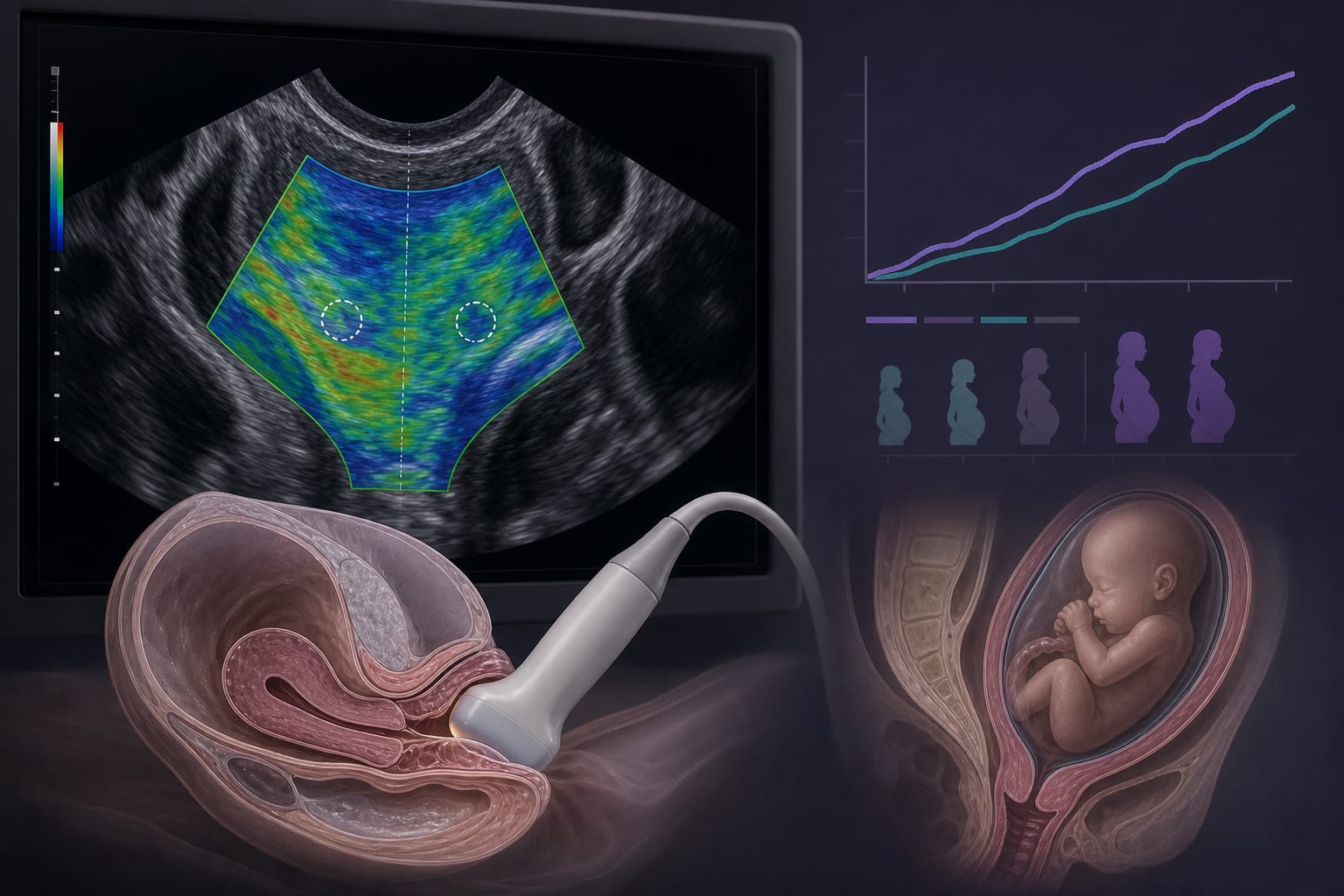
To evaluate the predictive value of mid-trimester cervical strain elastography parameters, alone and in combination with cervical length (CL), for spontaneous preterm birth (sPTB), highlighting the limitations of current predictive methods.
Key Findings:
sPTB occurred in 37 of 275 women (13.5%).
Internal os strain (IOS) had the best discrimination for sPTB (AUC 0.797, 95% CI needed).
The combined model of cervical length and IOS/EOS ratio achieved the highest performance (AUC 0.828, 95% CI needed).
The combined model showed a sensitivity of 73% and specificity of 82%.
Interpretation:
Mid-trimester cervical strain elastography, particularly metrics related to internal os strain, provides meaningful predictive information for sPTB, enhancing risk stratification beyond cervical length alone, which may improve clinical outcomes.
Limitations:
The study was conducted at a single center, limiting generalizability and potentially affecting the applicability of findings to broader populations.
External validation of findings is necessary before routine clinical implementation.
Conclusion:
Combining cervical strain elastography with cervical length improves predictive performance for spontaneous preterm birth, emphasizing the need for external validation.
Online interest in leucovorin, folate products, and acetaminophen-related autism concerns increased markedly in the 2 weeks following the White House announcement.